
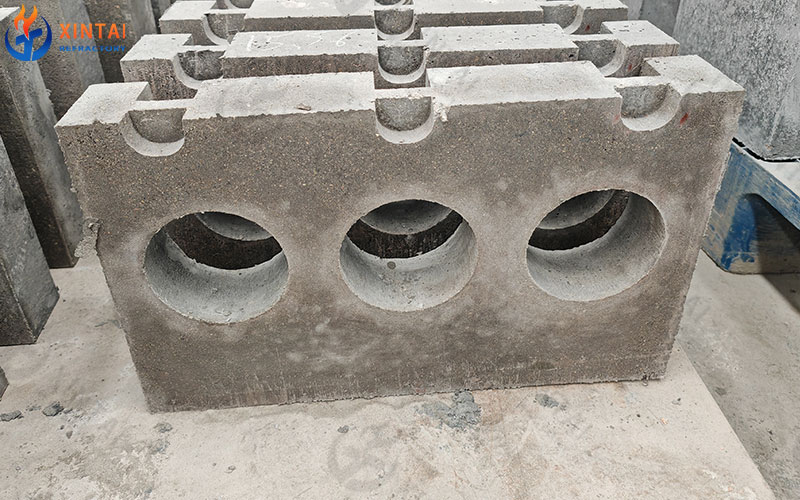
Castable refractory precast shapes are specially designed refractory components that are manufactured in advance and installed in specific areas of high-temperature industrial furnaces. Unlike traditional refractory materials that require complicated on-site construction, castable refractory precast shapes are produced in controlled factory environments through mold casting, curing, drying, and other processes. This advanced manufacturing method allows complex-shaped refractory components, large-sized structures, and customized furnace parts to be produced with high dimensional accuracy and stable performance.
In industries such as steelmaking, cement production, non-ferrous metallurgy, glass manufacturing, and thermal processing, many furnace areas have complex structures or difficult construction conditions. Installing refractory materials directly in these locations often requires significant labor and longer construction periods. Castable refractory precast shapes provide an efficient solution by manufacturing special refractory components in advance and installing them directly at the required positions.
By reducing on-site construction difficulties, improving installation efficiency, and ensuring consistent quality, castable refractory precast shapes have become an important choice for modern industrial furnace construction and maintenance.
What Are Castable Refractory Precast Shapes?
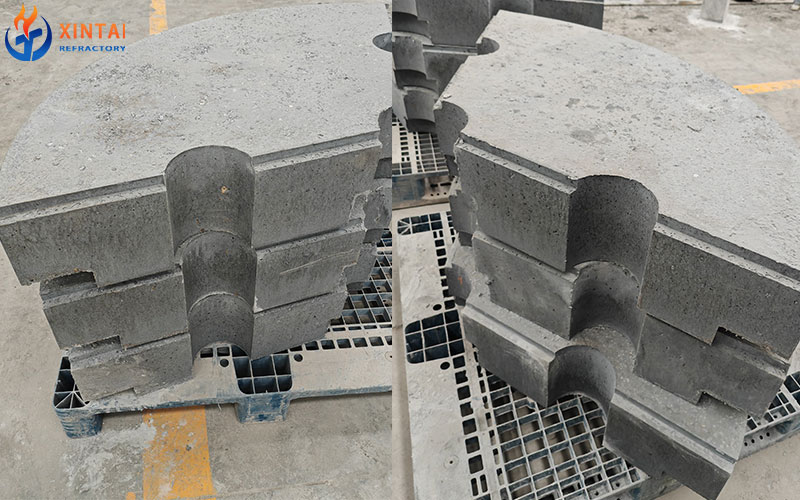
Castable refractory precast shapes are prefabricated refractory components made by mixing refractory aggregates, powders, binders, and additives according to a specific material formula. The mixture is poured into specially designed molds and formed into different shapes according to the requirements of furnace structures.
After molding, these refractory components undergo curing, drying, and sometimes heat treatment processes to achieve the required mechanical strength and thermal performance.
Compared with traditional refractory bricks, castable refractory precast shapes are not limited by standard sizes and simple geometries. They can be manufactured into various complex structures, including electric furnace roof sections, burner blocks, kiln components, tapping spouts, furnace covers, and other special refractory parts.
Because of their flexibility in design and excellent performance, castable refractory precast shapes are widely used in areas where conventional refractory installation methods are difficult or inefficient.
Raw Materials of Castable Refractory Precast Shapes
The performance and service life of castable refractory precast shapes are directly influenced by the selection and proportion of raw materials. Different industrial applications require different refractory formulations according to working temperature, mechanical impact, chemical corrosion, thermal cycling, and operating conditions.
Common raw materials used in castable refractory precast shapes include high alumina materials, clay-based materials, corundum, silicon carbide, refractory powders, binders, and various performance-enhancing additives.
1. High Alumina Raw Materials
High alumina materials are one of the most commonly used raw materials for castable refractory precast shapes. Their main component is aluminum oxide (Al₂O₃), which provides excellent refractoriness, corrosion resistance, and mechanical strength.
High alumina castable refractory precast shapes are suitable for applications that require high-temperature stability and strong resistance to molten materials and slag erosion.
The advantages of high alumina materials include:
- Excellent high-temperature performance
- Strong resistance to chemical corrosion
- High mechanical strength
- Good wear resistance
- Long service life
These materials are widely used in steel furnaces, heating furnaces, industrial kilns, and other high-temperature equipment.
2. Clay-Based Raw Materials
Clay-based refractory materials are traditional materials used in castable refractory precast shapes. They mainly contain alumina and silica components and provide stable thermal performance and good cost efficiency.
Although clay-based materials have lower temperature resistance compared with high alumina and corundum materials, they are still suitable for many general industrial furnace applications.
Their main advantages include:
- Good forming performance
- Stable thermal properties
- Easy processing
- Cost-effective solutions
Clay-based castable refractory precast shapes are often applied in areas where extreme temperature resistance is not required.
3. Corundum Materials
Corundum is a high-performance refractory raw material mainly composed of aluminum oxide crystals. It has excellent hardness, abrasion resistance, and high-temperature stability.
Castable refractory precast shapes containing corundum are usually used in demanding environments where refractory components need to withstand strong wear, thermal shock, and chemical attack.
Typical applications include:
- High-temperature furnace areas
- Burner zones
- Impact-resistant sections
- Severe wear locations
The addition of corundum can significantly improve the durability and reliability of refractory components.
4. Silicon Carbide Materials
Silicon carbide (SiC) is another important raw material used in castable refractory precast shapes. It has excellent thermal conductivity, oxidation resistance, and resistance to mechanical abrasion.
Silicon carbide-based refractory components perform well in environments with frequent temperature changes and strong thermal stress.
Typical applications include:
- Furnace bottoms
- Kiln components
- Heat treatment equipment
- Areas exposed to repeated thermal cycling
The use of silicon carbide helps improve thermal shock resistance and extends the operating life of refractory components.
5. Binders and Additives
In addition to refractory aggregates, binders and additives are important components in the production of castable refractory precast shapes.
Binders provide bonding strength and help maintain structural stability before and after high-temperature operation. Different binder systems can be selected according to application requirements.
Additives are used to improve specific properties, including:
- Material flowability
- Density
- Drying performance
- Crack resistance
- High-temperature strength
By optimizing the material formula, manufacturers can produce castable refractory precast shapes suitable for different industrial environments.
Characteristics of Castable Refractory Precast Shapes
Castable refractory precast shapes have several advantages that make them widely used in modern high-temperature industries.
1. Customized Shapes and Precise Dimensions
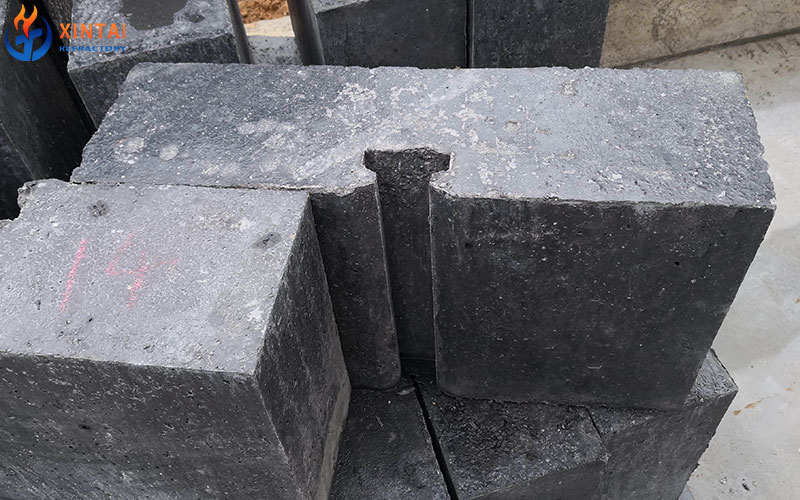
One of the biggest advantages of castable refractory precast shapes is their ability to achieve customized designs.
Because these refractory components are produced through molds, they can be manufactured according to detailed drawings and specific installation requirements.
Compared with traditional refractory bricks, castable refractory precast shapes provide:
- More flexible structural designs
- More complex geometries
- Larger component sizes
- Higher dimensional accuracy
This makes them ideal for special furnace areas that require customized refractory solutions.
2. Stable Quality and Reliable Performance
Castable refractory precast shapes are manufactured in controlled production environments. The raw materials, mixing process, molding conditions, and curing procedures can be accurately controlled.
This ensures:
- Uniform material structure
- Stable density
- Consistent strength
- Reliable high-temperature performance
Factory manufacturing reduces quality differences caused by complicated on-site construction conditions.
3. Faster Installation and Reduced Construction Time
Traditional refractory construction usually requires mixing, casting, curing, and drying processes at the installation site. These procedures may extend furnace maintenance periods.
With castable refractory precast shapes, most manufacturing processes are completed before transportation. Installation workers only need to position and fix the finished components according to the design requirements.
Benefits include:
- Shorter installation periods
- Reduced labor requirements
- Lower construction difficulty
- Faster equipment operation recovery
4. Less Influence from Environmental Conditions
On-site refractory construction can be affected by temperature, humidity, weather, and working conditions.
Castable refractory precast shapes reduce these limitations because they are manufactured under controlled factory conditions before delivery.
This allows more stable quality and reliable performance during installation.
5. Excellent Resistance to High Temperature and Corrosion
Depending on the selected raw materials, castable refractory precast shapes can provide excellent resistance against:
- High-temperature environments
- Thermal shock
- Chemical erosion
- Mechanical impact
- Molten material corrosion
By selecting suitable refractory materials, these products can meet the requirements of different furnace applications.
Manufacturing Process of Castable Refractory Precast Shapes
The production process of castable refractory precast shapes generally includes the following steps:
1. Mold Design and Manufacturing
Customized molds are designed according to the required application, furnace structure, and installation conditions. The mold determines the final dimensions and shape of the refractory component.
2. Raw Material Mixing
Selected refractory aggregates, powders, binders, and additives are mixed according to a professional formula. Uniform mixing ensures stable material performance.
3. Casting and Forming
After adding an appropriate amount of water, the refractory mixture is poured into molds. Vibration forming, vibration pressing, or ramming methods are used to improve compactness and reduce internal defects.
4. Curing and Drying
After forming, castable refractory precast shapes require proper curing and drying processes to achieve sufficient strength and remove moisture.
Proper drying helps prevent cracking and improves performance during high-temperature operation.
5. Quality Inspection
Before delivery, finished castable refractory precast shapes are inspected for:
- Dimensions
- Surface quality
- Density
- Mechanical strength
- Refractory performance
Only qualified products are delivered for industrial applications.
Applications of Castable Refractory Precast Shapes
Castable refractory precast shapes are widely used in various high-temperature industries, including:
- Electric arc furnace roofs
- Steel ladles
- Cement rotary kilns
- Industrial heating furnaces
- Glass melting furnaces
- Burner systems
- Metallurgical equipment
Their customized design capability makes them especially suitable for complex furnace structures and special operating conditions.
Conclusion
Castable refractory precast shapes combine advanced refractory materials with customized manufacturing technology to provide efficient solutions for modern industrial furnace construction.
By using high-quality raw materials such as high alumina, clay, corundum, and silicon carbide, these refractory components can achieve excellent resistance to heat, corrosion, and mechanical stress.
With advantages including customized design, stable quality, easy installation, and long service life, castable refractory precast shapes play an increasingly important role in high-temperature industries.
With professional manufacturing technology and customized refractory solutions, Xintai Refractory provides high-performance castable refractory precast shapes for steel plants, kilns, furnaces, and other industrial applications.