
Heavyweight castable and lightweight insulating castable are two important types of monolithic refractory materials used in industrial furnaces, kilns, boilers, heat-treatment equipment and thermal processing systems. Although both materials can be mixed with water and installed as castable linings, they are designed for different performance requirements. The main difference lies in their density, thermal conductivity, mechanical strength, porosity and insulation performance.
Choosing between heavyweight castable and lightweight insulating castable depends mainly on the location of the lining, operating temperature, mechanical load, abrasion, chemical attack and heat-loss requirements. Understanding these differences helps furnace designers, refractory contractors and industrial buyers select the appropriate material for each zone.
1. The Core Difference: Density and Thermal Performance
The most obvious difference between heavyweight castable and lightweight insulating castable is bulk density.
Heavyweight castable uses dense refractory aggregates and powders to create a compact structure. It normally provides high mechanical strength, excellent wear resistance and good resistance to molten materials and chemical attack.
Lightweight insulating castable uses lightweight aggregates or porous materials to reduce density and thermal conductivity. Its primary purpose is not maximum mechanical strength, but reducing heat transfer and improving thermal insulation.
| Comparison Item | Heavyweight Castable | Lightweight Insulating Castable |
|---|---|---|
| Main purpose | Structural refractory lining | Thermal insulation |
| Bulk density | High | Low |
| Thermal conductivity | Relatively high | Low |
| Mechanical strength | High | Lower |
| Porosity | Lower | Higher |
| Abrasion resistance | Excellent | Limited |
| Heat insulation | Moderate | Excellent |
| Resistance to impact | Excellent | Limited |
| Heat storage | Higher | Lower |
| Typical location | Working lining | Backup or insulation layer |
Therefore, the choice should not simply be based on which material has a higher temperature rating. The actual furnace position and operating conditions are more important.
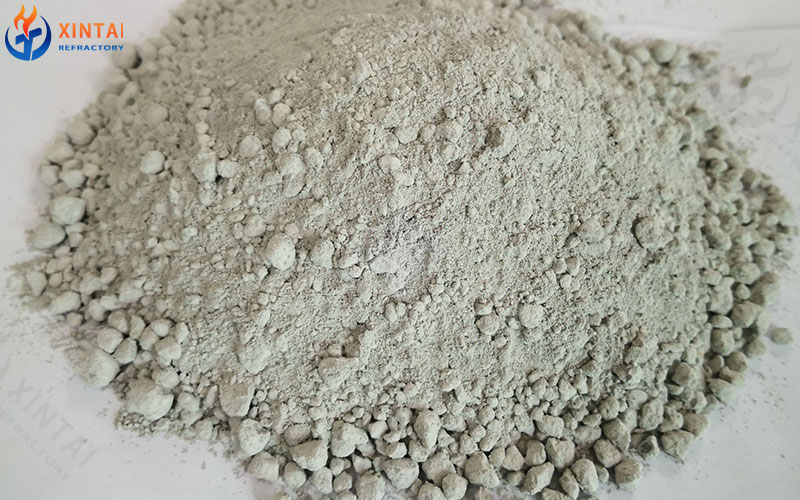
2. Characteristics of Heavyweight Castable
Heavyweight castable is designed to provide a strong and durable refractory structure. Its formulation generally contains dense refractory aggregates, fine powders, binders and performance-enhancing additives.
Because of its high density and relatively low porosity, heavyweight castable can withstand mechanical stress, abrasion and chemical attack better than lightweight insulating castable.
Typical advantages include:
- High bulk density
- High compressive strength
- Good abrasion resistance
- Good resistance to erosion
- Strong resistance to mechanical impact
- Good resistance to molten slag and materials
- Excellent structural stability at elevated temperatures
Heavyweight castable is particularly suitable when the refractory lining directly contacts flames, hot gases, molten materials, slag or abrasive materials.
For example, furnace floors and walls may experience mechanical impact from charging materials. In these locations, a lightweight material could suffer from excessive wear or damage. A dense heavyweight castable can provide the required working surface and structural protection.
3. Characteristics of Lightweight Insulating Castable
Lightweight insulating castable follows a different design concept.
Instead of maximizing density, the material contains lightweight aggregates with a porous internal structure. These aggregates reduce the overall weight and slow down heat transfer through the refractory lining.
Its main advantages include:
- Low bulk density
- Low thermal conductivity
- Excellent thermal insulation
- Reduced furnace shell temperature
- Lower heat loss
- Reduced heat storage
- Easy handling and installation compared with dense refractory materials
Lightweight insulating castable can help improve the energy efficiency of thermal equipment by reducing heat flowing from the hot side toward the furnace shell.
However, lower density also means lower mechanical strength in many formulations. Its resistance to severe abrasion, impact and molten material penetration is generally not comparable with that of heavyweight castable.
For this reason, lightweight insulating castable is usually selected for areas where thermal insulation is more important than mechanical resistance.
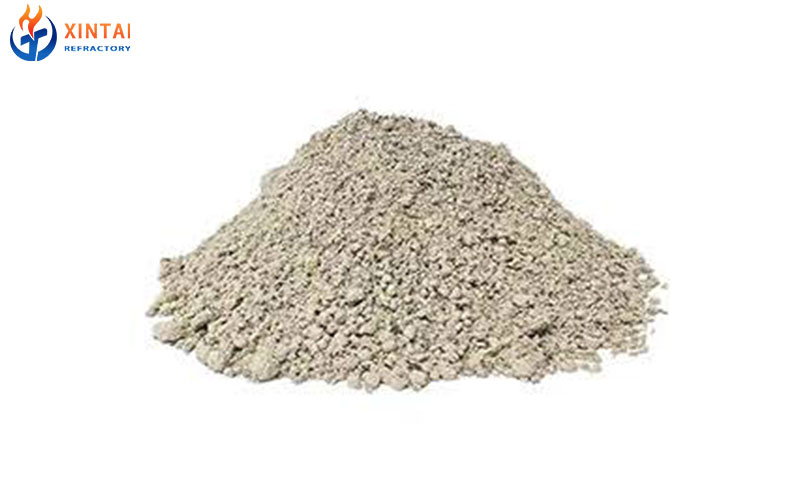
4. Why Heavyweight Castable Is Used for Working Linings
The working lining is the refractory layer directly exposed to the operating environment.
It may encounter:
- High temperatures
- Flame exposure
- Molten metal
- Slag
- Mechanical impact
- Abrasion
- Chemical corrosion
- Thermal cycling
These conditions require a material with sufficient strength and durability.
Heavyweight castable is therefore commonly used for furnace floors, furnace walls, kiln linings, burner zones, discharge areas and other high-wear sections.
In steelmaking and non-ferrous metallurgy, for example, the lining may need to withstand molten metal and slag. In cement and mineral processing equipment, abrasion can be another major concern. A dense castable can provide a more durable protective layer under these demanding conditions.
5. Why Lightweight Insulating Castable Is Used for Insulation
Lightweight insulating castable is mainly selected when the objective is to reduce heat loss rather than resist severe mechanical wear.
It can be used in:
- Backup insulation layers
- Furnace walls
- Furnace roofs
- Boiler insulation systems
- Heat-treatment equipment
- Industrial kiln insulation
- Chimney and duct insulation
- Thermal equipment where weight reduction is important
For example, a furnace wall may consist of a dense refractory working layer on the hot face and a lightweight insulating castable behind it.
The dense layer protects the furnace from the high-temperature working environment, while the lightweight layer reduces heat transfer toward the outer shell.
This combination allows different refractory materials to perform different functions within the same furnace structure.
6. Heavyweight vs. Lightweight: It Is Not Simply “Strong vs. Weak”
It is important to understand that lightweight insulating castable is not simply a lower-quality version of heavyweight castable.
The two materials have different engineering objectives.
Heavyweight castable prioritizes:
Strength + density + abrasion resistance + corrosion resistance
Lightweight insulating castable prioritizes:
Low density + low thermal conductivity + heat conservation + reduced heat loss
Using the wrong material can create problems.
If lightweight insulating castable is installed directly in a high-abrasion working zone, its lower mechanical strength may result in premature damage.
Conversely, using heavyweight castable throughout the entire furnace wall may provide unnecessary strength while increasing heat storage, furnace weight and thermal losses.
Conclusion
Heavyweight castable and lightweight insulating castable serve different roles in industrial refractory systems. Heavyweight castable provides a dense, strong and durable protective lining for areas exposed to mechanical impact, abrasion, molten materials and chemical attack. Lightweight insulating castable focuses on reducing thermal conductivity, heat loss and overall furnace weight.
In many applications, the most practical solution is not to choose only one material, but to combine them according to the function of each furnace zone. A properly designed refractory system can use heavyweight castable as the working lining and lightweight insulating castable as the insulation layer.
For refractory material buyers, furnace manufacturers and maintenance contractors, selecting the correct refractory castable should therefore begin with the actual working conditions of each zone. By matching density, strength, thermal conductivity and corrosion resistance to the application, the refractory lining can achieve a better balance between service life, energy efficiency and operating cost.