
Refractory castables are widely used in industrial furnaces, boilers, kilns, and other high-temperature equipment. As an important category of unshaped refractory materials, they offer flexible installation methods, relatively convenient construction, and the ability to form complex furnace linings without the need for extensive bricklaying. Depending on their raw material composition, alumina content, physical properties, and intended operating conditions, refractory castables can be classified into several types, among which clay refractory castables and high alumina refractory castables are two commonly used materials.
Although both materials are designed to withstand high temperatures, they differ significantly in chemical composition, refractory performance, mechanical strength, corrosion resistance, and application environments. Understanding the differences between clay refractory castables and high alumina refractory castables is essential for selecting suitable lining materials for industrial thermal equipment.
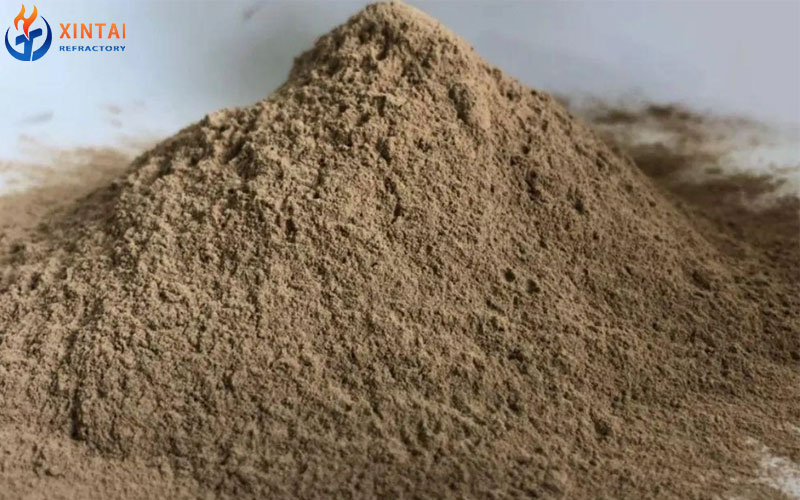
1. What Are Clay Refractory Castables?
Clay refractory castables are unshaped refractory materials primarily manufactured using refractory clay, chamotte, and other aluminosilicate aggregates and fine powders. Their main chemical components are alumina (Al₂O₃) and silica (SiO₂), with the alumina content generally lower than that of high alumina refractory castables.
During production, refractory aggregates, fine powders, binders, and other additives are mixed according to specific formulations. Depending on the product design, calcium aluminate cement or other suitable binding systems may be used to provide the required bonding strength.
Clay refractory castables are valued for their relatively economical raw materials, good workability, and practical performance under moderate high-temperature conditions. They can be installed through vibration casting, pouring, or other suitable construction methods, making them adaptable to different furnace lining structures.
Their performance is influenced by the physical and chemical changes that occur during heating. As the material temperature increases, dehydration, mineral transformation, sintering, and ceramic bonding gradually contribute to the development of its final structure and strength.
Main Characteristics of Clay Refractory Castables
1. Relatively economical raw materials
Refractory clay and chamotte are widely available in many regions. Their relatively accessible raw material supply helps make clay refractory castables an economical option for applications where extremely high alumina content or exceptional corrosion resistance is not required.
2. Good construction performance
Clay refractory castables can be formulated to provide suitable workability, flowability, and cohesion. These characteristics support convenient installation in furnace walls, roofs, and other lining structures.
3. Suitable refractoriness
Clay refractory castables generally have a refractoriness of at least 1,580°C, although the actual refractoriness and recommended service temperature depend on the formulation and product grade. It is important to distinguish refractoriness from continuous operating temperature, as the two are not necessarily the same.
4. Adaptability to different furnace structures
Because they are installed as castable materials rather than individual bricks, clay refractory castables can be used in areas with relatively complicated geometries. This flexibility makes them suitable for selected furnace repairs and lining construction projects.
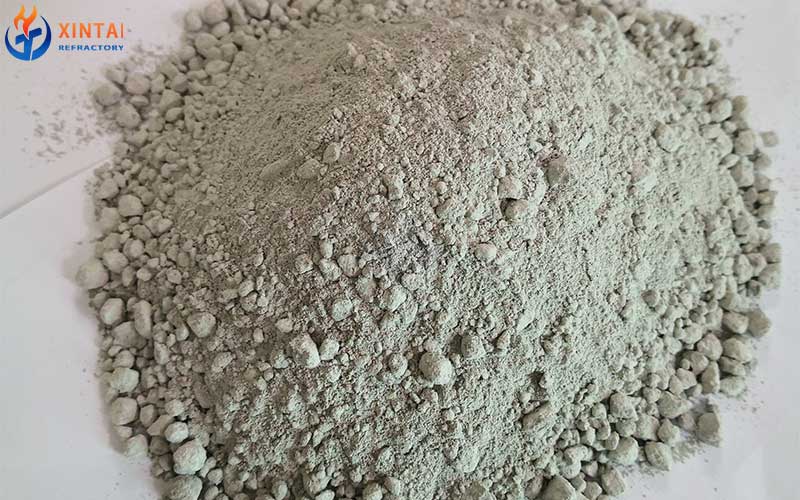
2. What Are High Alumina Refractory Castables?
High alumina refractory castables are unshaped refractory materials manufactured using high-alumina aggregates, refractory powders, binders, and functional additives. Their alumina content is generally higher than that of conventional clay refractory castables. Depending on the grade, high alumina castables may contain 48%, 60%, 70%, 80%, or even higher Al₂O₃ content.
The higher alumina content contributes to improved high-temperature performance and helps enhance resistance to slag attack, chemical corrosion, and mechanical wear when the material is properly formulated.
High alumina refractory castables are available in different grades and formulations to meet the requirements of various industrial applications. Common products include high strength high alumina refractory castables, high alumina abrasion-resistant castables, and other specialized formulations designed for demanding furnace environments.
Main Characteristics of High Alumina Refractory Castables
1. High alumina content
High alumina aggregates and powders provide the material with a higher Al₂O₃ content. This composition helps improve its refractoriness and high-temperature structural stability.
2. Good mechanical strength
High alumina refractory castables can be designed to provide excellent compressive strength and resistance to mechanical impact. Their performance makes them suitable for furnace sections exposed to material movement, particle impact, or mechanical stress.
3. Good abrasion resistance
Abrasion-resistant high alumina castables are particularly useful in areas exposed to continuous particle movement and friction. They are widely considered for circulating fluidized bed (CFB) boilers and other thermal equipment where material erosion is a major concern.
4. Resistance to chemical attack
Depending on their alumina content, aggregate selection, and formulation, high alumina castables can provide good resistance to slag penetration and chemical erosion. Their actual corrosion resistance should be evaluated according to the chemical composition of the slag, operating temperature, and service environment.
5. Adaptable formulation
Manufacturers can adjust aggregate grading, powder composition, binder systems, and additives to produce high alumina castables with different setting characteristics, flowability, strength, and wear resistance.
3. Key Differences Between Clay and High Alumina Refractory Castables
Although both materials belong to the category of unshaped refractory materials, their different raw material compositions result in different performance characteristics.
3.1 Chemical Composition and Alumina Content
The most fundamental difference between clay refractory castables and high alumina refractory castables is their chemical composition.
Clay refractory castables mainly rely on refractory clay and chamotte as their primary raw materials. Their alumina content is generally lower, while silica accounts for a relatively larger proportion of the composition.
In contrast, high alumina refractory castables use high-alumina aggregates and powders. Their Al₂O₃ content is higher, and their formulations can be adjusted to meet different operating requirements.
The difference in chemical composition directly influences the formation of mineral phases during heating, as well as the material’s refractoriness, high-temperature strength, and resistance to chemical attack.
3.2 Refractoriness and High-Temperature Performance
Clay refractory castables are suitable for many general industrial applications involving moderate high-temperature conditions. However, their performance under more demanding thermal conditions may be limited by their composition and phase structure.
High alumina refractory castables generally offer higher refractoriness and better high-temperature performance, particularly when formulated with high-quality alumina aggregates and suitable binders.
It should be noted that the actual service temperature is not determined by alumina content alone. Factors such as thermal load, load-bearing conditions, atmosphere, heating rate, and chemical exposure must also be considered.
3.3 Mechanical Strength and Wear Resistance
Mechanical strength is another important factor when comparing these two materials.
Clay refractory castables can provide sufficient strength for many conventional furnace lining applications. Their performance is generally adequate where severe abrasion and mechanical impact are not major concerns.
High alumina refractory castables, especially high-strength and abrasion-resistant grades, are designed for more demanding operating conditions. They can provide better resistance to mechanical wear, particle erosion, and impact when the formulation is appropriately selected.
For example, circulating fluidized bed boilers involve continuous movement of solid particles, which can cause serious abrasion to furnace lining materials. High alumina abrasion-resistant castables are therefore commonly used in selected areas of these systems.
3.4 Corrosion and Slag Resistance
The resistance of refractory materials to chemical corrosion depends on their mineral composition and the chemical characteristics of the substances they contact.
Clay refractory castables can be used in environments with relatively mild chemical attack. However, their resistance may be insufficient for applications involving aggressive slags, molten materials, or strong chemical erosion.
High alumina refractory castables generally provide better resistance in many demanding industrial environments. Their higher alumina content can help improve resistance to certain types of slag and chemical attack.
Nevertheless, no refractory castable is universally resistant to all slags. The compatibility between the refractory composition and the actual chemical environment should always be evaluated before material selection.
3.5 Raw Material Cost and Overall Economy
Clay refractory castables generally have a lower raw material cost because refractory clay and chamotte are relatively economical materials.
High alumina refractory castables usually require higher-grade alumina aggregates and powders, which may increase production costs. Specialized formulations designed for high strength, abrasion resistance, or corrosion resistance may also require additional processing and additives.
However, the initial material price should not be the only consideration. In areas exposed to severe wear or chemical attack, using a more suitable high alumina castable may help reduce maintenance frequency, extend lining service life, and lower overall operating costs.
4. Comparison Table: Clay vs. High Alumina Refractory Castables
| Comparison Item | Clay Refractory Castables | High Alumina Refractory Castables |
|---|---|---|
| Main Raw Materials | Refractory clay, chamotte, aluminosilicate aggregates | High alumina aggregates and powders |
| Al₂O₃ Content | Generally lower | Generally higher |
| SiO₂ Content | Relatively higher | Varies according to grade |
| Refractoriness | Generally at least 1,580°C | Generally higher, depending on grade |
| Mechanical Strength | Suitable for conventional applications | Can provide high mechanical strength |
| Abrasion Resistance | Suitable for relatively mild wear conditions | Available in high abrasion-resistant grades |
| Corrosion Resistance | Suitable for less aggressive environments | Can provide better resistance to selected chemical attacks |
| Raw Material Cost | Generally lower | Generally higher |
| Typical Applications | General furnace linings and selected thermal equipment | CFB boilers, industrial furnaces, and high-wear areas |
The comparison above describes general characteristics rather than fixed technical specifications. Actual properties vary according to the product grade, raw material quality, binder system, and manufacturing process.
5. Typical Applications of Clay Refractory Castables
Clay refractory castables are commonly selected for industrial applications where moderate refractoriness, convenient construction, and cost efficiency are important.
Typical application areas include:
- General industrial furnace linings.
- Selected sections of heating furnaces.
- Furnace walls and roofs operating under moderate thermal conditions.
- Repair and maintenance of conventional refractory linings.
- Thermal equipment that does not experience severe abrasion or aggressive chemical corrosion.
Their relatively economical composition makes them a practical choice for projects where the operating environment does not require the enhanced properties of specialized high alumina materials.
However, the selection should still consider the actual furnace temperature, thermal cycling, mechanical loading, and chemical atmosphere.
6. Typical Applications of High Alumina Refractory Castables
High alumina refractory castables are widely used in industrial equipment requiring higher refractoriness, mechanical strength, and resistance to wear or chemical attack.
Common applications include:
1. Circulating Fluidized Bed (CFB) Boilers
CFB boilers involve high-speed circulation of solid particles. The continuous movement of these particles creates significant abrasion and erosion on the furnace lining. High alumina abrasion-resistant castables are commonly used in areas such as furnace walls, cyclone separators, and other components exposed to particle movement.
2. Industrial Heating Furnaces
High alumina castables can be used in furnace walls, roofs, combustion chambers, and other sections exposed to elevated temperatures. Their properties can be adjusted according to the thermal and mechanical requirements of different furnace designs.
3. Furnace Front Arches and Roof Structures
High-strength high alumina castables are suitable for selected furnace front arches, roofs, and other structures where mechanical stability and resistance to thermal stress are important.
4. Waste Incineration and Thermal Processing Equipment
Certain high alumina castable formulations can be considered for thermal processing equipment exposed to elevated temperatures, particle erosion, and chemical attack. The appropriate grade should be selected according to the waste composition and operating atmosphere.
5. Other High-Temperature Industrial Equipment
High alumina refractory castables are also used in various industrial kilns, boilers, and thermal processing systems where conventional clay-based materials may not provide sufficient service performance.
Conclusion
Clay refractory castables and high alumina refractory castables are both important materials in the unshaped refractory industry, but they are designed for different operating requirements.
Clay refractory castables are generally more economical and suitable for conventional furnace lining applications where moderate refractoriness and general mechanical performance are sufficient. High alumina refractory castables, on the other hand, offer higher alumina content and can provide improved refractoriness, mechanical strength, abrasion resistance, and resistance to selected chemical attacks.
The right choice depends on the actual operating temperature, mechanical loading, chemical environment, construction requirements, and expected service life of the refractory lining.
As a refractory manufacturer, Henan Xintai Refractory Material Co., Ltd. provides refractory products for different industrial applications. By evaluating equipment conditions and technical requirements, customers can select suitable refractory castables to improve lining performance and support stable industrial operation.
If you are looking for clay refractory castables or high alumina refractory castables for an industrial project, contact our team to discuss your application requirements and explore suitable refractory material solutions.