In the firing process of refractory bricks and other refractory materials, kiln temperature is one of the most important factors affecting product quality. Accurate temperature control helps ensure proper sintering, stable physical properties, and consistent performance in finished products. In addition to temperature-measuring instruments, experienced kiln operators often observe flame color and the brightness of the kiln interior to make quick assessments of firing conditions. This traditional technique is commonly known as visual temperature estimation.
Although flame color cannot provide an exact temperature reading, it remains a useful reference for understanding temperature changes and monitoring the firing process.
1. The Relationship Between Flame Color and Kiln Temperature
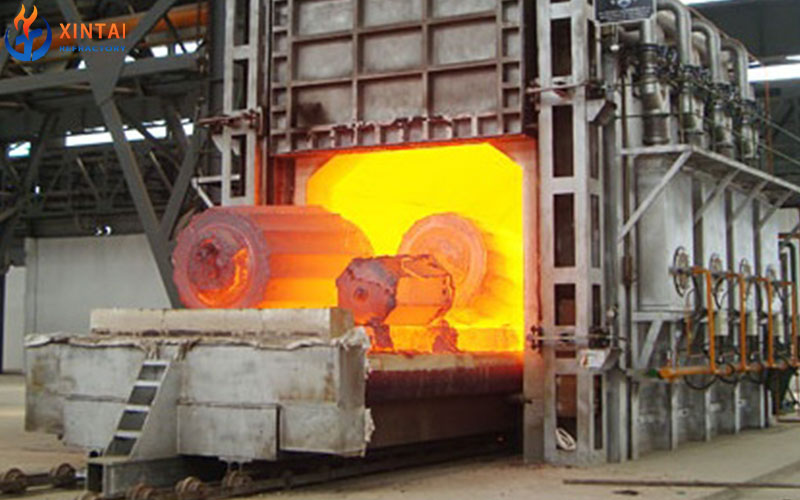
As the temperature inside a kiln increases, the visible glow of the flame and heated materials generally changes from dark red to bright red, orange, yellow, and eventually white. These color changes can provide experienced operators with an approximate indication of the temperature range.
The following reference describes common color changes and their approximate temperature ranges.
Dark Red: Approximately 600–700°C
At this stage, the interior of the kiln has relatively low visible brightness, and the flame may be difficult to distinguish clearly. The materials are mainly in the preheating stage, and the refractory brick bodies have generally not yet entered the main sintering stage.
Operators should pay attention to the heating rate and ensure that moisture removal and preliminary heating proceed appropriately.
Cherry Red: Approximately 800–900°C
As the temperature rises, the interior of the kiln becomes noticeably brighter, and the flame becomes easier to observe. Some low-temperature refractory materials may pass through this range during heating.
At this stage, operators should monitor the temperature increase and maintain a stable firing environment to prepare the materials for subsequent high-temperature reactions.
Bright Red: Approximately 1000–1100°C
When the kiln reaches this range, its interior may appear bright red. Many refractory bricks approach or enter an important stage of the firing process, depending on their chemical composition, raw materials, and manufacturing requirements.
Temperature stability becomes increasingly important because the firing conditions influence the development of the internal structure and the final properties of the products.
Orange-Red: Approximately 1100–1200°C
At this temperature, the kiln interior may display a strong orange-red glow, while the flame appears more active and luminous.
This range is relevant to the firing processes of many clay bricks and high alumina bricks, although the actual firing temperature depends on the specific formulation and required product properties.
Operators should observe both the visible color and the temperature readings to determine whether the firing process is progressing as expected.
Orange-Yellow: Approximately 1200–1300°C
As the temperature continues to rise, the kiln interior becomes extremely bright, and the visible glow may change from orange to yellow.
For many medium- and high-temperature refractory products, this range may correspond to an important stage of sintering or product maturation. However, the appropriate firing temperature varies considerably among different refractory formulations.
Excessive heating or prolonged holding at high temperatures may cause deformation, excessive shrinkage, or other defects. Therefore, operators must follow the specified firing schedule rather than relying on visual observations alone.
Bright Yellow to White: Approximately 1300°C and Above
At higher temperatures, heated surfaces and the visible glow inside the kiln may appear bright yellow or nearly white. This condition can occur in high-temperature firing processes involving certain high alumina, high-purity, and specialty refractory products.
At this stage, careful temperature control is essential. Excessive firing may lead to overburning, deformation, dimensional changes, or deterioration of product quality.
Important note: These color ranges are approximate visual references, not universal temperature standards. The observed appearance depends on factors such as flame luminosity, fuel type, combustion conditions, kiln structure, viewing position, ambient lighting, and the emissivity of the observed surfaces. Flame color itself is not a reliable standalone thermometer.
2. How Flame Conditions Help Evaluate the Firing Process
In addition to observing color, kiln operators can assess flame shape, brightness, and stability to obtain further information about combustion conditions.
Short and Strong Flames
A short, concentrated flame may indicate that the combustion process is stable and that heat release is concentrated in a particular area.
However, flame length alone cannot confirm complete combustion or uniform temperature distribution. Operators should also consider burner settings, oxygen supply, fuel flow, and temperature measurements.
Dark Flames with Long Tails
A dark or elongated flame may indicate incomplete combustion, insufficient air supply, unsuitable fuel-air mixing, or other combustion problems.
Such conditions should be investigated rather than interpreted as a definite sign of low kiln temperature. Adjustments to the air-fuel ratio and burner operation may be necessary, depending on the kiln system.
Extremely Bright or White Flames
An intensely bright flame or nearly white visible glow may indicate high temperatures or particularly luminous combustion conditions.
Operators should check the temperature instruments and compare the readings with the specified firing curve. If the temperature exceeds the required range, corrective action may be needed to reduce the risk of overfiring.
It is important to distinguish between flame color and the color of incandescent refractory surfaces. They are influenced by different physical and combustion-related factors, so their appearance should not be interpreted in exactly the same way.
3. Practical Applications of Visual Temperature Estimation
Visual observation remains a useful supplementary technique in refractory manufacturing, particularly when operators need to assess changing firing conditions quickly.
Monitoring the Heating Stage
During the initial heating process, observing the increasing brightness inside the kiln can help operators identify general temperature trends.
This information may support the evaluation of whether heating is progressing normally. Nevertheless, the heating rate should be controlled according to the production schedule and the characteristics of the refractory products.
Evaluating the Holding Stage
During the temperature-holding stage, operators can observe the appearance of the kiln interior and compare it with the expected firing conditions.
A stable visual appearance may provide supplementary information, but it does not prove that the entire kiln has reached a uniform temperature. Thermocouple readings and, where appropriate, temperature-distribution measurements remain essential.
Supporting Adjustments When Instruments Respond Slowly
When a temperature instrument shows an abnormal reading or responds slowly, visual observation may provide additional clues about the current combustion conditions.
However, if a sensor malfunctions, operators should follow the established troubleshooting and safety procedures. Flame color must not replace verified temperature measurements or be used as the sole basis for critical operating decisions.
Adapting to Different Refractory Products
Different refractory products require different firing schedules. Clay bricks, high alumina bricks, and specialty refractory materials may have different maturation temperatures and holding-time requirements.
Visual temperature estimation can help experienced operators recognize general changes during product transitions. The actual firing parameters, however, must be determined by the product formulation, technical specifications, and validated production procedures.
4. Combining Visual Observation with Instrumental Temperature Measurement
Although flame color provides a traditional and practical reference, it cannot replace accurate temperature-measuring instruments.
In modern refractory production, thermocouples, infrared thermometers, and other suitable monitoring systems provide more objective temperature data. Depending on the kiln design, multiple measurement points may be necessary to assess temperature distribution and identify hot or cold zones.
A reliable kiln temperature control process should combine the following practices:
Use instruments as the primary reference: Follow calibrated temperature measurements and the approved firing curve.
Observe flame conditions as supplementary information: Monitor flame brightness, shape, and stability to identify possible combustion changes.
Maintain a consistent firing schedule: Control heating rates, holding times, and cooling procedures according to product requirements.
Investigate abnormal conditions promptly: Compare visual observations with instrument readings and inspect the combustion system when necessary.
Document firing results: Record temperature curves, operating adjustments, and product inspection results to support process improvement.
By combining instrumental measurements with experienced visual observation, manufacturers can better monitor kiln operation, improve firing consistency, and reduce the risks of underfiring and overfiring.
5. Conclusion
Observing flame color is a traditional technique used to estimate kiln temperature during the firing of refractory bricks and other high-temperature materials. The general progression from dark red to bright red, orange, yellow, and white can provide useful visual clues about changes in the kiln environment.
However, these colors represent approximate references rather than precise temperature standards. Fuel characteristics, combustion conditions, kiln structure, and viewing conditions can all affect the observed appearance.
For reliable refractory production, manufacturers should use calibrated temperature instruments as the primary basis for process control and treat flame observation as a supplementary method. This combined approach helps maintain stable firing conditions, reduce firing defects, and improve the consistency of finished refractory products.