
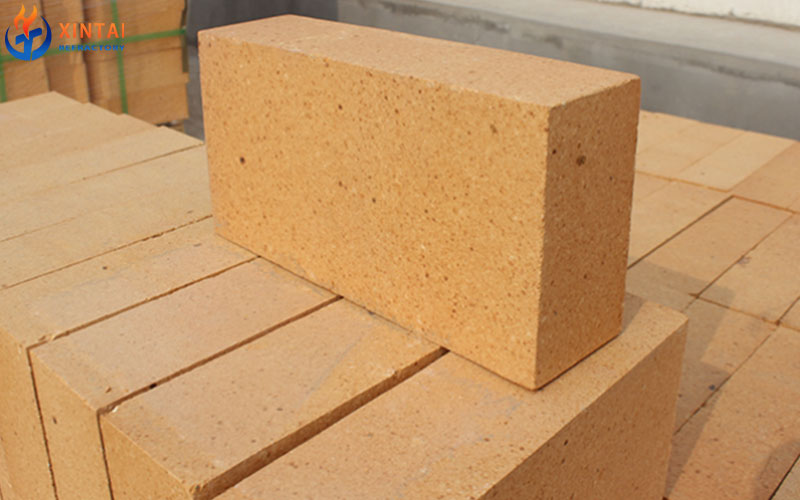
Low creep clay bricks are a critical category of refractory materials designed for high-temperature industrial environments where structural stability, load resistance, and dimensional integrity are essential. Unlike conventional fireclay bricks, these engineered refractories are formulated to minimize permanent deformation (creep) under sustained thermal and mechanical stress.
This article provides a comprehensive breakdown of the types of low creep clay bricks, their material classification, performance characteristics, and real-world industrial applications across steel, cement, and glass production systems.
1. Overview of Low Creep Clay Bricks
Low creep fire clay bricks are advanced refractory products based on high-quality fireclay and alumina-bearing raw materials. They are engineered through optimized mineral composition, controlled firing processes, and strict particle grading to achieve:
- Reduced high-temperature deformation
- Improved load-bearing capacity
- Enhanced thermal stability under continuous stress
- Long service life in severe industrial furnaces
Key Performance Indicators
Typical technical parameters include:
- Alumina content (Al₂O₃): 30%–45%
- Refractoriness: 1650°C–1790°C
- Creep rate: ≤0.4%–0.6% (high-temperature load conditions)
- Cold crushing strength: High structural integrity under pressure
- Thermal shock resistance: Moderate to excellent depending on formulation
The defining feature—low creep behavior—ensures minimal deformation even after prolonged exposure to high temperatures and mechanical loads.
2. Classification by Alumina Content
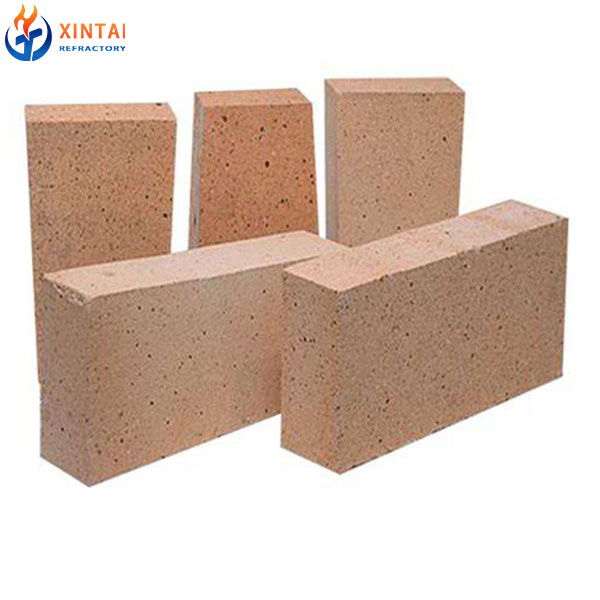
One of the most widely used classification methods is based on alumina (Al₂O₃) percentage. The alumina content directly influences refractoriness, structural density, and creep resistance.
2.1 Standard Low Creep Clay Bricks (Al₂O₃ 30–38%)
These are the most commonly used grades in general industrial furnace applications.
Material Characteristics
- Moderate alumina content
- Balanced silica-alumina matrix
- Stable firing shrinkage control
- Cost-effective formulation
Performance Features
- Suitable for medium-temperature environments
- Good resistance to mechanical stress
- Stable volume under moderate load
- Economical choice for large-scale lining projects
Typical Applications
- Boiler combustion chambers
- Heating furnace side walls
- Thermal processing equipment
- Low-to-medium temperature industrial kilns
These bricks are widely chosen where cost efficiency and durability must be balanced without extreme thermal demands.
2.2 Medium-Grade Low Creep Clay Bricks (Al₂O₃ 35–42%)
This category offers improved performance over standard grades, especially in higher thermal stress zones.
Material Characteristics
- Increased mullite phase formation
- Higher density after sintering
- Improved impurity control in raw materials
Performance Features
- Better load-bearing capacity at elevated temperatures
- Reduced creep deformation compared to standard grades
- Stronger resistance to slag penetration
- Enhanced thermal stability under cyclic heating
Typical Applications
- Rotary kiln preheating zones
- Reheating furnace hot zones
- Metallurgical furnace linings
- Industrial incinerators
This grade is often selected for furnaces operating under fluctuating or semi-high temperature conditions.
2.3 High-Alumina Low Creep Clay Bricks (Al₂O₃ 38–45%)
High-alumina low creep clay bricks represent a premium refractory solution designed for severe operating environments.
Material Characteristics
- High alumina raw materials with refined particle distribution
- Increased mullite and corundum phase content
- Extremely dense microstructure after firing
Performance Features
- Excellent resistance to high-temperature deformation
- Very low creep rate under heavy load
- High refractoriness under load (RUL)
- Superior corrosion resistance against acidic slag
Typical Applications
- Cement kiln transition zones
- Glass kiln crown structures
- Blast furnace auxiliary linings
- High-temperature soaking pits
These bricks are essential in zones where structural failure is not acceptable due to continuous high thermal and mechanical stress.
3. Classification by Application Scenarios
Beyond chemical composition, low creep clay bricks are also categorized based on functional use in industrial furnace systems.
3.1 Furnace Lining Bricks
Furnace lining applications represent one of the largest usage segments.
Key Features
- Designed for structural stability under continuous heating
- Balanced thermal expansion control
- Resistant to thermal fatigue and mechanical vibration
Industrial Use Cases
- Steel reheating furnaces
- Heat treatment furnaces
- Annealing furnaces
- Industrial melting systems (non-slag zones)
These bricks are typically used in walls, arches, and structural layers that maintain furnace integrity.
3.2 Kiln Crown Bricks
Kiln crown bricks are specialized for the upper structural sections of kilns, especially in glass production.
Key Features
- High load-bearing capability at elevated temperatures
- Excellent resistance to sagging and deformation
- Stable dimensional integrity under prolonged heating
Industrial Use Cases
- Glass melting furnace crowns
- Ceramic tunnel kiln roofs
- High-temperature sintering kiln covers
Since kiln crowns are exposed to constant radiant heat and structural stress, low creep performance is critical to prevent collapse or deformation.
3.3 Rotary Kiln Bricks
Rotary kilns require materials that can withstand both thermal and mechanical movement.
Key Features
- Strong abrasion resistance
- Resistance to thermal cycling and rotation-induced stress
- Controlled expansion behavior
Industrial Use Cases
- Cement production kilns
- Lime production systems
- Mineral processing kilns
Low creep clay bricks help maintain kiln alignment and reduce maintenance shutdown frequency.
3.4 Hot Zone Bricks for Metallurgical Furnaces
Hot zone applications demand the highest refractory performance.
Key Features
- High refractoriness under load
- Resistance to slag and gas corrosion
- Minimal structural deformation under long-term exposure
Industrial Use Cases
- Steel ladle furnaces
- Soaking pits
- Reheating furnace hot zones
These bricks are often combined with other advanced refractories to maximize service life.
4. Classification by Performance Characteristics
In addition to composition and application, low creep clay bricks can be categorized based on engineering performance.
4.1 Standard Load-Bearing Low Creep Bricks
- Designed for moderate structural loads
- Suitable for general furnace lining
- Balanced thermal and mechanical properties
4.2 High Load Resistance Bricks
- Enhanced compressive strength
- Suitable for heavy structural zones
- Reduced deformation under long-term stress
4.3 High Thermal Stability Bricks
- Designed for rapid heating and cooling cycles
- Reduced thermal shock cracking risk
- Suitable for intermittent furnace operations
4.4 Chemical Corrosion Resistant Bricks
- Optimized for slag and gas resistance
- Suitable for chemically aggressive environments
- Extended service life in metallurgical applications
5. Manufacturing Technology Behind Low Creep Clay Bricks
The performance of low creep clay bricks is heavily dependent on manufacturing precision.
Key Production Processes
- Raw material selection (high-purity fireclay and bauxite)
- Fine grinding and particle grading
- High-pressure forming
- Controlled high-temperature firing (up to 1400–1500°C)
- Slow cooling to stabilize crystal phases
Critical Phase Formation
- Mullite formation enhances structural rigidity
- Glass phase optimization reduces porosity
- Corundum phase improves high-temperature strength
These microstructural transformations are essential for achieving low creep performance.
6. Advantages of Low Creep Clay Bricks
Across industrial applications, these bricks offer multiple operational benefits:
Technical Advantages
- Reduced permanent deformation under load
- High dimensional stability at elevated temperatures
- Improved furnace safety and structural integrity
- Longer service life compared to conventional fireclay bricks
Economic Advantages
- Lower maintenance frequency
- Reduced downtime in industrial operations
- Improved energy efficiency in furnace systems
- Cost-effective lifecycle performance