
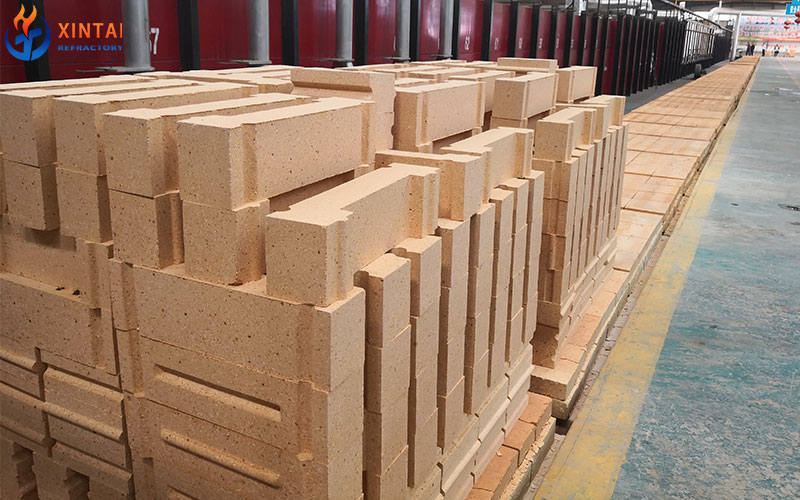
High alumina bricks, known for their exceptional heat resistance and durability, are widely used in high-temperature industrial applications. They play a crucial role in ensuring efficiency, safety, and longevity of various furnaces and kilns. Now Xintai Refractory Brick will provides a comprehensive overview of high alumina bricks, covering their composition, properties, types, applications, advantages, and selection criteria.
1. Composition of High Alumina Bricks
High alumina bricks are mainly composed of bauxite, corundum, and other alumina-rich materials. The key factor determining their performance is the alumina (Al₂O₃) content, which usually ranges from 45% to over 90%.
- 45%–60% Al₂O₃: Medium-high alumina bricks, suitable for moderate temperature applications.
- 60%–90% Al₂O₃: High alumina bricks with excellent chemical resistance and high-temperature stability.
- Above 90% Al₂O₃: Ultra-high alumina bricks used in extremely harsh environments, such as steelmaking furnaces.
Other components may include magnesia, silica, and small amounts of additives to enhance bonding, thermal shock resistance, and mechanical strength.
2. Physical and Chemical Properties
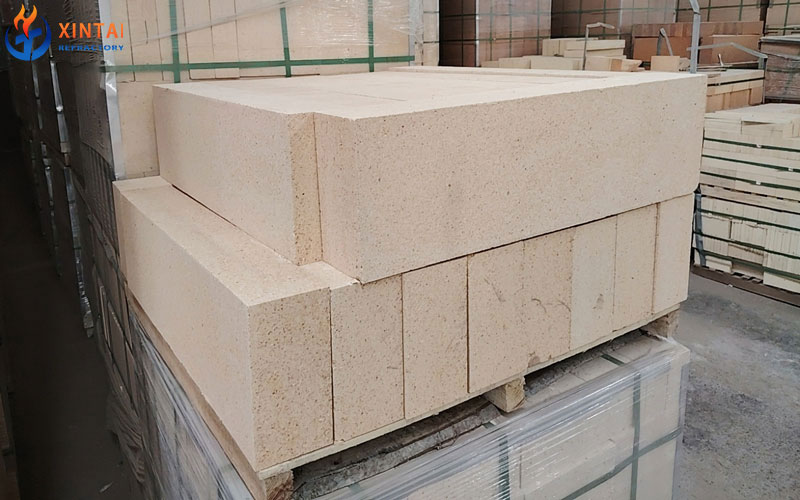
High alumina bricks combine high density with low porosity, giving them superior mechanical and thermal properties. Key characteristics include:
- High Refractoriness: Can withstand temperatures up to 1750–1800°C, depending on alumina content.
- High Compressive Strength: Ensures bricks maintain structural integrity under heavy loads.
- Chemical Resistance: Resistant to acidic and basic slags in furnaces.
- Thermal Shock Resistance: Can tolerate rapid temperature changes without cracking.
- Low Thermal Expansion: Reduces the risk of deformation at high temperatures.
These properties make them ideal for use in harsh environments like steel converters, cement kilns, glass furnaces, and petrochemical reactors.
3. Types of High Alumina Bricks
High alumina bricks can be categorized based on alumina content, manufacturing process, and application:
- By Alumina Content
- Medium alumina bricks (45–60% Al₂O₃)
- High alumina bricks (60–90% Al₂O₃)
- Ultra-high alumina bricks (>90% Al₂O₃)
- By Manufacturing Process
- High-Pressure Formed Bricks: High strength, suitable for steel and glass industries.
- Cast Bricks: Made by casting, offering complex shapes and high density.
- Sintered Bricks: Sintered at high temperature, stable structure and wear-resistant.
- By Application
- Steel Industry Bricks: Converter, ladle, and furnace lining.
- Cement Industry Bricks: Rotary kiln, preheater, and cooler linings.
- Glass Industry Bricks: Melting furnace, high-temperature pipelines, and furnace chambers.
- Other Industrial Bricks: Chemical reactors, ceramic kilns, and thermal power boilers.
4. Applications of High Alumina Bricks
High alumina bricks are widely used in high-temperature industries, providing core benefits in the following sectors:
- Steel Industry
- Converter, ladle, and blast furnace linings
- Resistant to high-temperature steel slags
- Extends furnace service life and reduces maintenance downtime
- Cement Industry
- Lining of rotary kilns
- Preheaters and kiln heads
- Excellent thermal shock resistance and wear resistance
- Glass Industry
- Melting furnace lining, melting pools, and pipelines
- Maintains glass melt quality
- Reduces energy consumption and material wear
- Chemical and Ceramic Industry
- High-temperature reactors and melting equipment
- Resistant to acid and alkaline corrosion
- Extends equipment service life and lowers maintenance costs
5. Advantages of High Alumina Bricks
- High Temperature and Thermal Shock Resistance
High alumina bricks can withstand extreme temperatures and rapid temperature changes without cracking or deforming. - Strong Chemical Resistance
Resistant to both acidic and alkaline slags, suitable for complex industrial environments. - High Mechanical Strength
Dense and strong, suitable for heavy-load areas and high-wear applications. - Energy Saving and Eco-Friendly
Low thermal conductivity helps maintain furnace temperature and improves energy efficiency. - Long Service Life
High wear and corrosion resistance reduce replacement frequency and downtime costs.
6. Key Factors in Selecting High Alumina Bricks
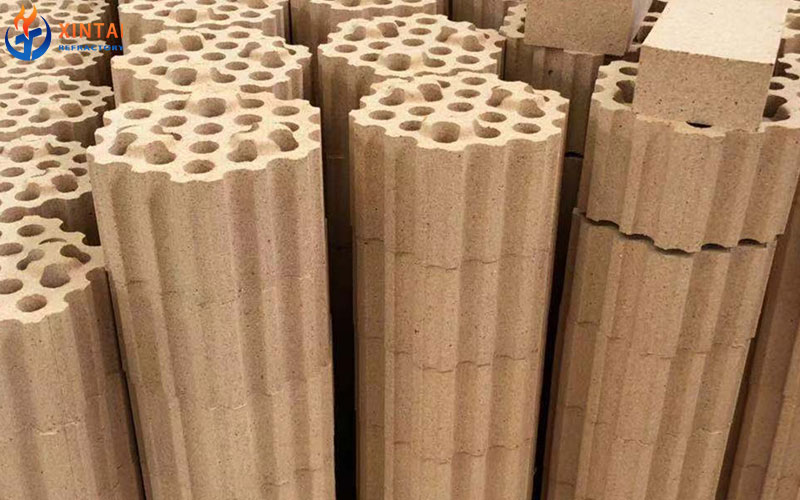
Selecting the right high alumina brick requires consideration of several factors:
- Operating Temperature: Different alumina content suits different temperature zones.
- Chemical Environment: Select bricks based on acidic or alkaline slag conditions.
- Mechanical Load: High-strength bricks are needed for high-load zones.
- Thermal Shock Conditions: Bricks in areas with frequent temperature changes need high thermal shock resistance.
- Economic Factors: Balance performance with cost and choose appropriate brick type and size.
7. Installation and Maintenance Tips
- Joint Treatment: Use refractory mortar or fibers to seal joints tightly and prevent slag penetration.
- Installation Method: Ensure high-pressure bricks are aligned properly for uniform load distribution.
- Regular Inspection: Check for wear, cracks, and slag damage; replace damaged bricks promptly.
- Furnace Cleaning: Remove slag and dust to prevent localized high-temperature damage.
Conclusion
High alumina bricks, with their high-temperature resistance, wear resistance, chemical resistance, and mechanical strength, are indispensable in high-temperature industries. Choosing the right brick type and specification not only extends furnace life but also improves production efficiency and reduces maintenance costs. With continuous technological advancements, high alumina bricks will play an even more critical role in steel, cement, glass, chemical, and other industries, providing reliable protection and performance.