
Refractory fireclay brick is one of the most widely used refractory materials in industrial furnaces and high-temperature equipment. It is mainly produced from fireclay as the primary raw material, with alumina (Al₂O₃) content generally ranging from 30% to 48%. Due to its good thermal shock resistance, stable performance, and relatively low cost, refractory fireclay brick has become an important lining material for various industrial kilns.
Compared with high alumina bricks and other advanced refractory products, fireclay bricks have moderate refractoriness and corrosion resistance, but their excellent cost performance makes them suitable for many applications where extreme operating conditions are not required. According to different manufacturing processes and performance requirements, refractory fireclay bricks can be divided into several types, including ordinary fireclay bricks, low porosity fireclay bricks, phosphate bonded fireclay bricks, low creep fireclay bricks, alkali resistant fireclay bricks, thermal shock resistant fireclay bricks, and lightweight fireclay bricks.
Different types of fireclay bricks have significant differences in chemical composition, physical properties, and application fields. Choosing the right type of refractory fireclay brick is essential for improving furnace efficiency and extending service life.
1. Ordinary Fireclay Brick
Ordinary fireclay brick is the most basic and commonly used type of refractory fireclay brick. It usually contains 30%–40% Al₂O₃ and is manufactured by molding and firing clay-based raw materials at high temperatures.
This type of brick has moderate refractoriness, generally around 1300–1500℃, with acceptable mechanical strength and thermal shock resistance. However, compared with higher-grade refractory products, ordinary fireclay bricks have relatively limited resistance to slag erosion and chemical attack.
Due to its economical price, ordinary fireclay brick is widely used in non-critical areas of industrial furnaces, such as:
- Furnace walls with lower temperature requirements
- Kiln backup layers
- Heating furnace linings
- Boiler combustion chambers
- General thermal equipment
Its main advantage is cost efficiency, making it a practical choice for projects where extreme durability is not required.
2. Low Porosity Fireclay Brick
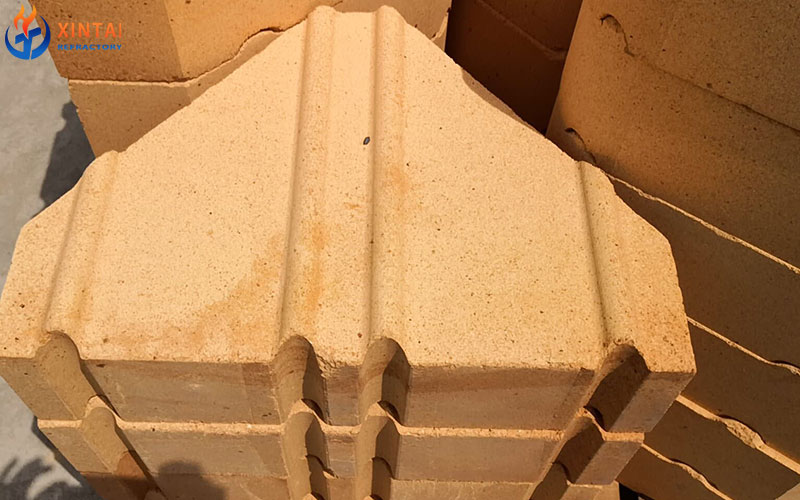
Low porosity fireclay brick is a high-density refractory product designed to improve corrosion resistance and structural stability. It is usually made from high-quality fireclay clinker combined with aluminosilicate minerals such as sillimanite and andalusite.
Through optimized raw material selection and manufacturing technology, the apparent porosity of low porosity fireclay bricks is usually below 15%. Compared with ordinary fireclay bricks, they have:
- Higher bulk density
- Lower water absorption
- Better slag resistance
- Improved mechanical strength
- Better gas tightness
Because of these advantages, low porosity fireclay bricks are commonly used in areas requiring better resistance against chemical erosion, including:
- Glass melting furnaces
- Coke ovens
- Hot blast furnaces
- Industrial heating furnaces
They are especially suitable for furnace zones exposed to corrosive gases and molten materials.
3. Phosphate Bonded Fireclay Brick
Phosphate bonded fireclay brick is a special type of refractory fireclay brick that uses phosphoric acid or aluminum phosphate as a bonding agent instead of traditional ceramic bonding.
During production, phosphate bonding improves the high-temperature strength and wear resistance of the brick. Unlike ordinary fired bricks, phosphate bonded bricks can achieve excellent mechanical properties at high temperatures.
The main advantages include:
- High compressive strength
- Excellent abrasion resistance
- Good resistance to molten slag erosion
- Strong thermal shock resistance
Due to its outstanding wear resistance, phosphate bonded fireclay brick is often used in cement rotary kilns, especially in areas such as:
- Preheating zones
- Transition zones
- Areas exposed to material impact
- High-temperature abrasion zones
It is a suitable solution where both mechanical wear and thermal cycling are concerns.
4. Low Creep Fireclay Brick
Low creep fireclay brick is designed to maintain dimensional stability under long-term high-temperature operation.
At elevated temperatures, ordinary refractory bricks may experience creep deformation caused by continuous thermal stress. Low creep fireclay bricks reduce this problem through optimized chemical composition and microstructure control.
The advantages of low creep fireclay bricks include:
- Low permanent deformation
- Excellent volume stability
- Improved long-term durability
- Better resistance to thermal stress
They are widely applied in furnace areas where structural stability is critical, such as:
- Hot blast furnace linings
- Industrial furnace roofs
- High-temperature support structures
- Large-scale heating equipment
Using low creep fireclay bricks can significantly improve the service life and operational reliability of industrial furnaces.
5. Alkali Resistant Fireclay Brick
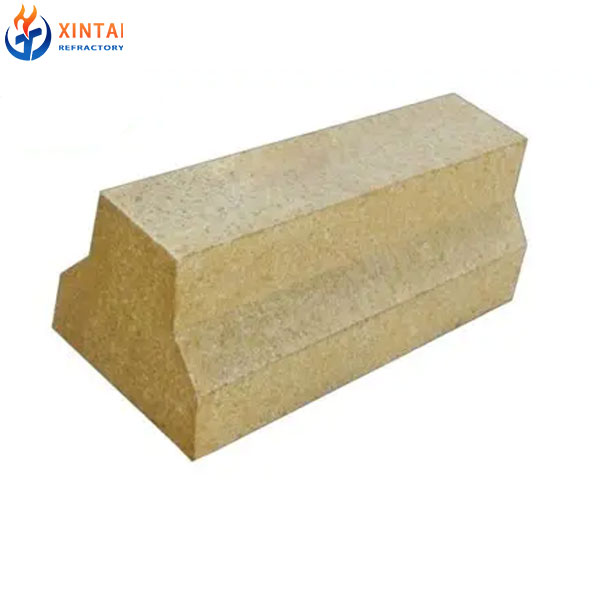
Alkali resistant fireclay brick is developed to resist the erosion caused by alkali metal oxides and alkaline vapors.
In industrial processes such as cement production, alkali compounds may react with refractory materials and cause structural damage. Alkali resistant fireclay bricks improve resistance to these chemical reactions through special raw material formulations.
Common types include:
- Standard alkali resistant fireclay brick
- Roof alkali resistant brick
- High-strength alkali resistant brick
Main characteristics include:
- Good resistance to alkali vapor corrosion
- Stable volume performance
- Good thermal shock resistance
- Suitable mechanical strength
These bricks are commonly used in:
- Cement rotary kiln preheating systems
- Precalciner systems
- Grate coolers
- Other areas exposed to alkaline environments
6. Thermal Shock Resistant Fireclay Brick
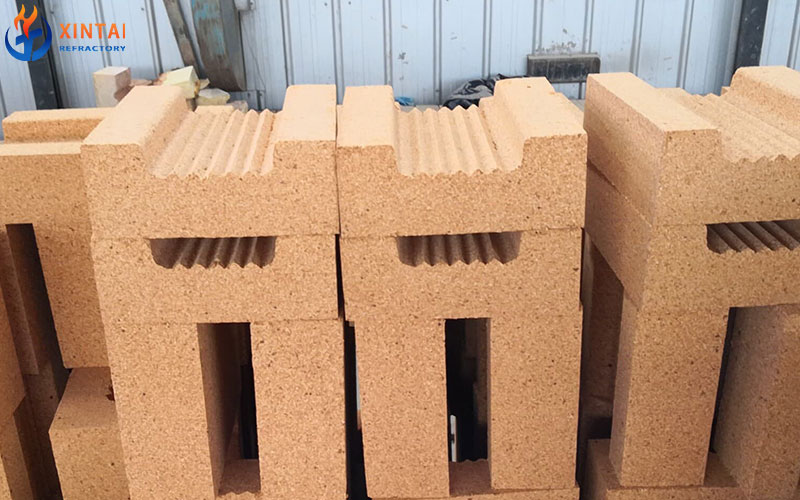
Thermal shock resistance is an important property for refractory materials exposed to frequent temperature changes.
Thermal shock resistant fireclay brick improves resistance to rapid heating and cooling cycles by controlling its microstructure. A suitable amount of microcracks or flexible structures can absorb thermal stress and prevent sudden cracking.
The main benefits include:
- Excellent resistance to temperature fluctuations
- Reduced risk of cracking
- Longer service life under intermittent operation
Typical applications include:
- Coke oven doors
- Kiln car linings
- Intermittent ceramic kilns
- Boiler burners
- Furnace sections with frequent temperature changes
For equipment operating under repeated heating and cooling conditions, thermal shock resistant fireclay bricks are an effective choice.
7. Lightweight Fireclay Brick
Lightweight fireclay brick is a type of insulating refractory material with low thermal conductivity and excellent heat preservation performance.
Unlike dense fireclay bricks, lightweight fireclay bricks have a higher porosity structure, which reduces heat transfer and improves furnace energy efficiency.
Their main advantages include:
- Low thermal conductivity
- Lightweight structure
- Excellent insulation performance
- Reduced energy consumption
However, because of their relatively low mechanical strength and poor resistance to slag erosion, lightweight fireclay bricks are generally not used in direct contact with flames or molten materials.
Typical applications include:
- Furnace insulation layers
- Kiln backup linings
- Heat treatment equipment
- Industrial thermal insulation systems
Comparison of Different Types of Refractory Fireclay Bricks
| Type of Fireclay Brick | Main Characteristics | Advantages | Common Applications |
|---|---|---|---|
| Ordinary Fireclay Brick | Al₂O₃ 30%-40%, basic performance | Low cost, good thermal stability | General furnace linings, low-temperature areas |
| Low Porosity Fireclay Brick | Porosity usually below 15%, high density | Better corrosion resistance and strength | Glass furnaces, coke ovens, hot blast furnaces |
| Phosphate Bonded Fireclay Brick | Uses phosphate bonding technology | High strength, excellent wear resistance | Cement rotary kilns, abrasion areas |
| Low Creep Fireclay Brick | Optimized structure for high temperature stability | Low deformation, long service life | Furnace roofs, high-temperature structures |
| Alkali Resistant Fireclay Brick | Resistant to alkaline vapor erosion | Good chemical corrosion resistance | Cement kiln systems, coolers |
| Thermal Shock Resistant Fireclay Brick | Improved microstructure flexibility | Excellent thermal cycling resistance | Coke ovens, intermittent kilns |
| Lightweight Fireclay Brick | High porosity and low density | Excellent insulation performance | Furnace insulation layers |
Conclusion
Refractory fireclay brick remains an important material in industrial furnace construction because of its balanced performance, reliability, and economical cost. Although all fireclay bricks are based on clay materials, different production processes and compositions create significant differences in their performance.
Ordinary fireclay bricks are suitable for general applications, while low porosity, phosphate bonded, low creep, alkali resistant, thermal shock resistant, and lightweight fireclay bricks are designed for more specific operating conditions.
By understanding the characteristics and applications of different types of refractory fireclay bricks, industries can select the most suitable refractory solution to improve furnace efficiency, reduce maintenance costs, and extend equipment service life.