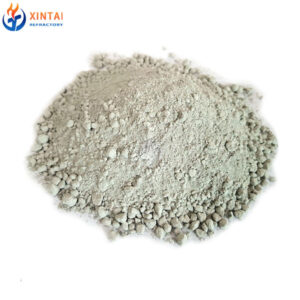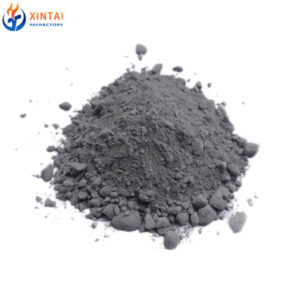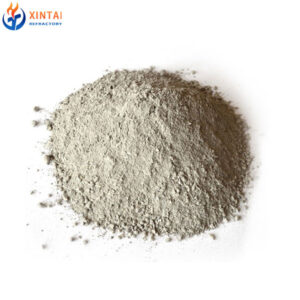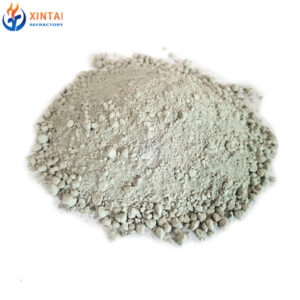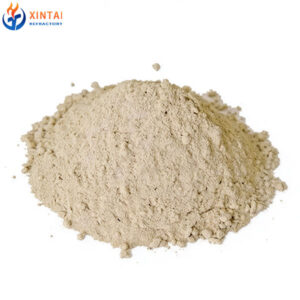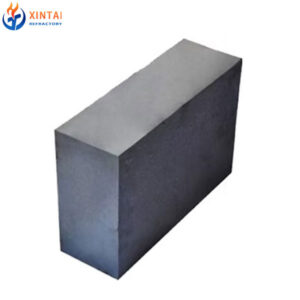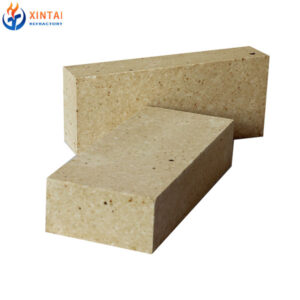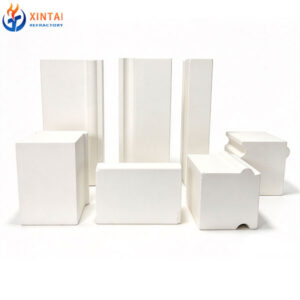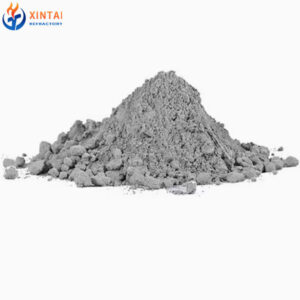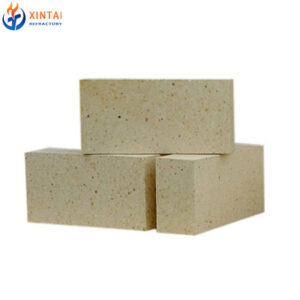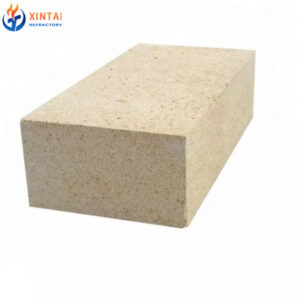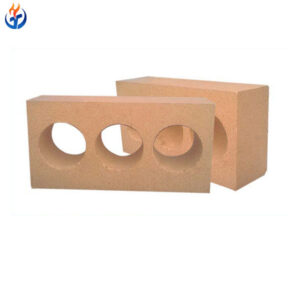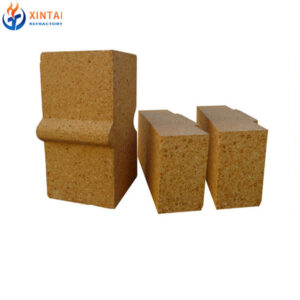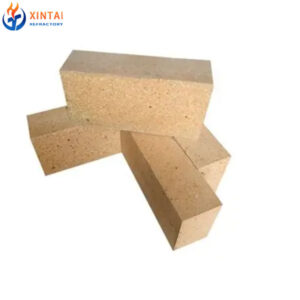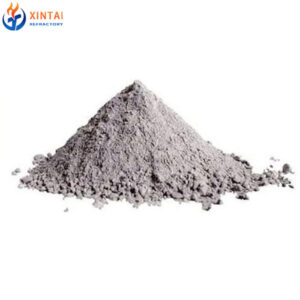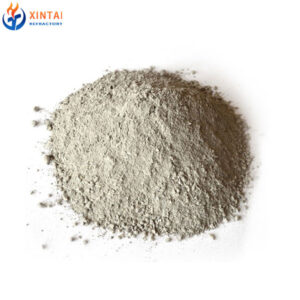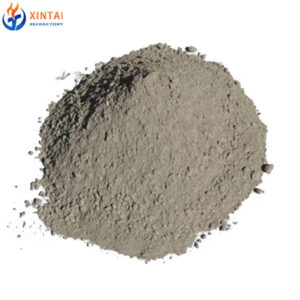
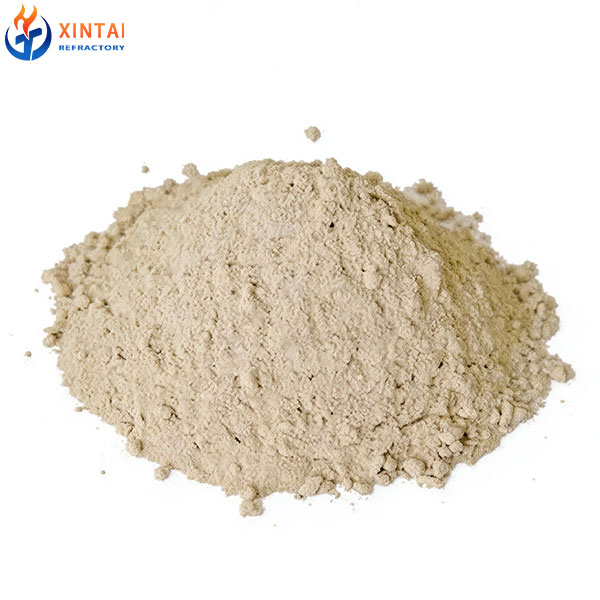
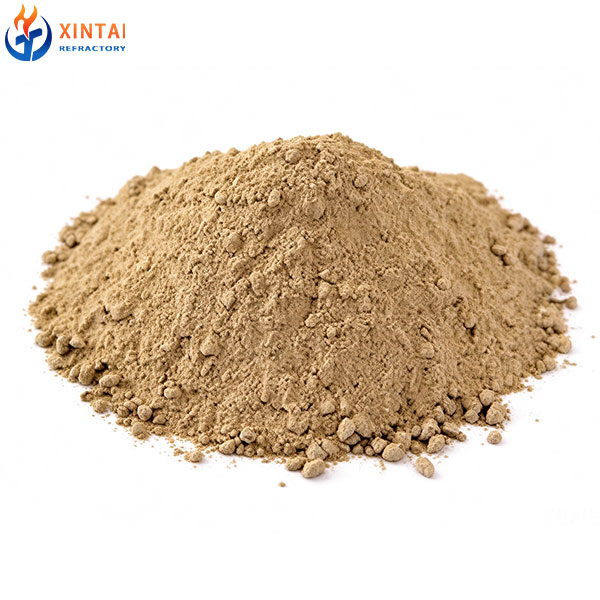
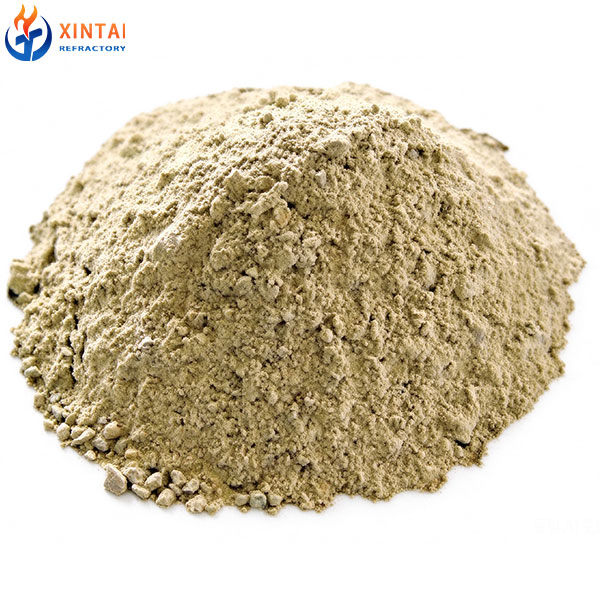
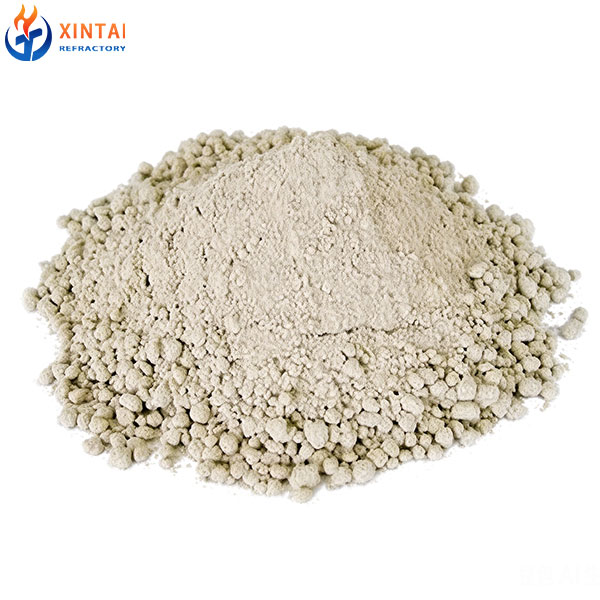
Fire Clay Refractory Castables are unshaped refractory materials formulated with selected fire clay aggregates, calcined flint clay, refractory powders, plastic clay binders, and suitable additives. After mixing with the specified amount of water and proper installation, the material forms a continuous refractory lining that provides thermal protection and structural stability for industrial furnaces and high-temperature equipment.
As a type of clay-bonded refractory castable, Fire Clay Refractory Castables are characterized by good thermal shock resistance, volume stability, mechanical strength, and resistance to abrasion and slag attack under suitable operating conditions. Their clay-based bonding system provides good plasticity and workability, making them suitable for casting complex shapes, repairing furnace linings, and constructing monolithic refractory structures.
Compared with conventional refractory brick construction, castable installation can reduce the number of joints and adapt more easily to irregular furnace structures. Depending on the aggregate composition and formulation, different grades can be developed to meet specific requirements for strength, density, refractoriness, and resistance to thermal cycling.
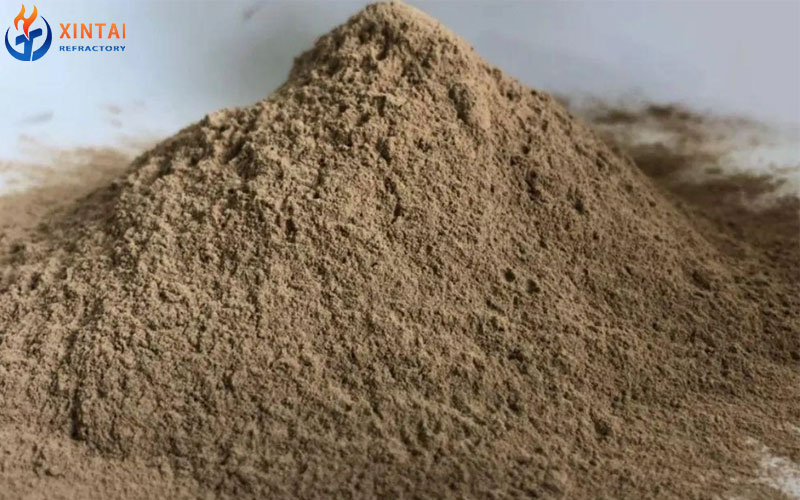
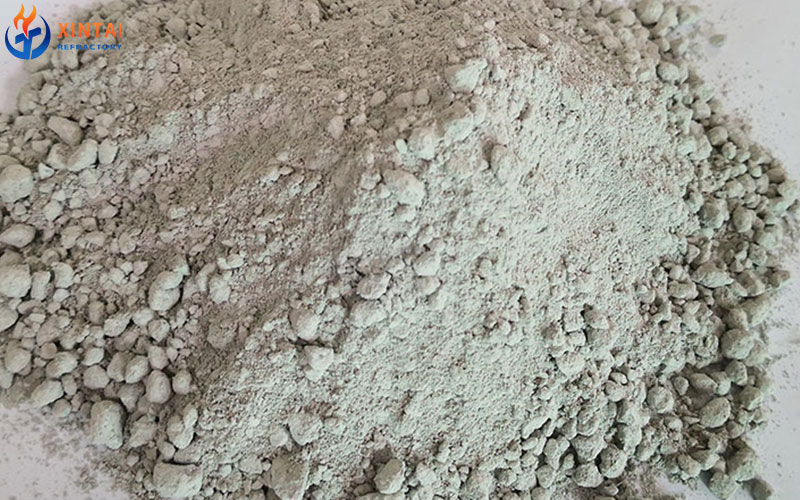
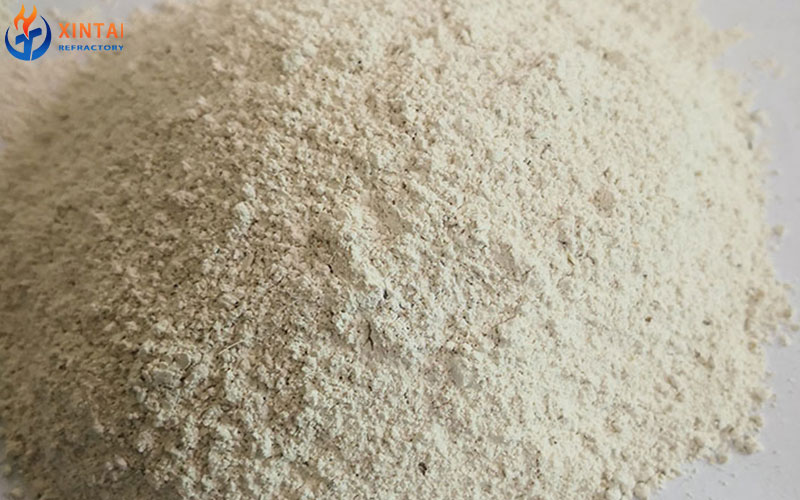
Physicochemical Parameters
The following table provides reference specifications for different fire clay and clay-bonded refractory castable grades. Actual chemical composition and physical properties depend on the selected raw materials, binder system, and manufacturing formulation.
| Items | Standard Fire Clay Castable | High-Strength Clay Castable | Clay-Bonded High Alumina Castable |
|---|---|---|---|
| Al₂O₃ Content, % | Grade-dependent | Grade-dependent | Approx. 45–55 or customized |
| Fe₂O₃ Content, % | Controlled according to grade | Controlled according to grade | ≤2.0–2.5 (reference) |
| Refractoriness, °C | Grade-dependent | Grade-dependent | Grade-dependent |
| Bulk Density, g/cm³ | Approx. 2.0–2.4 | Approx. 2.1–2.5 | Approx. 2.1–2.3 |
| Cold Crushing Strength, MPa | Grade-dependent | Grade-dependent | Grade-dependent |
| Flexural Strength, MPa | Grade-dependent | Grade-dependent | Grade-dependent |
| Apparent Porosity, % | Grade-dependent | Grade-dependent | Grade-dependent |
| Thermal Shock Resistance | Good | Good | Grade-dependent |
| Installation Method | Casting / Pouring | Casting / Pouring | Casting / Pouring |
Product Features
- Good Thermal Shock Resistance: Fire clay refractory castables can withstand temperature fluctuations under suitable operating conditions. Their thermal stability helps reduce the risk of cracking and structural damage caused by repeated heating and cooling cycles.
- High-Temperature Strength: Selected refractory aggregates and clay-based bonding materials provide mechanical strength at elevated temperatures, supporting the structural integrity of furnace linings.
- Good Resistance to Slag Attack: Properly formulated clay castables can resist penetration and erosion from certain slags and furnace deposits. The actual resistance depends on slag chemistry, temperature, and material composition.
- Excellent Workability and Plasticity: The clay-based bonding system provides suitable plasticity and workability, facilitating mixing, casting, and installation in furnace sections with complex geometries.
- Strong Bonding Performance: The combination of refractory aggregates, fine powders, and clay binders helps form a cohesive refractory structure after proper installation and heat treatment.
- Good Abrasion Resistance: Suitable formulations provide resistance to mechanical wear caused by material movement, dust, ash, and other abrasive particles in industrial furnace environments.
- Volume Stability at High Temperatures: Properly selected raw materials and controlled production processes help maintain lining dimensions and structural stability during high-temperature service.
- Flexible Construction and Repair: As an unshaped refractory material, fire clay castable can be used for new furnace linings, localized repairs, and precast refractory components.
- Customizable Material Grades: Chemical composition, bulk density, strength, and other properties can be adjusted according to furnace operating conditions and customer specifications.
Applications
Fire Clay Refractory Castables are used in industrial furnaces and thermal processing equipment where reliable refractory protection, convenient installation, and good thermal stability are required.
- Heating Furnaces: Used for selected furnace walls, floors, roofs, and other lining sections in industrial metal heating equipment. The material helps protect furnace structures from high temperatures and thermal cycling.
- Soaking Furnaces: Applied to suitable lining areas of soaking furnaces used in steel reheating processes, where thermal stability and resistance to operational wear are important.
- Boiler Furnaces: Suitable for selected boiler furnace walls, combustion chambers, and other refractory-lined components exposed to high-temperature combustion gases and ash.
- Cyclone Chambers: Used in appropriate cyclone chamber sections where refractory linings need to withstand thermal stress, gas flow, and particulate erosion.
- Burner Areas: Applied around selected burner blocks, burner surrounds, and furnace openings. Castable materials can accommodate irregular shapes and complex installation areas.
- Mixing Chambers: Used for lining suitable mixing chambers and related furnace components exposed to elevated temperatures and process gases.
- Industrial Kilns: Suitable for selected sections of kilns and thermal processing equipment where clay-based refractory materials meet the required temperature and chemical conditions.
- Furnace Repair and Maintenance: Used for repairing damaged refractory linings, filling designated sections, and restoring protective layers during scheduled maintenance and shutdowns.
- Precast Refractory Components: Can be prepared into precast blocks and specially shaped refractory components for applications requiring consistent dimensions and convenient on-site installation.
The final product grade should be selected according to operating temperature, furnace structure, slag or chemical exposure, mechanical wear, heating and cooling cycles, and installation requirements.
Customization Services
Xintai Refractory provides customized Fire Clay Refractory Castables for industrial furnace construction, refractory lining replacement, and maintenance projects.
- Material Selection: Selection of suitable fire clay aggregates, calcined flint clay, refractory powders, and clay-based binders according to application requirements.
- Chemical Composition: Customization of Al₂O₃, SiO₂, Fe₂O₃, and other relevant chemical composition parameters according to the required grade.
- Physical Properties: Adjustment of bulk density, cold crushing strength, flexural strength, apparent porosity, and other available technical properties.
- Temperature Requirements: Material recommendations based on furnace operating temperature, thermal load, and expected service conditions.
- Performance Requirements: Formulation options for improved thermal shock resistance, abrasion resistance, bonding strength, volume stability, and resistance to specific slag environments.
- Installation Requirements: Suitable castable grades for casting, pouring, furnace lining construction, and precast refractory component production.
- Packaging and OEM Service: Customized packaging, product identification, and OEM services for qualified orders.
- Technical Support: Assistance with material selection based on furnace structure, lining location, operating conditions, and project specifications.
To help us recommend suitable Fire Clay Refractory Castables, please provide your furnace type, operating temperature, application location, required Al₂O₃ content, estimated quantity, and any available technical specifications.
Packing and Shipping Details
Fire Clay Refractory Castables are packaged to help protect the dry refractory mixture from moisture, contamination, and damage during storage and international transportation.
- Packaging: Standard moisture-resistant bags or customized packaging according to product requirements.
- Palletizing: Palletized packaging can be arranged for convenient handling, loading, and unloading.
- Shipping Methods: Sea freight, railway, truck transportation, or air freight depending on order quantity and destination.
- Delivery Time: Confirmed according to product grade, order quantity, production schedule, and shipping arrangements.
- Storage: Store in a dry, covered, and well-ventilated warehouse. Keep bags sealed and protected from moisture. Follow the product-specific storage period and shelf-life instructions.
- Export Documents: Commercial invoices, packing lists, and other agreed export documents can be provided.
- Pre-Shipment Inspection: Packaging, product identification, and agreed technical specifications can be checked before dispatch.


About Xintai Refractory
Henan Xintai Refractory Material Co., Ltd. is a professional manufacturer and supplier of refractory materials with more than 20 years of industry experience. We supply refractory bricks, insulating bricks, refractory cement, castables, and other refractory products for various high-temperature industrial applications.
Our product range serves customers in the steel, cement, glass, ceramics, non-ferrous metal, petrochemical, and power industries. With established production capabilities, quality control procedures, and customization options, we support industrial buyers seeking refractory materials suited to their furnace and kiln requirements.
Whether you need Fire Clay Refractory Castables for new furnace construction, lining upgrades, or maintenance projects, Xintai Refractory can provide suitable material recommendations based on your technical requirements.
Contact Xintai Refractory today to discuss your project and request a competitive quotation.