
The metallurgical industry operates under extremely harsh working conditions involving high temperatures, molten metal corrosion, thermal shock, abrasion, and chemical attack. Refractory materials are essential for maintaining the safety, efficiency, and service life of industrial furnaces and thermal processing equipment. Among various refractory products, refractory castables have become increasingly important because of their excellent construction flexibility, strong mechanical performance, and ability to adapt to complex furnace structures.
Refractory castables are unshaped refractory materials composed of refractory aggregates, powders, binders, and additives. After mixing with water or other liquids, they can be cast or vibrated into position and then hardened to form durable high-temperature linings. Compared with traditional refractory bricks, castables offer advantages such as easier installation, fewer joints, lower labor intensity, and improved overall structural integrity.
In recent decades, the development of low-cement, ultra-low cement, self-flowing, and steel fiber reinforced castables has significantly improved the performance of refractory linings in metallurgical applications. Today, refractory castables are widely used in blast furnaces, ladles, electric furnaces, hot metal pretreatment systems, tundishes, reheating furnaces, and many other high-temperature units in the iron and steel industry.
This article explores the major applications of refractory castables in the metallurgical industry, their material characteristics, performance advantages, and future development trends.
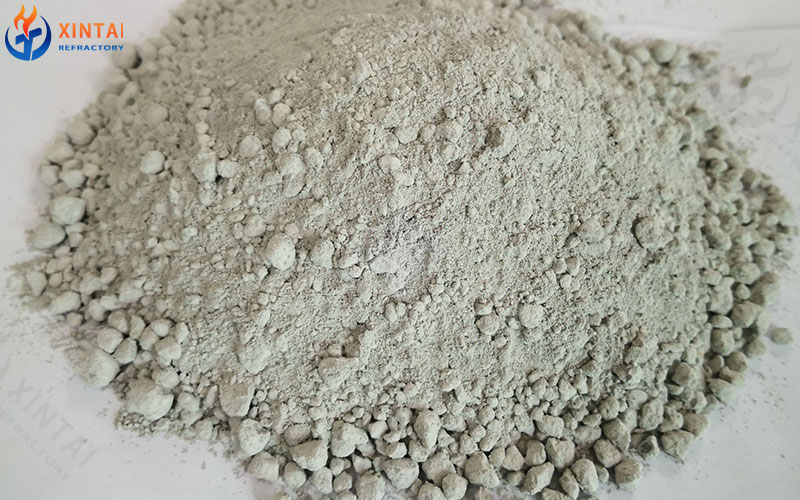
Characteristics of Refractory Castables
Refractory castables are designed to withstand severe operating conditions while maintaining structural stability. Depending on the formulation and application environment, they can provide excellent resistance to heat, abrasion, slag erosion, and rapid temperature changes.
Main Characteristics
1. High Temperature Resistance
Most refractory castables used in metallurgy can operate at temperatures ranging from 1300°C to 1800°C. High alumina and corundum-based castables are particularly suitable for extreme thermal environments.
2. Excellent Wear Resistance
Metallurgical equipment often handles flowing molten metal, slag, coke, and dust particles. Wear-resistant castables are specially designed to resist abrasion and prolong service life.
3. Strong Thermal Shock Resistance
Frequent heating and cooling cycles can cause cracking in refractory linings. Advanced castables with optimized particle gradation and additives provide superior thermal shock stability.
4. Good Corrosion Resistance
Slag, molten iron, alkali vapors, and chemical reactions can damage furnace linings. Different castable formulations are selected according to acidic, alkaline, or neutral working conditions.
5. Easy Construction
Unlike refractory bricks, castables can be directly poured or sprayed into complicated structures, reducing construction time and minimizing joints.
Classification of Refractory Castables Used in Metallurgy
Different metallurgical processes require different types of refractory castables.
High Alumina Castables
These castables contain high Al₂O₃ content and are widely used in steel ladles, reheating furnaces, and furnace roofs because of their high refractoriness and strength.
Low Cement Castables
Low cement castables contain reduced calcium aluminate cement content, improving high-temperature strength and slag resistance.
Ultra-Low Cement Castables
These materials offer even lower porosity and better thermal shock resistance than conventional low cement castables.
Silicon Carbide Castables
SiC-containing castables provide excellent abrasion resistance and thermal conductivity, making them suitable for blast furnace troughs.
Steel Fiber Reinforced Castables
Steel fibers enhance toughness and crack resistance, especially in areas subjected to thermal cycling and mechanical stress.
Self-Flowing Castables
These castables can flow and compact without vibration, improving installation efficiency in complicated structures.
Application of Refractory Castables in Metallurgical Industry
1. Application in Blast Furnace Ironmaking Systems
Blast furnaces are among the most demanding thermal systems in the metallurgical industry. Refractory castables are widely used in blast furnace troughs, runners, tapholes, and hot blast stove systems.
Blast Furnace Trough Castables
The blast furnace trough transports molten iron and slag at extremely high temperatures. The lining must withstand:
- Molten iron erosion
- Slag corrosion
- Thermal shock
- Mechanical abrasion
ASC castables are commonly used in these applications. ASC refers to alumina-silicon carbide-carbon refractory castables. These materials are typically low cement or ultra-low cement castables composed of:
- Alumina aggregates
- Silicon carbide
- Carbon
- Calcium aluminate cement
- Various performance additives
Advantages of ASC Castables
- Excellent wear resistance
- Strong resistance to molten iron penetration
- Good thermal conductivity
- Improved oxidation resistance
- Long service life
The use of ASC castables significantly improves the operational stability of blast furnace ironmaking systems while reducing maintenance frequency.
Hot Blast Stove Applications
Refractory castables are also used in hot blast stoves where they resist high-temperature combustion gases and thermal cycling. Lightweight insulating castables help improve thermal efficiency and reduce energy consumption.
2. Application in Hot Metal Pretreatment
Hot metal pretreatment is an important process before steelmaking. It removes impurities such as sulfur, phosphorus, and silicon from molten iron.
Ladle Applications
In ladles, refractory castables are mainly used in:
- Furnace bottoms
- Molten pool areas
- Working linings
The slag line area often uses aluminum-silicon carbide-carbon castables because this section experiences severe slag erosion and thermal stress.
Spray Gun Applications
The spray gun is a critical device used during hot metal desulfurization and pretreatment.
Traditional spray guns were assembled using refractory bricks and prefabricated parts, but integral castable spray guns gradually became mainstream due to their superior performance.
Advantages of Integral Castable Spray Guns
- Uniform structure
- No construction joints
- Better thermal shock resistance
- Higher mechanical strength
- Longer service life
- Improved operational safety
These spray guns are mainly made from alumina-silica refractory castables with optimized formulations to withstand repeated thermal cycling.
3. Application in Electric Furnace Steelmaking
Electric arc furnaces (EAFs) are widely used in modern steel production because of their high efficiency and flexibility. Refractory castables play an important role in improving furnace performance and reducing downtime.
Furnace Roof Applications
The furnace roof is exposed to:
- Arc radiation
- High-temperature gases
- Dust erosion
- Thermal shock
Refractory castables are commonly used in the electrode triangle area of electric furnace roofs.
Water-Cooled Furnace Roof Technology
Since the late 1990s, full water-cooled furnace roof technology has been widely adopted in the steel industry. In these systems, overall precast castable structures are commonly installed around the electrode openings.
Benefits of Castable Furnace Roofs
- Improved integrity
- Reduced cracking
- Easier maintenance
- Better thermal resistance
- Lower heat loss
As electric furnace technology continues to develop, integral castable furnace covers are expected to become even more common.
4. Application in Steel Ladles
Steel ladles transport molten steel between different refining processes. The refractory lining must withstand extreme thermal and chemical attack.
Working Conditions of Steel Ladles
Steel ladles experience:
- Molten steel erosion
- Slag corrosion
- Thermal cycling
- Mechanical impact
Common Castables Used
- High alumina castables
- Corundum castables
- Spinel castables
- Low cement castables
Advantages
Modern ladle castables offer:
- Low porosity
- High strength
- Excellent slag resistance
- Long campaign life
- Reduced steel contamination
Spinel-containing castables are especially popular because they improve thermal shock resistance and corrosion resistance.
5. Application in Tundishes
The tundish is an intermediate vessel used during continuous casting. Refractory castables are widely used in permanent linings and working linings.
Requirements for Tundish Castables
- Clean steel production
- Resistance to molten steel penetration
- Thermal insulation
- Crack resistance
Dry Vibration and Castable Linings
Modern tundishes often use dry vibration materials together with castable permanent linings to improve efficiency and reduce turnaround time.
Insulating castables are also used to minimize heat loss and improve temperature stability during continuous casting operations.
6. Application in Reheating Furnaces
Reheating furnaces are used to heat steel billets, blooms, and slabs before rolling.
Operating Conditions
These furnaces are exposed to:
- High-temperature flames
- Mechanical abrasion
- Rapid heating and cooling
- Furnace atmosphere corrosion
Common Refractory Castables
- Lightweight insulating castables
- Wear-resistant castables
- High-strength castables
Benefits
Refractory castables in reheating furnaces provide:
- Energy savings
- Improved thermal efficiency
- Reduced furnace downtime
- Simplified repair procedures
7. Application in Non-Ferrous Metallurgy
Refractory castables are also widely used in non-ferrous metallurgical industries such as aluminum, copper, lead, and zinc smelting.
Typical Applications
- Aluminum melting furnaces
- Copper converters
- Holding furnaces
- Incineration systems
Performance Requirements
Non-ferrous metallurgy often requires castables with:
- Alkali resistance
- Corrosion resistance
- Non-wetting properties
- Thermal insulation performance
Special low-cement and phosphate-bonded castables are commonly used in these environments.
Factors Affecting the Service Life of Refractory Castables
Several factors influence the performance and durability of refractory castables in metallurgical applications.
Material Selection
Choosing the correct refractory composition according to temperature, slag chemistry, and operating conditions is essential.
Construction Quality
Improper mixing, water addition, vibration, or curing can significantly reduce castable performance.
Drying and Heating Schedule
Rapid heating can cause steam explosion and cracking. Proper drying and preheating procedures are critical.
Operating Conditions
Excessive temperature fluctuations, slag attack, and mechanical impact can accelerate wear.
Conclusion
Refractory castables play a vital role in the metallurgical industry by providing durable, efficient, and flexible lining solutions for high-temperature equipment. From blast furnaces and electric arc furnaces to ladles, tundishes, and reheating furnaces, castables have become indispensable in modern steelmaking and non-ferrous metallurgy.
The continuous development of low cement technology, self-flowing materials, precast components, and environmentally friendly refractory systems has greatly improved the performance and reliability of refractory castables. Compared with traditional refractory bricks, castables offer significant advantages in construction flexibility, maintenance efficiency, and overall furnace integrity.
As the metallurgical industry continues moving toward higher productivity, energy efficiency, and sustainability, refractory castables will remain one of the most important refractory solutions for high-temperature industrial applications.