
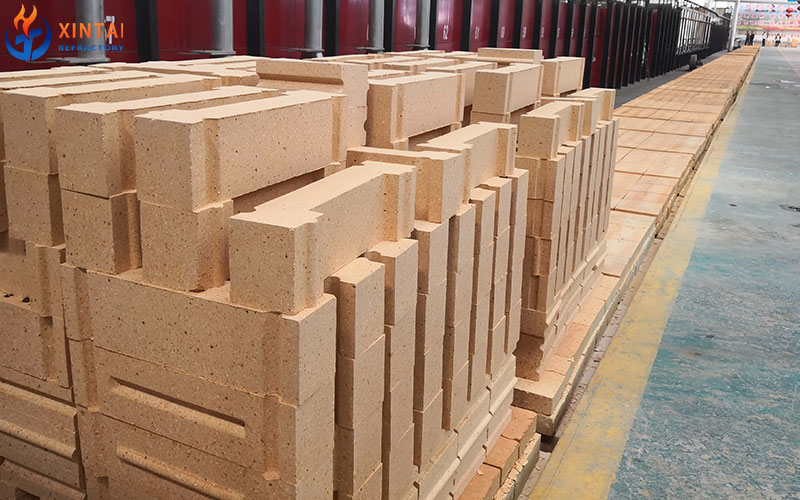
Blast furnace refractory bricks are essential materials for maintaining the structural integrity, thermal efficiency, and service life of blast furnaces. During ironmaking, the furnace lining is exposed to temperatures that can exceed 1500°C, molten iron, slag, alkaline vapors, mechanical pressure, abrasion, and repeated thermal fluctuations. Therefore, ordinary refractory materials cannot meet the demanding operating conditions inside a blast furnace.
The main types of blast furnace refractory bricks include clay bricks, high alumina bricks, corundum bricks, silicon carbide bricks, carbon bricks, and microporous carbon bricks. Different materials are selected according to the operating conditions of the furnace throat, shaft, bosh, belly, hearth, and bottom. Although their compositions and applications differ, high temperature resistance, structural stability, corrosion resistance, low permeability, and thermal shock resistance are among the most important performance characteristics.
1. High Temperature Resistance and Structural Strength
One of the fundamental requirements for blast furnace refractory bricks is the ability to maintain their shape and strength at extremely high temperatures. The interior of a blast furnace can reach temperatures of 1500°C or higher, particularly in the lower furnace and hearth areas. Refractory bricks must resist softening, deformation, cracking, and collapse under these conditions.
High alumina bricks are commonly valued for their high refractoriness. Depending on their alumina content and manufacturing process, high-quality products can have refractoriness of approximately 1750°C to 1790°C. They can maintain dimensional stability while exposed to prolonged thermal loads.
Mechanical strength is also important because the refractory lining must withstand the weight and impact of iron-bearing materials moving through the furnace. High-quality blast furnace refractory bricks can provide strong compressive performance at room temperature, while maintaining sufficient strength at elevated temperatures. This helps reduce lining deformation and premature structural damage.
2. High Alumina Content and Low Iron Oxide Content
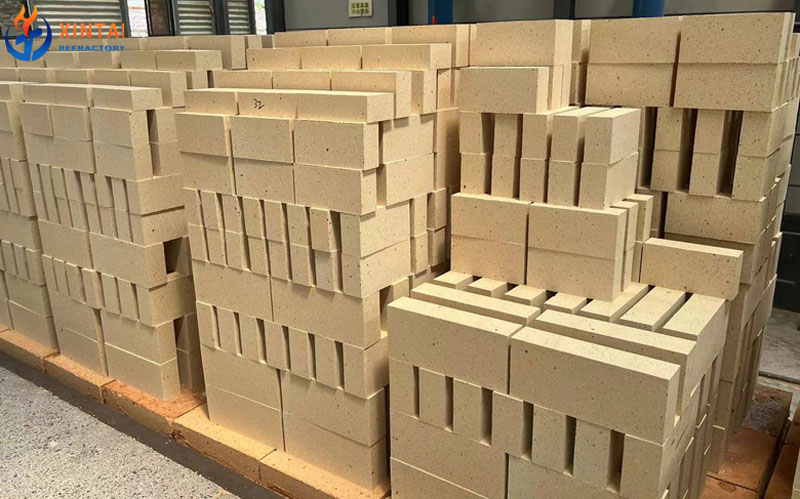
The chemical composition of refractory bricks has a direct influence on their performance. For clay and high alumina refractory materials, a relatively high alumina content contributes to higher refractoriness and better resistance to high-temperature conditions.
At the same time, iron oxide content should be carefully controlled. Excessive iron oxide can participate in undesirable reactions inside the blast furnace. Under certain reducing conditions, iron oxide may interact with carbon monoxide and contribute to the formation of metallic iron and deposited graphite carbon. These reactions can damage the refractory structure and accelerate deterioration.
For this reason, suitable blast furnace refractory bricks require controlled chemical composition, particularly with regard to alumina and iron oxide content. Consistent raw materials and controlled manufacturing processes are important for achieving stable performance.
3. Excellent Resistance to Slag and Molten Iron
Blast furnace refractory bricks are continuously exposed to molten slag, hot metal, alkaline substances, and other aggressive materials. Their resistance to chemical erosion is therefore a major factor determining furnace lining life.
Carbon bricks and microporous carbon bricks are widely used in the hearth and bottom because of their excellent resistance to molten iron and slag. Their low wettability and favorable chemical stability help reduce direct penetration and erosion.
Corundum-based materials can provide excellent high-temperature performance, but their resistance to certain slag compositions must be considered carefully. For example, interactions between corundum-based refractory materials and calcium oxide-containing slag may cause chemical reactions and structural degradation.
The appropriate refractory material should therefore be selected according to the actual slag composition, operating temperature, and location inside the furnace rather than relying on a single material for every section.
4. Low Porosity and Excellent Resistance to Penetration
Porosity has a significant influence on the durability of blast furnace refractory bricks. When open pores and interconnected channels exist inside a refractory lining, molten slag, hot metal, alkaline vapors, zinc, and other aggressive substances can penetrate into the brick.
Once these materials enter the refractory structure, they may react with the matrix, cause volume changes, weaken bonding, and accelerate cracking or spalling. Lower apparent porosity and smaller pore sizes can reduce the pathways available for penetration.
Modern blast furnace linings increasingly use microporous and ultramicroporous carbon bricks. By controlling the pore structure and reducing pore sizes to extremely fine levels, these materials can improve resistance to molten iron penetration and chemical attack. This is particularly valuable in hearth and bottom applications where hot metal penetration is a major concern.
5. Good Thermal Shock Resistance
Blast furnaces experience temperature fluctuations during startup, shutdown, maintenance, reduced production, and operational changes. Repeated heating and cooling create thermal stresses inside refractory materials.
Blast furnace refractory bricks with good thermal shock resistance can withstand repeated temperature changes without excessive cracking, peeling, or spalling. High alumina bricks, silicon carbide-containing materials, and certain carbon-based refractories can provide favorable thermal shock performance when properly designed.
Volume stability is another important factor. Excessive reheating shrinkage can generate cracks when refractory materials are exposed to high temperatures. Small reheating shrinkage helps maintain the integrity of the lining and prevents cracks from becoming channels for slag and gas penetration.
6. Wear and Abrasion Resistance
The upper areas of a blast furnace are exposed to the movement and impact of raw materials. Iron ore, coke, and other charge materials can cause continuous mechanical wear as they travel downward through the furnace.
For this reason, blast furnace refractory bricks used in the furnace throat and upper shaft need adequate abrasion resistance and mechanical strength. Clay bricks and high alumina bricks are often considered for these areas because they can provide a balance of strength, wear resistance, thermal performance, and cost.
Selecting a refractory with insufficient abrasion resistance can result in rapid lining thinning, while excessive material removal may expose underlying layers and shorten the overall campaign life of the furnace.
7. Material Selection for Different Blast Furnace Areas
Different zones of a blast furnace have different thermal, chemical, and mechanical conditions, so refractory selection should be based on the specific operating environment.
The furnace throat and upper shaft mainly experience charging impact, abrasion, and hot gas circulation. Strong clay bricks and high alumina bricks may be used where appropriate.
The lower shaft, bosh, belly, and tuyere-related areas face higher temperatures and more severe chemical attack. Silicon carbide bricks, corundum-based refractories, and alumina-carbon materials may be selected according to the operating conditions.
The hearth and furnace bottom are among the most severely affected areas because they are directly exposed to molten iron and slag. Microporous carbon bricks, graphitized carbon materials, and composite structures such as ceramic cups are commonly used to improve resistance to hot metal penetration, corrosion, and thermal damage.
Conclusion
The performance of blast furnace refractory bricks directly affects furnace safety, production stability, maintenance frequency, and campaign life. High temperature resistance, high-temperature strength, chemical corrosion resistance, low porosity, penetration resistance, thermal shock resistance, abrasion resistance, and volume stability are all important characteristics.
There is no single refractory material that is ideal for every blast furnace zone. The most effective approach is to match refractory composition and properties with the specific conditions of each area. Through suitable material selection, controlled manufacturing, and proper lining design, blast furnace operators can improve refractory durability and maintain stable ironmaking performance.
As a refractory material supplier, Xintai Refractory provides refractory solutions designed for demanding high-temperature industrial applications, with material selection focused on durability, thermal performance, and resistance to severe operating conditions.