
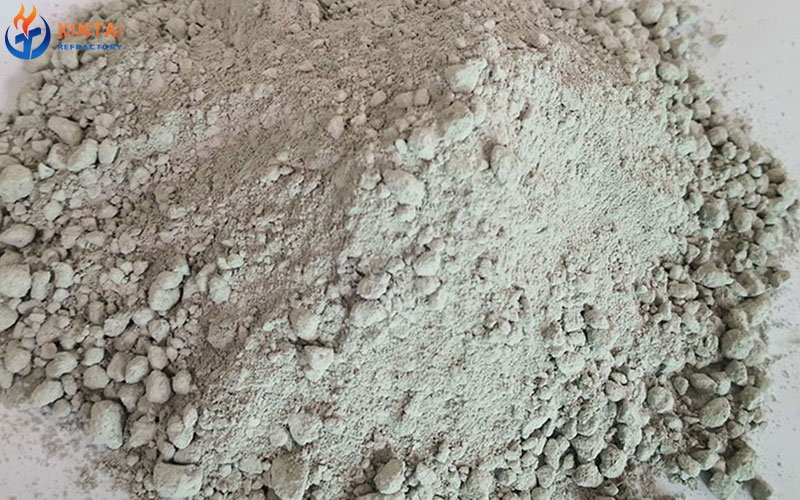
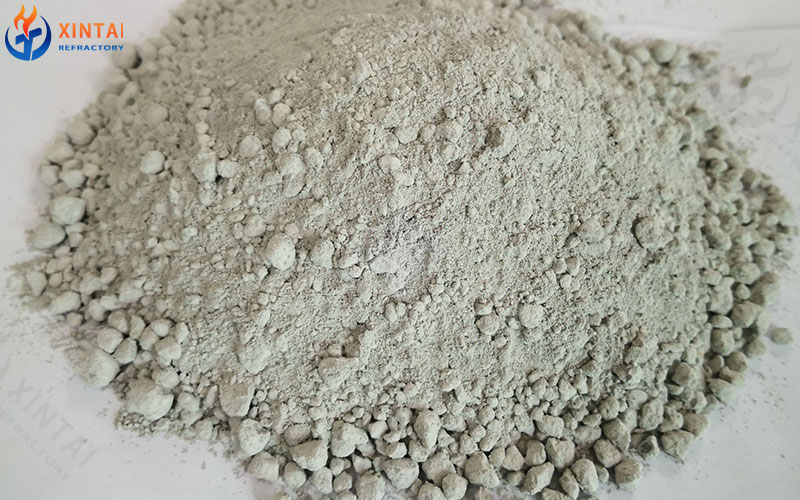
Monolithic castable refractory is a type of unshaped refractory material used to construct, repair, and protect high-temperature industrial equipment. Unlike traditional refractory bricks, it is supplied as a dry mixture or premixed material and formed directly at the installation site. After adding the required amount of water or liquid binder, the material can be cast, pumped, gunned, or rammed into the desired shape.
Monolithic castables are widely used in steelmaking, cement production, non-ferrous metal processing, foundries, boilers, incinerators, and other thermal equipment. Their ability to form continuous refractory linings makes them suitable for applications where complex shapes, fast installation, or seamless protection are required.
What Is Monolithic Castable Refractory?
Monolithic castable refractory is generally composed of refractory aggregates, fine powders, binders, additives, and other performance-enhancing ingredients. The aggregate provides the structural framework, while the fine particles help fill gaps and improve packing density. The binder provides strength after curing and drying.
Common raw materials include alumina, bauxite, corundum, silicon carbide, and other heat-resistant minerals. The formulation can be adjusted according to the operating temperature, mechanical load, chemical environment, abrasion level, and installation method of a particular furnace or industrial unit.
After installation, the castable normally goes through several stages, including mixing, placing, curing, drying, and heating. Correct drying is particularly important because residual moisture can generate steam rapidly during the first heating process and may cause cracking or explosive spalling.
Why Use Monolithic Castable Refractory?
One major advantage of monolithic castables is their seamless construction. Since the material is installed as a continuous lining rather than assembled from individual bricks, there are fewer joints through which heat, molten materials, or corrosive gases can penetrate.
Monolithic castables can also be adapted to complicated equipment geometries. They can be installed around burners, openings, corners, pipes, arches, and other irregular structures where cutting and fitting refractory bricks may require considerable labor.
Another advantage is installation flexibility. Depending on the formulation, a castable may be installed by conventional casting, pumping, vibration casting, ramming, or other specialized techniques. This allows industrial users to select a construction method according to the equipment design and project requirements.
However, selecting a suitable castable requires more than simply comparing maximum service temperatures. Bulk density, porosity, cold crushing strength, permanent linear change, thermal shock resistance, abrasion resistance, and chemical compatibility should also be considered.
Main Types of Monolithic Castable Refractory
Different castable formulations are designed for different operating conditions. The following are several common categories.
1. Conventional Castable Refractory
Conventional castables generally contain refractory aggregates and a relatively high proportion of hydraulic cement binder. They are comparatively easy to mix and install and are commonly used for general refractory construction and maintenance.
Typical applications include furnace linings, kiln components, boiler areas, burner surroundings, and equipment requiring moderate to high temperature resistance.
Their relatively simple formulation and installation process make them practical for many general-purpose industrial applications.
2. Low Cement Castable
Low cement castables contain less cement than conventional castables and are formulated to achieve a denser microstructure. Lower cement content can reduce the amount of water required during installation and help improve several high-temperature properties.
Low cement castables are commonly used in demanding furnace applications where improved strength, corrosion resistance, thermal stability, and reduced porosity are required.
They are frequently considered for steel ladles, furnace linings, heating equipment, and other areas exposed to severe thermal and mechanical conditions.
3. Ultra-Low Cement Castable
Ultra-low cement castables further reduce the cement content while using optimized particle-size distribution and fine powders to maintain a dense structure.
These materials can provide high hot strength, low porosity, and good resistance to molten metal and slag under appropriate operating conditions. They are often selected for high-performance refractory linings where conventional castables may not provide sufficient durability.
Proper mixing, installation, curing, and drying are particularly important because the material is formulated for controlled performance.
4. High Alumina Castable
High alumina castables contain a high proportion of alumina-bearing refractory materials. They are designed for applications requiring high refractoriness, good mechanical strength, and resistance to chemical attack.
Depending on the grade, high alumina castables can be used in steelmaking equipment, cement kilns, boilers, furnaces, ladles, and other high-temperature installations.
The alumina content and aggregate selection have a significant effect on the final performance, so the grade should be matched to the actual working environment.
5. Corundum Castable
Corundum castables use high-purity alumina-based aggregates, such as fused or sintered corundum. They are designed for severe service conditions requiring high temperature stability, wear resistance, and chemical resistance.
These castables are commonly considered for areas exposed to strong abrasion, high thermal loads, molten materials, or aggressive chemical environments.
Because of their higher performance and raw material requirements, they are generally used in more demanding applications rather than ordinary refractory construction.
6. Silicon Carbide Castable
Silicon carbide castables contain silicon carbide as an important refractory component. Silicon carbide offers good thermal conductivity, thermal shock resistance, abrasion resistance, and resistance to certain corrosive environments.
These characteristics make silicon carbide castables suitable for areas such as boilers, incinerators, non-ferrous metal equipment, kiln components, and other applications where abrasion and thermal cycling are significant concerns.
7. Insulating Castable
Insulating castables are designed primarily to reduce heat loss rather than withstand the most severe mechanical loads. They usually have lower bulk density and higher porosity than dense castables.
They are commonly installed as backup insulation or in areas where lightweight thermal insulation is required. Typical applications include boiler insulation, furnace walls, kiln structures, and thermal equipment.
The lower density reduces heat transfer and can also reduce the overall weight of the refractory lining.
How to Select the Right Monolithic Castable Refractory
Choosing the appropriate monolithic castable refractory depends on the actual working conditions. First, determine the operating temperature and whether the lining will experience rapid temperature changes.
Next, consider mechanical conditions. Heavy abrasion, impact, vibration, or material flow may require a dense and wear-resistant castable. Chemical exposure is also important, particularly where the refractory comes into contact with slag, molten metal, alkalis, acids, or corrosive gases.
Installation conditions should also be evaluated. A castable designed for vibration casting may not be the best option for pumping or shotcreting. Water addition, mixing time, curing conditions, and drying procedures should follow the technical requirements of the selected material.
Conclusion
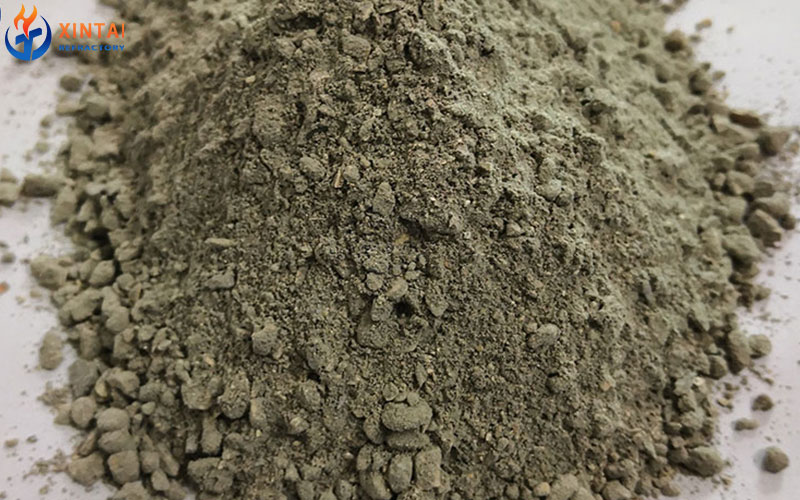
Monolithic castable refractory provides a flexible alternative to traditional shaped refractory products by allowing continuous linings to be formed directly on industrial equipment. Its main categories include conventional castables, low cement castables, ultra-low cement castables, high alumina castables, corundum castables, silicon carbide castables, and insulating castables.
Each type offers a different balance of temperature resistance, strength, density, abrasion resistance, thermal shock resistance, and chemical durability. Therefore, the best choice depends on the equipment, operating temperature, installation method, and specific working environment. For industrial buyers, matching the castable formulation to actual service conditions is essential for achieving reliable refractory performance and longer lining life.