
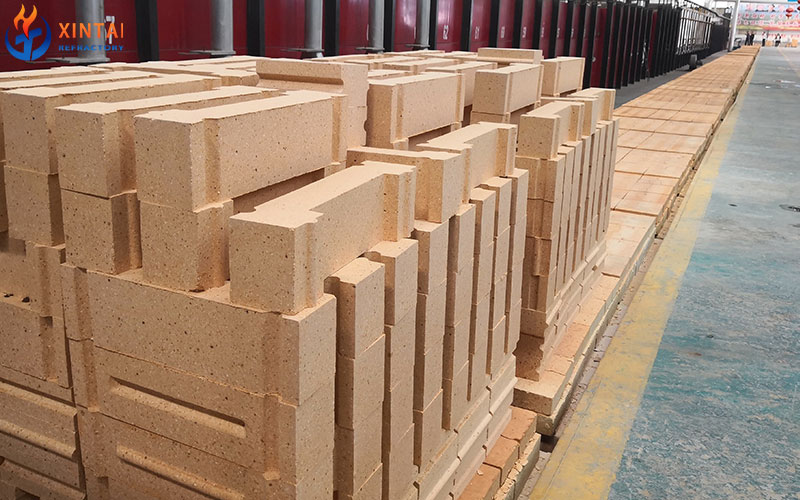
A coke oven operates under extremely harsh thermochemical conditions, where coal undergoes high-temperature dry distillation to produce coke. Inside the oven, temperatures can exceed 1000°C, combined with cyclic heating, reducing atmospheres, mechanical stress, and chemical attack from gases and slag.
To ensure long service life and stable operation, coke oven refractory bricks are carefully selected based on zone-specific performance requirements. Different parts of the coke oven demand different thermal resistance, thermal shock stability, load-bearing capacity, and chemical corrosion resistance.
The main categories of refractory materials used in coke ovens include silica-based bricks, aluminosilicate bricks, basic bricks, carbon-based materials, and advanced composite refractories.

Performance Requirements of Coke Oven Refractory Bricks
The operational environment of a coke oven requires refractory materials with a balanced combination of properties:
- High refractoriness (typically >1580°C)
- Excellent thermal shock resistance
- Strong load-bearing capacity at high temperature
- Resistance to acidic and basic slag corrosion
- Structural stability under cyclic heating
- Low permanent linear change
- Good creep resistance at elevated temperatures
Because no single material can satisfy all these requirements across every zone, coke oven refractory bricks are selected in a zoned configuration system.
Silica-Based Coke Oven Refractory Bricks
Silica bricks are the most widely used materials in coke oven construction, particularly in high-temperature structural zones.
Silica Bricks
Silica bricks typically contain more than 93% SiO₂ and are classified as acidic refractories.
Key properties:
- High refractoriness under load
- Excellent resistance to acidic slag
- Stable volume at high temperatures after repeated heating cycles
- High structural strength at service temperatures
Applications in coke ovens:
- Carbonization chamber walls
- Combustion chamber linings
- Roof structures
- High-temperature load-bearing zones
Silica-based coke oven refractory bricks are favored due to their ability to maintain mechanical integrity under long-term high-temperature exposure.
Semi-Silica Bricks
Semi-silica bricks contain approximately 65%–85% SiO₂ and show improved thermal shock resistance compared to pure silica bricks.
Key properties:
- Better thermal shock resistance
- Moderate corrosion resistance
- Stable performance under temperature fluctuations
Applications:
- Lower sections of regenerators
- Middle wall areas
- Transitional thermal zones
These materials help reduce cracking risks caused by frequent heating and cooling cycles.
Aluminosilicate Coke Oven Refractory Bricks
Aluminosilicate refractories include clay bricks and high alumina bricks, both widely used in secondary structural zones.
Fireclay Bricks
Fireclay bricks consist mainly of mullite, free silica, and glassy phases.
Key properties:
- Moderate refractoriness
- Good thermal shock resistance
- Cost-effective performance
- Stable structural behavior under fluctuating temperatures
Applications:
- Oven doors and door linings
- Ascension pipes
- Small flue channels
- Areas with frequent temperature variation
Fireclay-based coke oven refractory bricks are widely used due to their balanced performance and economic advantage.
High Alumina Bricks
High alumina bricks contain 50%–80% Al₂O₃ and provide significantly improved thermal and chemical resistance.
Key properties:
- High refractoriness (>1750°C in many grades)
- Strong resistance to chemical corrosion
- Excellent mechanical strength at high temperature
- Good creep resistance
Applications:
- Furnace side walls
- Bottom structures
- Roof reinforcement zones
- Load-bearing structural components
High alumina coke oven refractory bricks are essential in zones where mechanical stress and thermal load overlap.
Basic Coke Oven Refractory Bricks (Magnesia-Based)
Basic refractories are primarily based on magnesium oxide (MgO) and are used in specialized high-temperature zones.
Magnesia Bricks
Magnesia bricks exhibit strong resistance to basic slags and extreme temperatures.
Key properties:
- Extremely high melting point
- Excellent resistance to basic chemical attack
- Strong thermal stability in localized high-temperature zones
Applications:
- Specific furnace bottom regions
- Gas outlet zones
- Areas exposed to basic impurities or alkaline environments
Although not as widely used as silica bricks in coke ovens, magnesia-based coke oven refractory bricks are critical for targeted protection in chemically aggressive zones.
Carbon-Based Coke Oven Refractory Materials
Carbon and graphite-based refractories play a crucial role in extreme thermal environments.
Carbon Bricks and Graphite Materials
Carbon-based refractories include graphite bricks, carbon blocks, and silicon carbide-based materials.
Key properties:
- Excellent thermal conductivity
- Superior thermal shock resistance
- Strong resistance to slag penetration
- Minimal thermal expansion
Applications:
- Carbonization chamber bottom zones
- High-heat transfer areas
- Localized extreme temperature regions
- Areas requiring rapid heat dissipation
Carbon-based coke oven refractory bricks are essential where thermal stress is severe and rapid heat transfer is required.
Silicon Carbide Bricks
Silicon carbide (SiC) bricks combine hardness, thermal conductivity, and corrosion resistance.
Key properties:
- High wear resistance
- Excellent thermal conductivity
- Strong resistance to oxidation (with proper protection)
- High mechanical strength
Applications:
- Hot gas channels
- High-wear structural components
- Burner zones and combustion pathways
SiC-based coke oven refractory bricks are particularly useful in erosion-prone environments.
Composite Coke Oven Refractory Bricks
Modern coke oven design increasingly uses composite refractories that combine multiple material phases.
Functional Advantages
Composite bricks integrate properties such as:
- Thermal shock resistance (from silica or carbon phases)
- Corrosion resistance (from high alumina or magnesia phases)
- Structural stability (from mullite or SiC reinforcement)
Applications
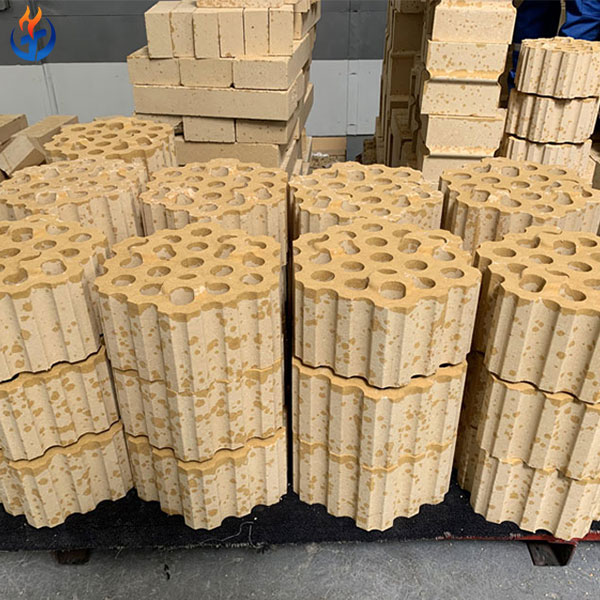
- Regenerator checkerwork (checker bricks)
- Transitional flue zones
- Complex geometrical structures
- Multi-stress thermal zones
Composite coke oven refractory bricks are widely adopted in modern coke oven designs to extend service life and reduce maintenance frequency.
Zonal Application of Coke Oven Refractory Bricks
Different parts of a coke oven require different refractory solutions:
Carbonization Chamber
- Silica bricks
- Carbon-based refractories (localized areas)
Combustion Chamber
- Silica bricks
- High alumina bricks (reinforcement zones)
Regenerator Chamber
- Semi-silica bricks
- Checker bricks (composite structures)
Flue and Gas Channels
- Fireclay bricks
- Silicon carbide bricks
Doors and Auxiliary Components
- Fireclay bricks
- High alumina bricks
This zonal engineering approach ensures optimal performance of coke oven refractory bricks across the entire system.
Selection Criteria for Coke Oven Refractory Bricks
Selecting suitable refractory materials requires detailed engineering analysis:
1. Temperature Profile
- Maximum operating temperature
- Thermal gradient distribution
2. Chemical Environment
- Acidic or basic gas exposure
- Alkali or sulfur compounds
3. Mechanical Stress
- Load-bearing requirements
- Structural vibration
4. Thermal Cycling Frequency
- Start-stop operation cycles
- Heating and cooling rates
5. Service Life Expectation
- Long-term durability requirements
- Maintenance cycle planning
A scientifically designed selection strategy for coke oven refractory bricks significantly improves furnace lifespan and reduces operational downtime.
Conclusion
Coke ovens rely on a carefully engineered combination of refractory materials to withstand extreme thermal, chemical, and mechanical conditions. The selection of coke oven refractory bricks is not a one-size-fits-all decision but a zonal engineering process that integrates silica bricks, aluminosilicate bricks, basic refractories, carbon-based materials, and composite systems.
By optimizing material selection according to operational zones and stress conditions, coke oven operators can significantly enhance energy efficiency, operational stability, and service life, ultimately improving production efficiency and reducing maintenance costs.