
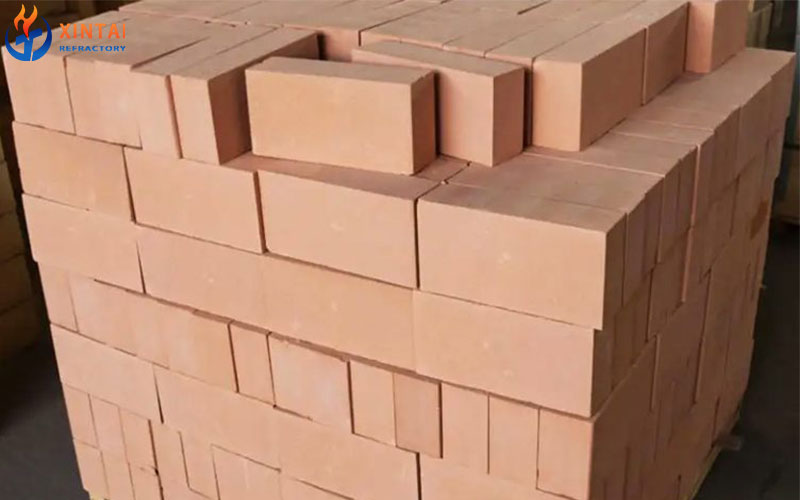
Cement kilns operate under some of the most aggressive thermal and chemical environments in heavy industry. Inside a rotary cement kiln, temperatures can exceed 1400°C, while the refractory lining is simultaneously exposed to abrasive raw meal, alkali vapors, clinker melt, and severe thermal cycling. Under these conditions, fire clay bricks (refractory clay bricks) remain one of the most widely used lining materials due to their balanced performance, cost efficiency, and adaptability across different kiln zones.
Selecting the appropriate fire clay brick for a cement kiln is not a simple material choice—it is an engineering decision that directly affects kiln stability, energy efficiency, maintenance cycles, and overall production cost. This article provides a systematic technical guide to selection criteria, performance requirements, application zones, and failure mechanisms.
Operating Conditions in Cement Kilns
Understanding kiln conditions is the foundation for proper refractory selection. Cement kiln environments are characterized by multiple simultaneous stress factors:
1. High Temperature Exposure
- Burning zone: 1350°C–1450°C
- Transition zones: 1000°C–1350°C
- Preheating zones: 300°C–900°C
Fire clay bricks must maintain structural integrity without excessive deformation or softening under load.
2. Chemical Corrosion
- Alkali attack (Na₂O, K₂O vapor penetration)
- Sulfur compounds
- Clinker liquid phase infiltration
- Dust deposition reactions
These chemical interactions gradually degrade the aluminosilicate matrix of clay bricks.
3. Mechanical Stress
- Rotation-induced abrasion
- Raw meal friction
- Clinker impact and rolling
- Thermal expansion stress
4. Thermal Shock Cycles
Frequent start-stop operations or temperature fluctuations lead to:
- Crack propagation
- Spalling
- Structural loosening
Key Performance Requirements for Fire Clay Bricks
Selecting suitable fire clay bricks requires evaluation of several technical indicators:
1. Refractoriness
Fire clay bricks typically have a refractoriness of 1580°C–1750°C, depending on alumina content. For cement kilns, higher-grade fire clay bricks are preferred in hotter zones.
2. Al₂O₃ Content
- Low-grade: 30%–35%
- Medium-grade: 35%–40%
- High-grade: 40%–45%
Higher alumina content improves:
- High-temperature stability
- Slag resistance
- Load-bearing capacity
3. Apparent Porosity
- Standard clay brick: 18%–26%
- Dense clay brick: 12%–18%
Lower porosity results in:
- Better resistance to alkali penetration
- Higher mechanical strength
- Improved lifespan in kiln environments
4. Cold Crushing Strength (CCS)
Typical values:
- 20 MPa – 60 MPa depending on grade
Higher CCS is required in kiln sections with strong mechanical load and abrasion.
5. Thermal Shock Resistance
A critical parameter for rotary kiln operation. Good fire clay bricks must withstand repeated heating and cooling cycles without cracking.
Kiln Zone-Based Selection Strategy
Different sections of the cement kiln require different refractory performance characteristics.
1. Preheating Zone
Operating Conditions:
- Temperature: 300°C–900°C
- Low liquid phase formation
- High dust flow
Recommended Bricks:
- Standard fire clay bricks
- Medium-density aluminosilicate bricks
Selection Focus:
- Cost efficiency
- Moderate abrasion resistance
- Thermal stability
In this zone, chemical attack is relatively mild, so economical clay bricks are commonly used.
2. Calcining Zone
Operating Conditions:
- Temperature: 900°C–1200°C
- Increasing alkali vapor concentration
- Moderate clinker formation
Recommended Bricks:
- Medium-alumina fire clay bricks
- Dense structured clay bricks
Selection Focus:
- Alkali resistance
- Abrasion resistance
- Improved structural density
This zone begins to show significant chemical corrosion, requiring improved brick quality.
3. Transition Zone
Operating Conditions:
- Temperature: 1200°C–1350°C
- Strong chemical reactions
- Formation of initial clinker melt
Recommended Bricks:
- High-alumina fire clay bricks
- Dense, low-porosity aluminosilicate bricks
Selection Focus:
- High refractoriness under load
- Resistance to clinker adhesion
- Enhanced thermal shock stability
This zone is one of the most demanding for fire clay brick performance.
4. Burning Zone (Critical Area)
Operating Conditions:
- Temperature: 1350°C–1450°C+
- Molten clinker exposure
- Severe chemical and mechanical attack
Recommended Bricks:
- High-alumina refractory bricks (or specialized alternatives)
- Dense, high-strength clay-based refractories (limited use)
Selection Focus:
- Maximum thermal stability
- Resistance to liquid phase penetration
- High load softening temperature
Fire clay bricks alone are often insufficient in this zone and may require combination with more advanced refractories.
Material Selection Criteria
When choosing fire clay bricks for cement kilns, engineers should evaluate the following dimensions:
1. Chemical Composition Compatibility
The brick must resist:
- Alkali vapor infiltration
- Sulfur-induced reactions
- Clinker melt penetration
Aluminosilicate balance plays a key role in resistance behavior.
2. Bulk Density and Porosity Balance
- High density → improved corrosion resistance
- Moderate porosity → better thermal shock tolerance
An optimized balance is essential rather than extreme values.
3. Thermal Conductivity
Lower thermal conductivity helps:
- Reduce heat loss
- Improve kiln energy efficiency
- Stabilize inner lining temperature gradients
4. Mechanical Load Resistance
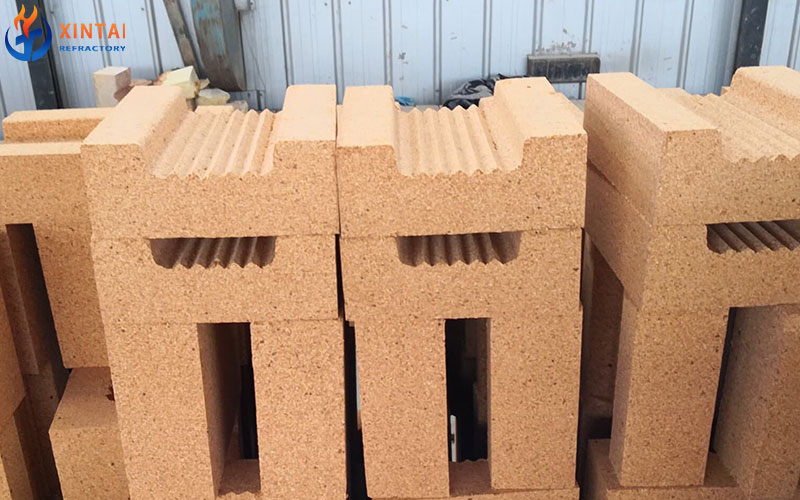
Rotary kilns impose continuous compressive and shear forces. Bricks must resist:
- Deformation under load
- Edge wear
- Structural collapse
5. Service Life Expectation
Depending on zone:
- Preheating zone: 12–24 months
- Calcining zone: 8–18 months
- Transition zone: 6–12 months
Common Failure Mechanisms
Understanding failure patterns helps optimize selection and maintenance strategies.
1. Alkali Attack Degradation
Alkali vapors penetrate brick pores, forming low-melting compounds that weaken structure.
2. Thermal Spalling
Caused by rapid temperature changes, leading to surface layer detachment.
3. Clinker Adhesion and Pull-Out
Molten clinker sticks to brick surfaces and pulls away material during rotation.
4. Mechanical Abrasion
Continuous friction from raw materials causes surface wear and thinning.
5. Structural Cracking
Results from combined thermal and mechanical stress accumulation.
Installation Considerations
Even high-quality fire clay bricks can fail if installation is improper.
1. Masonry Joint Control
- Uniform joint thickness
- Proper refractory mortar selection
- Avoid excessive gaps
2. Expansion Allowance
Thermal expansion gaps must be properly designed to prevent:
- Buckling
- Brick extrusion
- Shell stress transfer
3. Kiln Rotation Alignment
Misalignment increases uneven wear and localized failure zones.
4. Curing and Drying
Proper drying before full thermal load prevents steam pressure damage.
Maintenance and Optimization Strategies
To extend service life of fire clay brick linings:
1. Regular Inspection
- Hot spot detection
- Shell temperature monitoring
- Crack mapping
2. Preventive Replacement
Replace partially damaged zones before failure spreads.
3. Coating and Protection Layers
In some cases, protective coatings reduce chemical attack intensity.
4. Operational Stability
Stable kiln operation reduces:
- Thermal cycling damage
- Mechanical shock loads
Conclusion
The selection of fire clay bricks for cement kilns is a multi-variable engineering decision that must account for temperature distribution, chemical corrosion intensity, mechanical wear, and thermal shock conditions across different kiln zones. While fire clay bricks remain a cost-effective and versatile refractory solution, their performance depends heavily on correct grade selection and application-specific matching.
In preheating and calcining zones, medium and high-density clay bricks provide reliable performance. However, as operating conditions intensify toward the transition and burning zones, higher-grade aluminosilicate materials or hybrid refractory systems become necessary to ensure operational stability.
A scientifically optimized selection strategy not only extends kiln lining life but also improves thermal efficiency, reduces downtime, and lowers total production cost—making refractory engineering a critical component of modern cement manufacturing systems.