
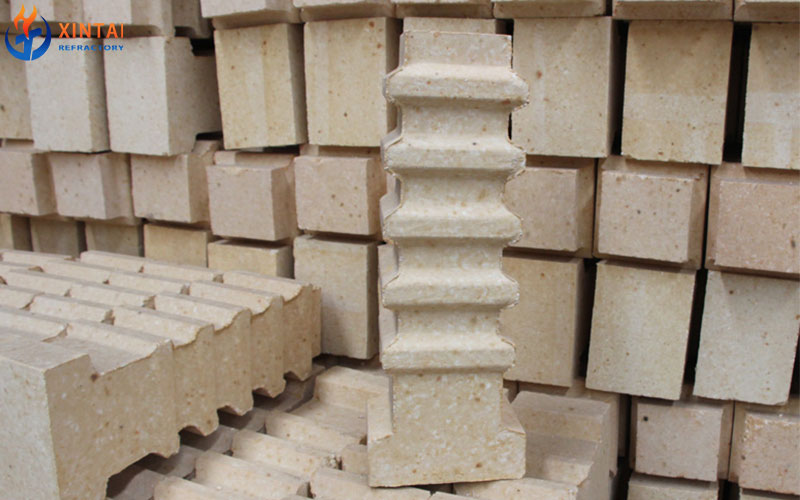
High-alumina bricks are a critical component in modern refractory engineering, widely used across various thermal processing industries due to their excellent heat resistance, mechanical strength, and chemical stability. These bricks are primarily employed in high-temperature furnaces, kilns, and other thermal equipment where ordinary firebricks cannot withstand the extreme conditions. High-alumina bricks are broadly categorized based on their chemical composition, physical properties, and performance characteristics. The main types include ordinary high-alumina bricks, high-load soft high-alumina bricks, low-creep high-alumina bricks, phosphate-bonded high-alumina bricks, and slightly expanding high-alumina bricks. Understanding the differences among these types is essential for manufacturers, engineers, and buyers seeking to optimize furnace longevity and efficiency.
1. Ordinary High-Alumina Bricks
Ordinary high-alumina bricks are among the most commonly used refractory bricks due to their excellent balance of performance, cost, and versatility. Their primary mineral components are andalusite, corundum, and glass phase. As the aluminum oxide (Al₂O₃) content increases, the proportion of mullite and corundum rises, while the glass phase decreases. This compositional adjustment directly enhances the brick’s refractoriness and high-temperature performance.
These bricks offer superior performance compared to traditional clay bricks, making them ideal for various thermal applications. They are extensively used in hot-end linings of furnaces, kilns, and other high-temperature industrial equipment. Compared to clay bricks, ordinary high-alumina bricks can significantly increase furnace life, reduce maintenance requirements, and improve thermal efficiency. Their durability and heat resistance make them suitable for steel-making, cement, non-ferrous metals, glass, and ceramic industries.
Key features of ordinary high-alumina bricks include:
- Excellent refractoriness and thermal stability.
- Strong resistance to chemical corrosion by slag and molten metal.
- High mechanical strength, reducing wear and damage during furnace operation.
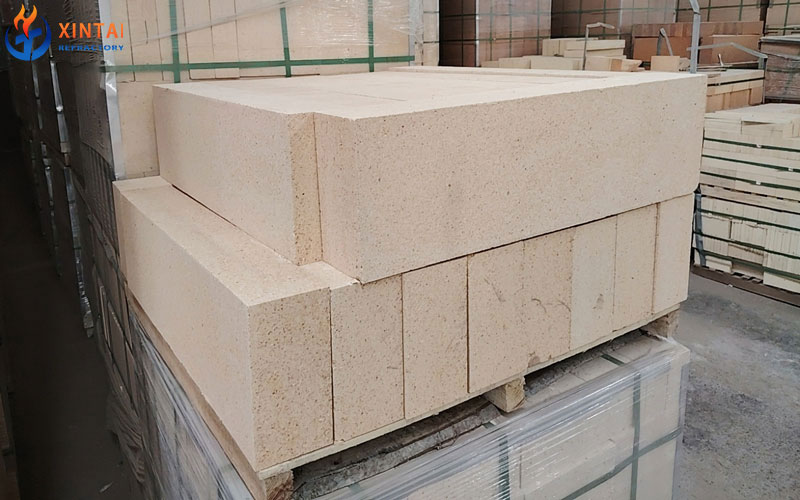
2. High-Load Soft High-Alumina Bricks
High-load soft high-alumina bricks are an advanced version of ordinary high-alumina bricks, designed to withstand higher mechanical stress at elevated temperatures. The primary difference lies in the composition of the matrix and the binder. In addition to adding andalusite or other high-purity alumina raw materials, high-alumina materials such as corundum powder or high-alumina corundum powder are introduced into the matrix. The binder is carefully selected, often using high-quality ball clay or composite binders tailored for specific applications. In some cases, a mullite-based binder is used to further enhance performance.
These modifications allow the bricks to achieve a higher load softening temperature, typically 50–70°C above that of ordinary high-alumina bricks. This improvement is crucial in high-temperature zones where furnace load and thermal stress are significant. High-load soft high-alumina bricks are commonly used in steel ladles, hot-blast stoves, and critical furnace lining areas where stability under high load is essential.
Advantages include:
- Higher softening temperature for improved load-bearing capability.
- Enhanced thermal and mechanical performance under extreme conditions.
- Long service life in high-temperature industrial applications.
3. Low-Creep High-Alumina Bricks
Creep resistance is a critical property for refractories used in high-temperature furnaces, especially in zones where sustained stress can cause deformation over time. Low-creep high-alumina bricks are engineered to address this challenge. They are produced using a method known as “unbalanced reaction,” where the matrix is modified to approach or achieve a fully mullite-based composition. Additives such as andalusite, activated alumina, and other high-alumina minerals are incorporated into the matrix to increase the mullite content and reduce the proportion of the glass phase.
The high mullite content improves mechanical and thermal properties, reducing deformation under prolonged high-temperature exposure. Proper control of the Al₂O₃/SiO₂ ratio is key to ensuring complete mullitization of the matrix. Low-creep high-alumina bricks are widely applied in hot-blast stoves, blast furnaces, and other high-temperature industrial kilns where both thermal and mechanical stresses are significant.
Key benefits of low-creep high-alumina bricks:
- Minimized deformation under high temperatures and loads.
- Enhanced durability in critical furnace zones.
- Improved resistance to thermal cycling and mechanical stress.
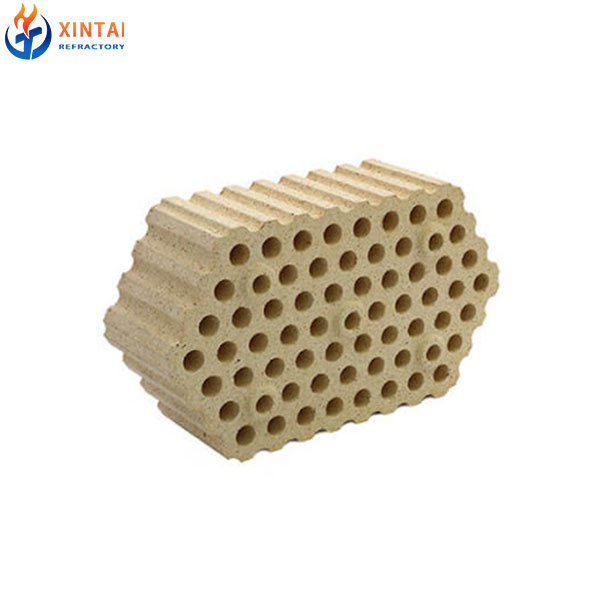
4. Phosphate-Bonded High-Alumina Bricks
Phosphate-bonded high-alumina bricks are chemically bonded refractories that do not require firing during production. These bricks are manufactured using dense, high-grade alumina bauxite clinker as the primary raw material, with phosphate or aluminum phosphate solutions serving as the binder. After semi-dry pressing, the bricks are heat-treated at 400–600°C to stabilize the structure.
One key advantage of phosphate-bonded bricks is their excellent resistance to spalling. However, due to the chemical nature of the binder, these bricks typically exhibit lower load softening temperatures and limited slag resistance compared to fired high-alumina bricks. To overcome these limitations, a small amount of fused corundum or mullite is often incorporated to reinforce the matrix.
Phosphate-bonded high-alumina bricks are particularly suitable for areas subject to chemical erosion or mechanical impact, such as cement rotary kilns, electric furnace roofs, and other critical furnace components.
Benefits include:
- Superior anti-spalling performance.
- High dimensional stability during use.
- Good thermal conductivity and heat shock resistance in specific applications.
5. Slightly Expanding High-Alumina Bricks
Slightly expanding high-alumina bricks are designed to improve furnace lining density and reduce the penetration of molten slag. These bricks are produced using high-alumina bauxite and andalusite, following standard high-alumina brick production processes. The key to achieving slight expansion is selecting the appropriate andalusite mineral type and particle size, controlling the firing temperature, and ensuring partial mullitization of the andalusite. The residual andalusite continues to transform into mullite during service, producing a small volumetric expansion effect.
This expansion fills gaps between bricks, enhancing the overall density of the lining and increasing resistance to slag infiltration. Slightly expanding high-alumina bricks are ideal for steel-making furnaces, cement kilns, and other applications where the penetration of molten materials could compromise the lining.
Advantages include:
- Controlled thermal expansion for tighter brick joints.
- Improved resistance to molten slag and chemical corrosion.
- Increased furnace lifespan due to enhanced lining integrity.
Applications of High-Alumina Bricks
High-alumina bricks are widely used in industries that require high-temperature processing. Their applications include:
- Steel Industry: Blast furnaces, electric arc furnace linings, ladles, and tundishes.
- Cement Industry: Rotary kiln linings, preheater cyclones, and clinker coolers.
- Non-Ferrous Metals: Furnace linings, ladles, and crucibles for aluminum, copper, and nickel processing.
- Glass and Ceramics: Glass melting furnaces, ceramic kilns, and refractory installations for thermal processing.
- Power Generation: Boilers, incinerators, and fluidized bed combustion systems.
The selection of the right type of high-alumina brick depends on the operating temperature, mechanical load, chemical environment, and desired service life. For example, low-creep bricks are essential in high-temperature zones where deformation is a concern, while phosphate-bonded bricks excel in areas requiring spalling resistance and dimensional stability.
Conclusion
High-alumina bricks represent a versatile and highly reliable material for modern high-temperature industrial applications. Understanding the different types—ordinary high-alumina, high-load soft high-alumina, low-creep, phosphate-bonded, and slightly expanding bricks—allows engineers and manufacturers to optimize furnace performance, minimize maintenance costs, and extend equipment lifespan. Each type offers unique advantages, from improved load-bearing capacity to enhanced resistance against chemical corrosion and thermal shock.
Selecting the appropriate high-alumina brick for a specific application requires careful consideration of operating conditions, including temperature, mechanical stress, and chemical environment. With proper use, these bricks provide excellent performance, contributing to energy efficiency, production consistency, and overall operational safety in high-temperature industries worldwide.