
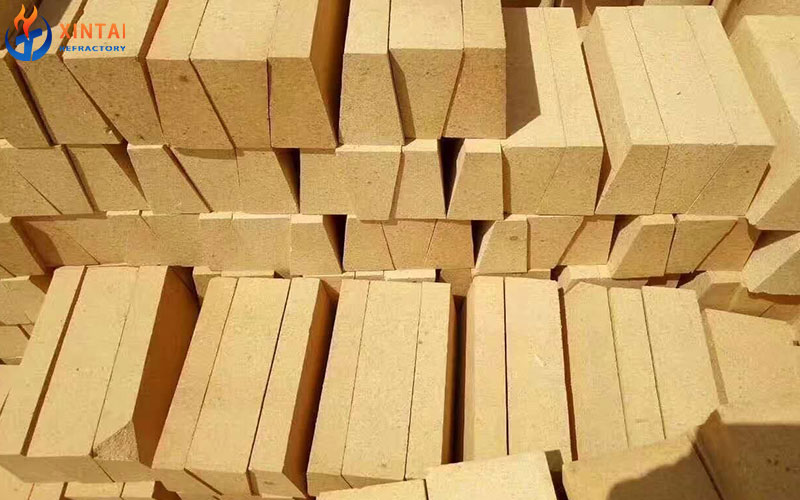
Refractory bricks are essential materials used in high-temperature industrial applications. Among the various types available, fire clay bricks and high alumina bricks are two of the most commonly used products in industries such as steel, cement, glass, ceramics, power generation, and petrochemicals. Although both belong to the category of aluminosilicate refractories, they differ significantly in chemical composition, physical properties, thermal performance, and application areas.
Understanding the differences between these two refractory materials helps engineers and plant operators select the most suitable lining material for their furnaces and kilns. This article provides a comprehensive comparison between fire clay bricks and high alumina bricks.
What Are Fire Clay Bricks?
Fire clay bricks are traditional refractory products manufactured from refractory clay, chamotte, and other aluminosilicate raw materials. They generally contain 30–48% Al₂O₃, with silica (SiO₂) as the main remaining component.
After molding and firing at high temperatures, these bricks exhibit good refractoriness, thermal stability, and resistance to moderate chemical attack.
Main Characteristics of Fire Clay Bricks
- Alumina content: 30–48%
- Refractoriness: 1580–1750°C
- Good thermal shock resistance
- Moderate mechanical strength
- Excellent dimensional stability
- Cost-effective compared with high alumina bricks
- Suitable for medium-temperature applications
Fire clay bricks are widely regarded as one of the most economical refractory materials available.
What Are High Alumina Bricks?
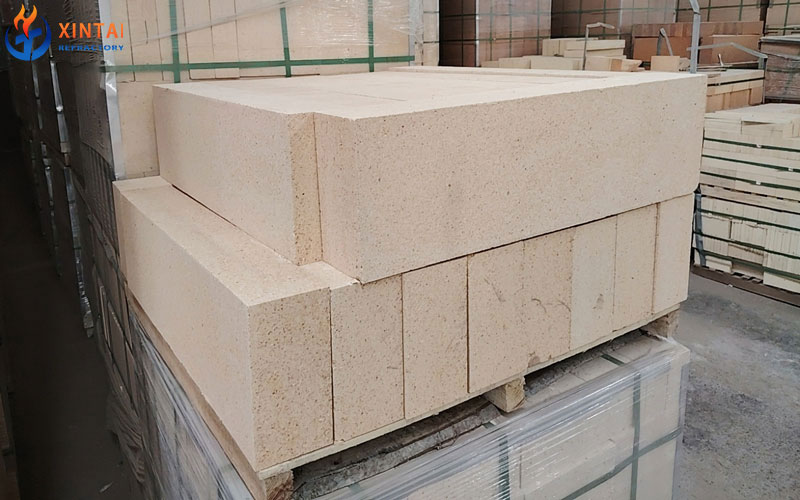
High alumina bricks are refractory products with an Al₂O₃ content exceeding 48%. They are manufactured from high-grade bauxite, fused corundum, mullite, or synthetic alumina materials.
Compared with fire clay bricks, high alumina bricks possess superior refractoriness, higher mechanical strength, and better resistance to slag corrosion and high-temperature deformation.
Main Characteristics of High Alumina Bricks
- Alumina content above 48%
- Refractoriness above 1770°C
- Excellent load-bearing capability
- High compressive strength
- Outstanding slag and abrasion resistance
- Low creep rate at elevated temperatures
- Long service life
Because of these advantages, high alumina bricks are often used in severe operating environments.
Chemical Composition Differences
The primary distinction between fire clay bricks and high alumina bricks lies in their alumina content.
| Property | Fire Clay Bricks | High Alumina Bricks |
|---|---|---|
| Al₂O₃ Content | 30–48% | Above 48% |
| SiO₂ Content | Higher | Lower |
| Main Mineral Phase | Mullite and Glass Phase | Mullite and Corundum |
| Refractoriness | 1580–1750°C | >1770°C |
| Slag Resistance | Moderate | Excellent |
| High-Temperature Strength | Medium | High |
Increasing alumina content generally improves the refractory performance and corrosion resistance of the brick.
Difference in Refractoriness
Refractoriness refers to the ability of a material to withstand high temperatures without melting.
Fire Clay Bricks
Typical refractoriness ranges from 1580°C to 1750°C. These bricks are suitable for applications involving medium operating temperatures.
High Alumina Bricks
Their refractoriness usually exceeds 1770°C and may reach 1850°C or higher depending on alumina content.
Consequently, high alumina bricks are better suited for extremely high-temperature industrial furnaces.
Difference in Mechanical Strength
Mechanical strength determines the ability of refractory materials to withstand loads and impact.
Fire Clay Bricks
Fire clay bricks possess adequate cold crushing strength for general industrial applications. However, their strength decreases significantly under elevated temperatures.
High Alumina Bricks
High alumina bricks maintain high mechanical strength even at elevated temperatures. Their dense structure and higher mullite content provide excellent load-bearing capability.
For heavy-duty furnaces and severe working conditions, high alumina bricks are generally preferred.
Difference in Slag Resistance
Industrial furnaces are exposed to molten slags and chemical attack.
Fire Clay Bricks
Because of their higher silica content, fire clay bricks exhibit only moderate resistance to acidic and neutral slags. Basic slags can easily erode them.
High Alumina Bricks
The increased alumina content significantly enhances slag resistance. High alumina bricks perform well against acidic and mildly basic slags, extending furnace service life.
This characteristic makes them widely used in steelmaking and cement production.
Difference in Thermal Shock Resistance
Thermal shock resistance refers to the ability of refractory materials to withstand rapid temperature fluctuations.
Fire Clay Bricks
Fire clay bricks have relatively good thermal shock resistance due to their porous structure and lower elastic modulus.
They can tolerate repeated heating and cooling cycles without severe cracking.
High Alumina Bricks
High alumina bricks generally have slightly lower thermal shock resistance, especially ultra-high alumina grades with dense structures. However, modern manufacturing technologies have greatly improved this property.
In applications involving frequent temperature changes, fire clay bricks sometimes offer advantages.
Difference in Refractoriness Under Load
Refractoriness under load (RUL) measures the ability of a brick to maintain its shape while subjected to high temperatures and mechanical stress.
Fire Clay Bricks
RUL values are generally between 1250°C and 1400°C.
High Alumina Bricks
Depending on alumina content, RUL values may exceed 1450°C or even 1600°C.
This makes high alumina bricks particularly suitable for load-bearing sections of industrial furnaces.
Difference in Wear Resistance
Mechanical abrasion is common in rotary kilns, blast furnaces, and material transfer systems.
Fire Clay Bricks
Wear resistance is moderate and adequate for ordinary furnace linings.
High Alumina Bricks
High alumina bricks exhibit excellent abrasion resistance due to their dense microstructure and high hardness.
They are therefore preferred for areas exposed to severe mechanical wear.
Difference in Service Life
The service life of refractory linings directly affects maintenance costs and production efficiency.
Fire Clay Bricks
Under normal operating conditions, fire clay bricks provide satisfactory service life at relatively low cost.
High Alumina Bricks
Thanks to superior corrosion resistance, strength, and high-temperature performance, high alumina bricks generally last much longer.
Although the initial investment is higher, they often reduce maintenance frequency and total operating costs.
How to Choose Between Fire Clay Bricks and High Alumina Bricks
Selecting the right refractory material depends on several factors:
Operating Temperature
- Below 1400°C: Fire clay bricks are usually sufficient.
- Above 1400°C: High alumina bricks are generally recommended.
Slag Composition
- Mild chemical attack: Fire clay bricks.
- Severe slag corrosion: High alumina bricks.
Mechanical Load
- Light-duty applications: Fire clay bricks.
- Heavy-duty structures: High alumina bricks.
Abrasion Conditions
- Low wear areas: Fire clay bricks.
- High wear zones: High alumina bricks.
Budget Considerations
- Lower initial cost: Fire clay bricks.
- Longer service life and reduced maintenance: High alumina bricks.
Conclusion
Although fire clay bricks and high alumina bricks are both widely used refractory materials, they differ considerably in composition, refractoriness, strength, corrosion resistance, and application range.
Fire clay bricks are economical and suitable for medium-temperature environments where thermal shock resistance is important. High alumina bricks, on the other hand, offer superior high-temperature performance, slag resistance, and mechanical strength, making them the preferred choice for demanding industrial applications.
When selecting refractory materials, factors such as operating temperature, furnace atmosphere, mechanical load, slag composition, and maintenance requirements should all be carefully evaluated. Choosing the right brick type can significantly improve furnace efficiency, extend lining service life, and reduce overall operating costs.