
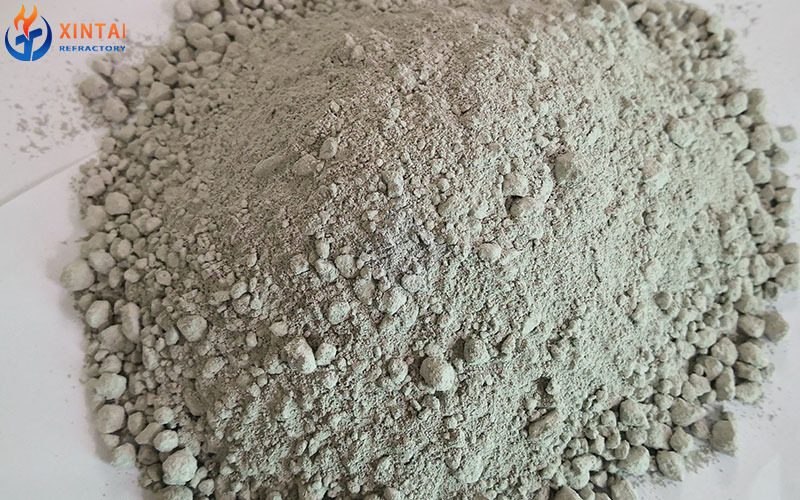
Refractory castable and wear-resistant plastic refractory are both widely used monolithic refractory materials for industrial furnaces, kilns, boilers, and other high-temperature equipment. Although both materials are designed to provide thermal protection and extend the service life of refractory linings, they differ significantly in composition, physical form, installation method, curing requirements, and application characteristics.
Understanding the differences between wear-resistant plastic refractory and refractory castable is important when selecting refractory materials for a specific furnace structure or operating environment. The right material should be selected according to temperature, abrasion, mechanical impact, installation conditions, and expected service life.
1. Differences in Composition
One of the main differences between wear-resistant plastic refractory and refractory castable is their formulation.
Wear-resistant plastic refractory is generally made from refractory aggregates, fine powders, plastic clay, chemical additives, and other modifying agents. These materials are mixed and processed to form a dense, plastic refractory mass. After proper mixing and storage, the material maintains good plasticity, allowing workers to shape and compact it during installation.
The plastic consistency is an important characteristic because the material is not normally prepared as a free-flowing mixture. Instead, it is supplied in a relatively compact form and can be placed and shaped according to the furnace structure.
Refractory castable, in contrast, is generally composed of refractory aggregates, refractory powders, bonding agents, and selected additives. Before installation, the dry material is mixed with an appropriate amount of water or another specified liquid according to the product formulation. It becomes a castable mixture that can be placed into molds or directly applied to the required area.
Therefore, although both materials contain refractory aggregates and fine powders, their bonding systems and physical properties are designed for different construction methods.
2. Differences in Physical Form
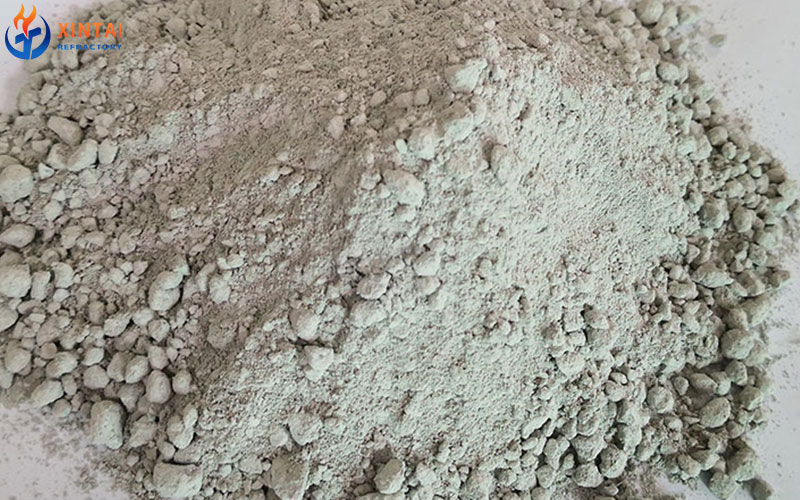
Wear-resistant plastic refractory has a plastic and cohesive consistency. This characteristic allows it to be shaped, pressed, and compacted during installation. It is particularly suitable for applications where the refractory lining needs to be tightly integrated with the furnace structure.
Its plasticity also makes it possible to adapt the material to irregular surfaces and complex areas. During construction, the material can be installed in layers and compacted to reduce voids and improve lining density.
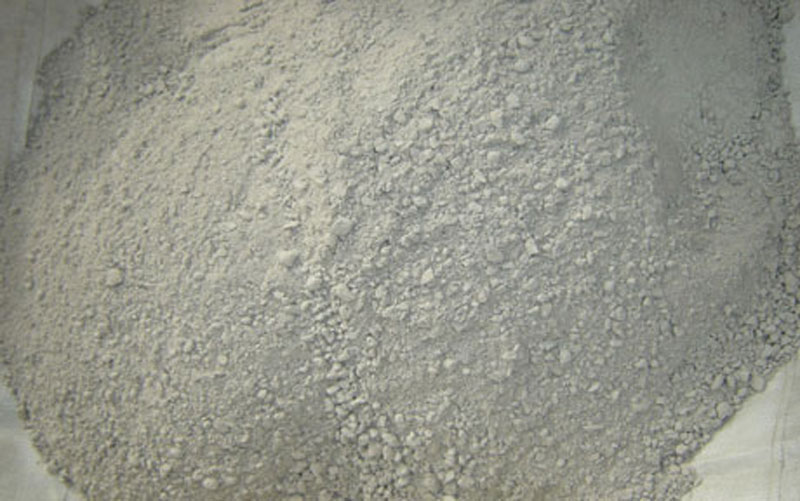
Refractory castable is normally supplied as a dry granular or powder-based mixture. After adding the specified amount of water and mixing, it becomes a workable refractory concrete-like material.
Depending on its formulation, a castable may be installed by pouring, casting, vibration casting, or other appropriate methods. After placement, it develops strength through the specified curing and drying process.
3. Differences in Construction Methods
Construction method is another important difference between the two materials.
Wear-resistant plastic refractory is commonly installed by ramming or vibration. The material is placed at the designated location and compacted to form a dense refractory lining. Proper ramming or vibration is essential because insufficient compaction can create pores, weak areas, or uneven density.
One advantage of plastic refractory construction is that it does not generally require the same conventional curing process as many water-added castables. After installation and according to the manufacturer’s technical requirements, the lining can proceed to controlled heating and drying.
Refractory castable is commonly installed through pouring, casting, or vibration. The prepared mixture is placed into the required area and compacted to eliminate excessive air pockets. Molds may be used when a specific shape or structural dimension is required.
Because castables contain a bonding system and are normally mixed with water, curing, drying, and initial heating are important parts of the installation process. The heating schedule should be controlled carefully to avoid excessive internal vapor pressure and cracking.
4. Differences in Curing and Drying Requirements
The curing and drying process is particularly important when comparing plastic refractory with castable.
Wear-resistant plastic refractory can generally avoid the long curing period associated with conventional water-containing castables. Under suitable construction conditions, this can shorten the time between installation and furnace operation. However, the actual heating procedure should always follow the material supplier’s technical instructions.
Refractory castables usually require a controlled curing and drying process after construction. The castable needs sufficient time to develop its initial strength before the furnace is heated. During the subsequent drying and heat-up stage, moisture must be removed gradually.
If the furnace is heated too quickly, water and moisture inside the refractory lining can turn into steam rapidly. Excessive vapor pressure may cause cracking, spalling, or even explosive damage to the lining. Therefore, a carefully designed drying and heat-up schedule is essential.
5. Differences in Application Conditions
Wear-resistant plastic refractory is particularly suitable for areas exposed to mechanical impact, abrasion, and high-temperature operation. Its dense structure and plastic installation characteristics make it useful for furnace linings and other zones where wear resistance is important.
Typical applications may include areas of industrial furnaces, heating equipment, boilers, and other thermal processing systems where the refractory lining is exposed to material movement or mechanical wear.
Refractory castables have a wider range of formulations and can be designed for different temperature, chemical, mechanical, and abrasion conditions. They are commonly used for furnace linings, burner blocks, boiler components, kiln structures, and other monolithic refractory applications.
Different castable formulations can provide different levels of strength, abrasion resistance, thermal shock resistance, chemical resistance, and temperature performance.
6. Differences in Construction Season and Site Conditions
Construction conditions should also be considered when choosing between these materials.
Plastic refractory can be advantageous when a project requires relatively fast installation and controlled heating after construction. Since it does not rely on the same curing mechanism as conventional castables, it can reduce some of the challenges associated with low-temperature construction.
Conventional refractory castables require greater attention to environmental conditions, especially during cold weather. Low temperatures can slow the curing process and may create a risk of freezing if the material contains water and is not adequately protected.
For outdoor projects, winter construction, or installations with strict schedules, engineers should evaluate the material’s installation temperature requirements before construction begins.
7. How to Choose Between Plastic Refractory and Castable
There is no universal answer as to which material should be used. The selection should be based on the actual operating and construction conditions.
Wear-resistant plastic refractory may be considered when high abrasion resistance, dense compaction, plastic installation, and relatively rapid commissioning are important requirements.
Refractory castable may be more appropriate when the project requires a pourable material, complex structural shapes, large-area monolithic construction, or a specific combination of thermal and mechanical properties.
Other factors should also be evaluated, including operating temperature, abrasion intensity, chemical attack, thermal cycling, mechanical impact, lining thickness, construction equipment, available curing time, and maintenance requirements.
Conclusion
Wear-resistant plastic refractory and refractory castable are both important monolithic refractory materials, but they are not interchangeable in every application. Their differences can be seen in composition, physical form, installation method, curing requirements, drying process, and suitable operating conditions.
Plastic refractory is characterized by its good plasticity and suitability for ramming or vibration installation, while refractory castable is generally mixed into a workable mass and installed by casting, pouring, or vibration. Castables usually require more careful curing and drying before the furnace reaches operating temperature.
When selecting a refractory material, the focus should not be limited to its temperature rating. The actual furnace structure, abrasion conditions, construction method, drying requirements, operating environment, and expected service life should all be considered. A suitable material selection combined with correct installation can help improve lining stability, reduce premature damage, and support reliable long-term furnace operation.