
A shuttle kiln is a widely used intermittent firing furnace in industries such as ceramics, advanced materials, electronic components, and special product manufacturing. When a shuttle kiln is used under incineration conditions, the refractory lining must withstand not only high temperatures but also complex working environments, including thermal shock, chemical corrosion, gas erosion, and repeated heating and cooling cycles. Choosing suitable shuttle kiln refractory brick materials is essential for improving furnace efficiency, extending service life, and reducing maintenance costs.
Different areas of a shuttle kiln incinerator have different operating conditions. The high-temperature combustion zone, kiln roof, burner area, flue, kiln car, and insulation layer require refractory materials with different properties. Common refractory bricks used in shuttle kiln incinerators include clay bricks, high alumina bricks, mullite bricks, corundum bricks, silicon bricks, magnesia bricks, silicon carbide bricks, and lightweight insulating bricks.
This article introduces the main types of shuttle kiln refractory brick, their characteristics, application areas, and selection considerations to help users choose suitable refractory solutions according to different furnace structures and operating requirements.
Main Requirements for Shuttle Kiln Refractory Brick
The refractory lining of a shuttle kiln incinerator needs to meet several important performance requirements:
High Temperature Resistance
During operation, the combustion area of a shuttle kiln may experience temperatures above 1400℃ or even higher depending on the process. Refractory bricks must maintain structural stability under long-term high-temperature conditions without excessive deformation or softening.
Excellent Thermal Shock Resistance
Unlike continuous furnaces, shuttle kilns often operate through repeated heating and cooling cycles. The refractory lining experiences frequent temperature changes, which can cause cracking if the material has poor thermal shock resistance.
Therefore, materials with good thermal stability, such as mullite bricks and silicon carbide bricks, are often selected for areas exposed to frequent temperature fluctuations.
Corrosion Resistance
When a shuttle kiln is used for incineration applications, combustion gases may contain acidic components, alkaline substances, sulfur compounds, chlorine compounds, or molten ash. Refractory bricks need sufficient chemical resistance to prevent erosion and premature failure.
Low Thermal Conductivity for Energy Saving
The insulation layer of a shuttle kiln plays an important role in reducing heat loss. Lightweight refractory bricks with low thermal conductivity can help maintain furnace temperature while reducing energy consumption.

Common Types of Shuttle Kiln Refractory Brick
1. Clay Brick
Clay bricks are traditional refractory materials widely used in low and medium temperature areas.
Typical properties:
- Al₂O₃ content: 30%-48%
- Service temperature: approximately 1300-1400℃
- Refractoriness: 1580-1770℃
Clay bricks have good thermal shock resistance, stable performance, and relatively low cost. They are suitable for areas where extreme temperature and corrosion resistance are not required.
Applications:
- Low-temperature zones
- Flue channels
- Outer layers of kiln walls
- Non-critical insulation areas
- Shuttle kiln side walls
However, clay bricks are not recommended for strong corrosion zones or direct flame areas because their alumina content and corrosion resistance are limited compared with high alumina or corundum materials.
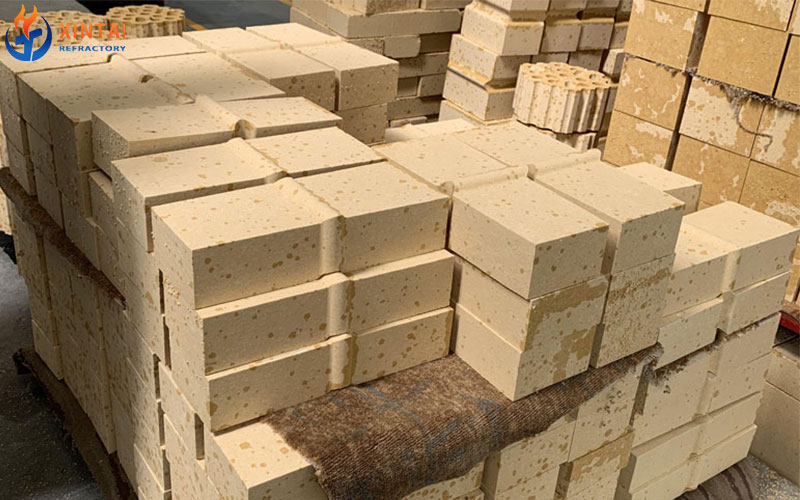
2. High Alumina Brick
High alumina brick is one of the most commonly used materials in high-temperature shuttle kilns.
According to alumina content, high alumina bricks are usually divided into:
- Grade I: Al₂O₃ ≥75%
- Grade II: Al₂O₃ 60%-75%
- Grade III: Al₂O₃ 48%-60%
High alumina bricks provide better mechanical strength, higher refractoriness, and stronger chemical resistance than ordinary clay bricks.
Advantages:
- High load softening temperature
- Good resistance to acidic gas corrosion
- Excellent high-temperature stability
- Good resistance to flame erosion
Applications:
- Combustion zones
- High-temperature firing areas
- Kiln roofs
- Burner surroundings
- Areas exposed to direct flame
For shuttle kiln incinerators with acidic exhaust gases, high alumina bricks are often preferred because they provide reliable corrosion resistance and long-term performance.
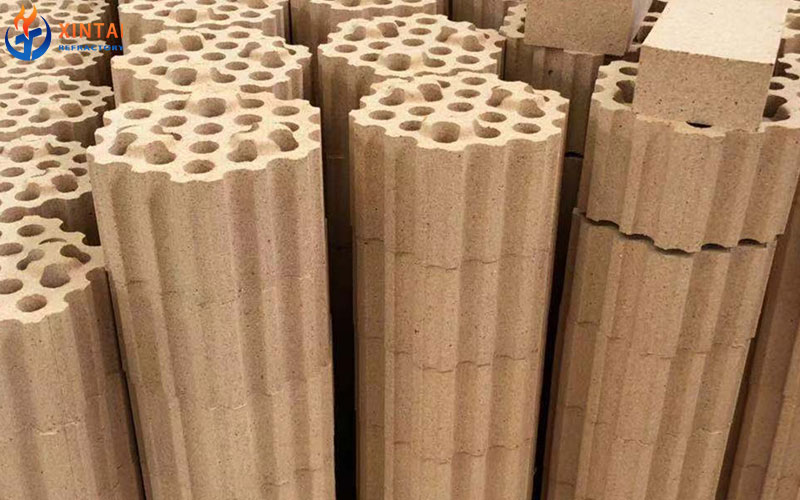
3. Mullite Brick and Lightweight Mullite Brick
Mullite bricks are advanced refractory materials with mullite as the main crystal phase.
Main characteristics:
- Alumina content: about 65%-75%
- Long-term service temperature: 1500-1650℃
- Low thermal expansion
- Good thermal shock resistance
- Strong creep resistance
Lightweight mullite bricks have lower density and lower thermal conductivity, making them suitable for energy-saving furnace designs.
Typical thermal conductivity:
- Approximately 0.4-0.8 W/(m·K)
Applications:
- Lightweight composite furnace lining
- Kiln car surface areas
- Transition zones
- Insulation structures
For intermittent shuttle kilns, mullite lightweight bricks are often considered an ideal choice because they balance temperature resistance, insulation performance, and thermal cycling durability.
4. Corundum Brick
Corundum brick is a high-performance refractory material mainly composed of alumina.
Typical grades:
- Al₂O₃ ≥90%
- 95% high purity alumina brick
- 99% high purity alumina brick
Performance Features:
- Service temperature above 1700℃
- Extremely high hardness
- Excellent oxidation resistance
- Strong acid corrosion resistance
Applications:
- Ultra-high temperature combustion zones
- Burner blocks
- Melting areas
- Severe erosion locations
Although corundum bricks have excellent high-temperature performance, their thermal shock resistance is lower compared with some other refractory materials. In shuttle kilns with frequent start-stop operations, they usually require proper structural design or buffer layers.
5. Silicon Brick
Silicon bricks contain high amounts of silicon dioxide.
Typical properties:
- SiO₂ ≥93%
- Refractoriness: around 1730℃
- Service temperature: approximately 1600℃
Silicon bricks have good high-temperature creep resistance and maintain strength under stable high-temperature conditions.
Applications:
- Fixed high-temperature kiln chambers
- Ceramic firing shuttle kilns
- Stable thermal areas
However, silicon bricks have relatively large thermal expansion and are not suitable for areas with severe temperature fluctuations.
Refractory Bricks for Strong Corrosion Conditions
6. Magnesia Brick and Magnesia Chrome Brick
When shuttle kiln incinerators process alkaline waste or materials containing strong alkaline components, basic refractory bricks may be required.
Magnesia Brick Features:
- Service temperature above 1650℃
- Excellent resistance to alkaline slag
- Good high-temperature strength
Magnesia Chrome Brick Features:
- Improved thermal shock resistance
- Good slag resistance
- Suitable for harsh chemical environments
Applications:
- Alkaline waste incineration zones
- Slag contact areas
- High corrosion sections
When using basic refractory materials, direct contact between acidic bricks and alkaline bricks should be avoided because chemical reactions may reduce service life.
7. Silicon Carbide Brick
Silicon carbide brick and silicon nitride bonded silicon carbide brick are commonly used in areas requiring high wear resistance.
Main advantages:
- High thermal conductivity
- Excellent thermal shock resistance
- Strong wear resistance
- Good resistance to sulfur and chlorine corrosion
Service temperature:
- Approximately 1450-1600℃
Applications:
- Waste incinerator outlet areas
- Cooling sections
- High-speed gas flow zones
- Areas with severe mechanical erosion
Silicon carbide bricks are especially suitable where hot gases create strong impact and abrasion.
Lightweight Insulation Refractory Brick
8. Lightweight Clay Brick and Lightweight High Alumina Brick
Insulation bricks are designed mainly for reducing heat loss rather than carrying heavy loads.
Typical characteristics:
- Low bulk density: about 1.0-1.4 g/cm³
- Low thermal conductivity
- Lightweight structure
Applications:
- Back insulation layers
- Outer furnace walls
- Non-load-bearing structures
- Heat preservation layers
A common shuttle kiln lining structure is:
Working layer: High alumina brick or mullite brick
Middle insulation layer: Lightweight mullite or lightweight high alumina brick
Outer layer: Lightweight clay insulation brick
This composite structure can provide both high-temperature protection and energy efficiency.
How to Select Shuttle Kiln Refractory Brick by Application Area
Combustion Zone
The combustion area experiences the highest temperature and strongest flame impact.
Recommended materials:
- High alumina brick
- Corundum brick
For acidic combustion gases, high alumina and corundum materials provide better corrosion resistance. For alkaline slag environments, basic refractory materials may be considered.
Kiln Car and Moving Components
Kiln cars experience repeated heating and cooling cycles.
Recommended materials:
- Mullite lightweight brick
- High alumina wear-resistant brick
The priority is thermal shock resistance and weight reduction.
Flue and Heat Recovery Area
These areas usually have lower temperatures but require stable insulation performance.
Recommended materials:
- Clay brick
- Lightweight insulation brick
A composite structure can reduce heat loss and improve overall furnace efficiency.
Burner and Rapid Cooling Area
These areas experience flame impact, gas erosion, and temperature changes.
Recommended materials:
- Silicon carbide brick
- Corundum brick
- High-performance prefabricated refractory components
Important Considerations When Choosing Shuttle Kiln Refractory Brick
1. Consider Thermal Cycling Conditions
Because shuttle kilns frequently start and stop, thermal shock resistance should be prioritized. Materials with excellent high-temperature performance but poor thermal stability may not always be suitable.
2. Match Refractory Material with Gas Chemistry
Different atmospheres require different refractory solutions.
- Acidic gases: high alumina or corundum bricks
- Alkaline slag: magnesia-based materials
- Sulfur/chlorine environments: silicon carbide materials
3. Avoid Incorrect Combination of Materials
Acidic and alkaline refractory bricks should not be directly connected without proper isolation because chemical reactions may occur at the interface.
4. Use Lightweight Materials Correctly
Lightweight bricks should only be used for insulation purposes. They should not be installed in load-bearing areas such as structural arches, columns, or heavily stressed sections.
5. Combine Bricks with Refractory Castables
For areas with frequent damage, combining refractory bricks with prefabricated refractory castables can improve overall durability and simplify maintenance.
Conclusion
Selecting the right shuttle kiln refractory brick is essential for improving furnace durability, reducing energy consumption, and maintaining stable production performance. Different furnace zones require different refractory solutions. High alumina bricks and corundum bricks are suitable for high-temperature combustion areas, mullite bricks provide excellent thermal shock resistance for intermittent operation, silicon carbide bricks perform well in erosion environments, and lightweight refractory bricks improve insulation efficiency.
A scientific selection method should consider temperature, chemical corrosion, thermal cycling, mechanical wear, and structural requirements. By choosing suitable refractory materials for each area of the shuttle kiln incinerator, manufacturers can achieve longer furnace service life and more efficient operation.