
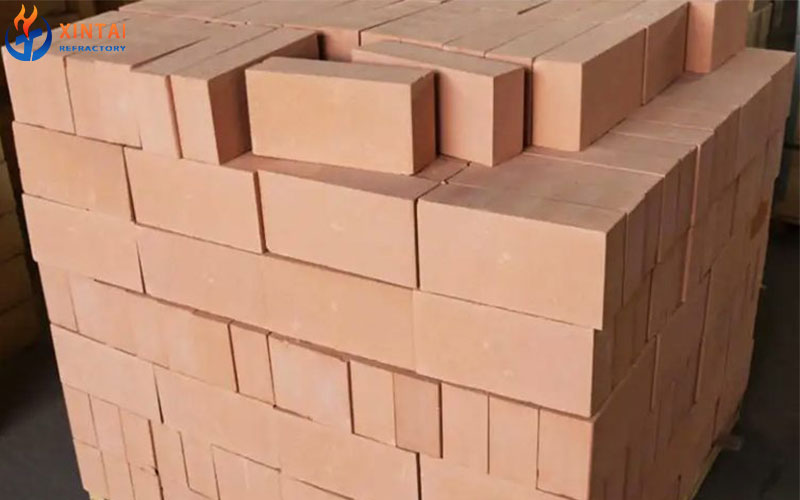
Refractory insulation bricks are essential thermal insulation materials widely used in high-temperature industrial furnaces, kilns, and thermal equipment. They are designed to reduce heat loss, improve energy efficiency, maintain stable operating temperatures, and extend the service life of furnace linings. Industries such as steel, cement, glass, ceramics, petrochemicals, and non-ferrous metals rely on refractory insulation bricks to achieve better thermal performance under extreme conditions.
When choosing the best refractory insulation bricks, many customers often ask which type provides the highest performance. However, there is no single “best” refractory insulation brick suitable for all applications. The performance of insulation bricks depends on multiple factors, including operating temperature, thermal conductivity, mechanical strength, chemical environment, and budget requirements.
Different types of refractory insulation bricks have different characteristics. Some provide excellent insulation performance, while others offer higher temperature resistance or stronger corrosion resistance. Therefore, selecting the right refractory insulation bricks according to specific working conditions is the key to achieving the best results.
What Are Refractory Insulation Bricks?
Refractory insulation bricks are lightweight refractory materials manufactured from various mineral raw materials through special production processes. Compared with traditional dense refractory bricks, they have higher porosity and lower bulk density, which significantly reduces heat transfer.
The main purpose of refractory insulation bricks is not only to withstand high temperatures but also to minimize heat loss from industrial furnaces. Their low thermal conductivity helps reduce fuel consumption, improve energy efficiency, and maintain uniform temperature distribution inside heating equipment.
Common types of refractory insulation bricks include:
- High alumina lightweight bricks
- Mullite insulation bricks
- Alumina hollow ball bricks
- Lightweight silica bricks
- Lightweight fireclay bricks
Each type has different advantages and application areas.
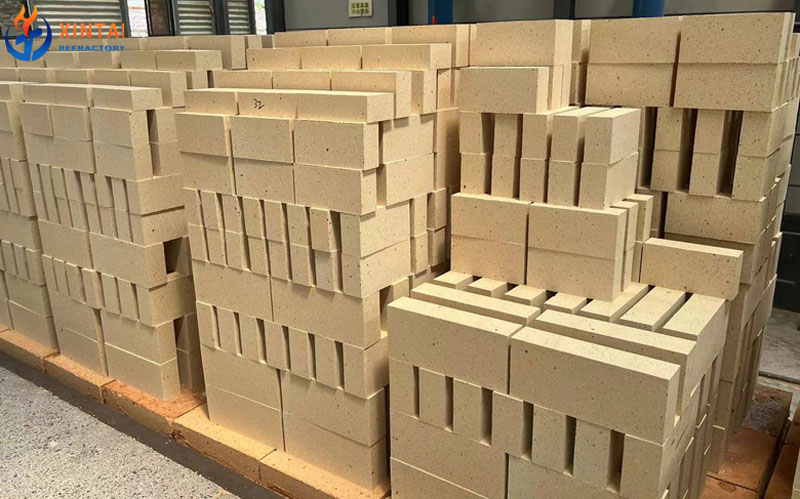
High Alumina Lightweight Bricks: Excellent Performance for High Temperature Applications
High alumina lightweight bricks are one of the most commonly used refractory insulation bricks in high-temperature industrial equipment. They are manufactured using high alumina raw materials and lightweight technology, providing a good balance between insulation performance and temperature resistance.
The thermal conductivity of high alumina lightweight bricks is generally around 0.20–0.55 W/(m·K), and their refractoriness can exceed 1500°C. Due to their excellent thermal insulation capability and relatively high strength, they are widely used in medium and high-temperature zones of industrial furnaces.
Main Advantages of High Alumina Lightweight Bricks
- High temperature resistance
- Good thermal insulation performance
- Low heat storage capacity
- Good volume stability
- Suitable for energy-saving furnace designs
Typical Applications
High alumina lightweight bricks are commonly applied in:
- Hot blast furnace linings
- Cement kiln preheaters
- Industrial heating furnaces
- High-temperature furnace insulation layers
However, although they have good temperature resistance, high alumina lightweight bricks are usually not recommended for direct contact with strong flames or severe chemical corrosion environments. They are often used as insulation layers behind working linings.
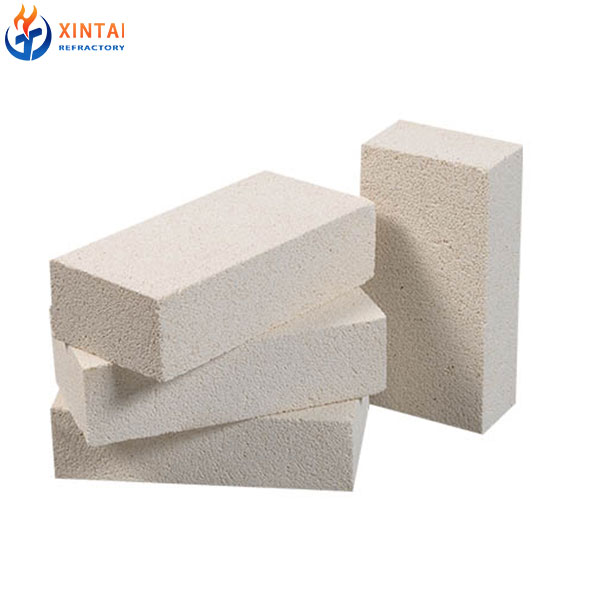
Mullite Insulation Bricks: A Preferred Choice for Complex High Temperature Conditions
Mullite insulation bricks are considered one of the premium refractory insulation bricks because of their excellent combination of thermal insulation, high temperature stability, and chemical resistance.
Mullite is a high-performance aluminosilicate material formed by alumina and silica components. Mullite insulation bricks generally have a thermal conductivity of approximately 0.18–0.56 W/(m·K) and can withstand temperatures around 1600°C.
Advantages of Mullite Insulation Bricks
The main benefits include:
- Excellent thermal insulation performance
- High refractoriness
- Good resistance to thermal shock
- Strong resistance to chemical attack
- Low thermal expansion
Compared with ordinary lightweight refractory bricks, mullite insulation bricks have better structural stability at high temperatures. They can also tolerate direct flame exposure in many applications.
Common Applications
Mullite insulation bricks are widely used in:
- Glass furnace regenerators
- Ceramic firing kilns
- High-temperature laboratory furnaces
- Heat treatment equipment
For industries requiring long-term operation under high temperature and complex chemical conditions, mullite insulation bricks are often a better choice.
Alumina Hollow Ball Bricks: High Temperature Insulation for Extreme Environments
Among different refractory insulation bricks, alumina hollow ball bricks are specially developed for ultra-high temperature applications. They are produced using alumina hollow spheres as the main raw material, giving them excellent resistance to extreme temperatures.
The refractoriness of alumina hollow ball bricks can reach 1800°C, making them suitable for some of the most demanding industrial environments.
Characteristics of Alumina Hollow Ball Bricks
Key advantages include:
- Extremely high temperature resistance
- Good mechanical strength
- Excellent volume stability
- Resistance to high-temperature erosion
These properties make alumina hollow ball bricks suitable for applications where ordinary insulation materials cannot perform effectively.
Applications
Typical uses include:
- Ultra-high temperature furnaces
- Vacuum heat treatment furnaces
- High-temperature experimental equipment
- Special metallurgical furnaces
However, compared with other lightweight insulation bricks, alumina hollow ball bricks generally have a higher thermal conductivity of around 0.9–1.2 W/(m·K). Therefore, their insulation performance is relatively lower, but they provide outstanding performance under extreme temperatures.
Lightweight Silica Bricks: Suitable for Acidic High Temperature Environments
Lightweight silica bricks are a type of acidic refractory insulation brick mainly made from silica materials. They are characterized by strong resistance to acidic gases and good high-temperature performance.
Their thermal conductivity is approximately 0.55–0.70 W/(m·K).
Advantages of Lightweight Silica Bricks
- Good acid resistance
- Stable performance at high temperatures
- Suitable for acidic furnace atmospheres
- Low cost compared with some advanced insulation materials
Applications
Lightweight silica bricks are commonly used in:
- Glass industry furnaces
- Coke ovens
- Acidic atmosphere heating equipment
However, silica bricks have limitations. They can react with alkaline substances, so they are not suitable for environments containing strong alkaline corrosion.
Therefore, when selecting lightweight silica bricks, it is necessary to evaluate the chemical composition of the furnace atmosphere.
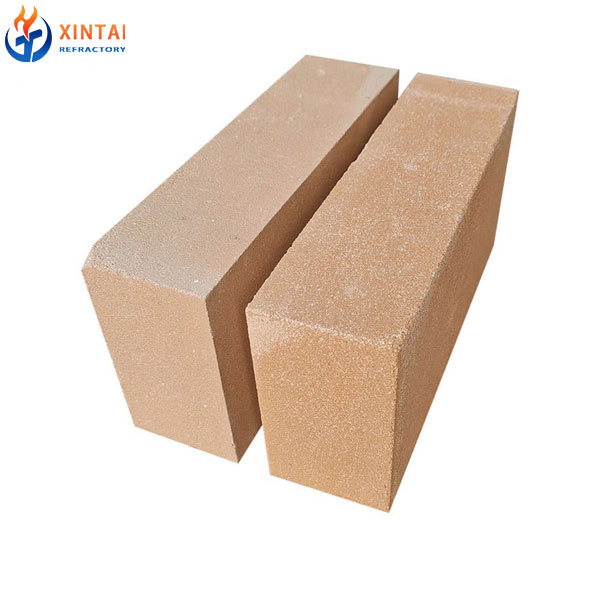
Lightweight Fireclay Bricks: Economical Insulation Solution
Lightweight fireclay bricks are among the most widely used and economical refractory insulation bricks. They are made from fireclay materials and are suitable for general industrial furnace insulation.
Their thermal conductivity is usually around 0.23–0.65 W/(m·K), and their heat resistance is generally suitable for applications below 1300°C.
Benefits of Lightweight Fireclay Bricks
- Affordable price
- Good thermal shock resistance
- Easy installation
- Wide availability
- Suitable for general insulation purposes
Common Applications
Lightweight fireclay bricks are often used in:
- Low and medium temperature kilns
- Heating furnace insulation layers
- Ceramic kilns
- General industrial thermal equipment
Although they cannot compete with high alumina or mullite bricks in extreme temperatures, lightweight fireclay bricks remain an excellent choice when cost control is important.
How to Choose the Right Refractory Insulation Bricks?
Choosing suitable refractory insulation bricks requires comprehensive consideration of several factors.
1. Operating Temperature
Temperature is the most important factor.
- Below 1300°C: Lightweight fireclay bricks are usually sufficient.
- Around 1500°C: High alumina lightweight bricks are recommended.
- Around 1600°C: Mullite insulation bricks provide better performance.
- Above 1700°C: Alumina hollow ball bricks are more suitable.
Selecting bricks with insufficient temperature resistance may cause deformation, cracking, or premature failure.
2. Thermal Conductivity Requirements
For energy-saving applications, lower thermal conductivity is preferred.
Materials such as mullite insulation bricks and high alumina lightweight bricks provide excellent insulation performance and can effectively reduce furnace heat loss.
3. Chemical Environment
The furnace atmosphere also affects material selection.
- Acidic environments: Lightweight silica bricks are suitable.
- Complex chemical environments: Mullite insulation bricks provide better resistance.
- Alkaline environments: Avoid materials that react with alkaline substances.
4. Mechanical Strength Requirements
Although insulation bricks focus on heat preservation, sufficient mechanical strength is still necessary, especially for areas exposed to vibration, loading, or thermal cycling.
5. Cost Considerations
Different refractory insulation bricks vary significantly in price.
For projects with strict budgets and moderate temperatures, lightweight fireclay bricks may provide the best economic value. For demanding industrial applications, higher-performance materials can reduce maintenance costs and improve furnace efficiency over time.
Conclusion
There is no universal “best” refractory insulation brick because every industrial application has different requirements. High alumina lightweight bricks provide excellent overall performance for many high-temperature applications. Mullite insulation bricks are ideal for environments requiring high temperature stability and chemical resistance. Alumina hollow ball bricks are designed for extreme temperature conditions, while lightweight silica bricks and lightweight fireclay bricks offer economical solutions for specific environments.
The correct selection of refractory insulation bricks should always be based on operating temperature, furnace atmosphere, insulation requirements, mechanical conditions, and project budget. By choosing the right material, industrial users can improve energy efficiency, reduce heat loss, extend furnace service life, and achieve more reliable high-temperature operations.