
The steel industry operates under extreme thermal, chemical, and mechanical conditions. Furnaces, ladles, blast furnaces, and reheating systems routinely endure temperatures ranging from 260°C to over 1760°C, along with aggressive slag corrosion, thermal shock, and continuous mechanical abrasion.
In this environment, refractory material for steel plants is not just a structural component—it is a core performance enabler. It directly influences:
- Furnace campaign life
- Energy consumption efficiency
- Steel purity and quality
- Maintenance cost and downtime
- Operational safety and stability
There is no single “universal best” solution. Instead, the optimal choice depends on the application zone, chemical environment, and operational conditions.
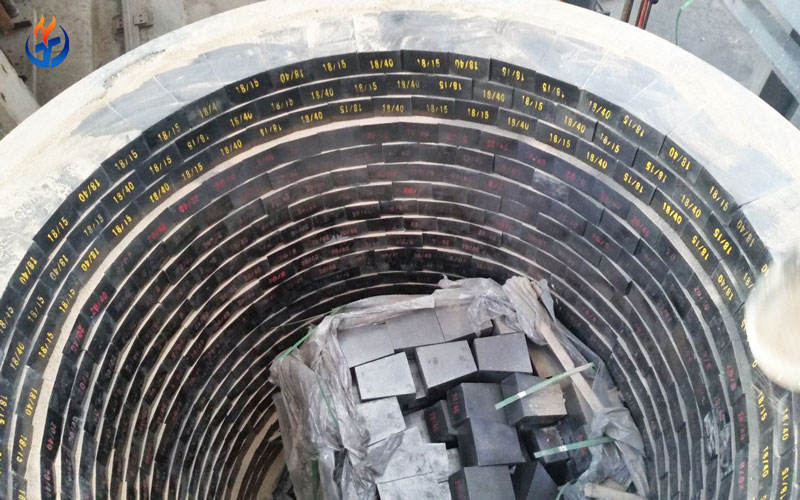
What Is Refractory Material for Steel Plants?
Refractory material for steel plants refers to high-temperature-resistant non-metallic materials used to line industrial furnaces and metallurgical equipment. These materials are engineered to maintain mechanical strength, chemical stability, and structural integrity under extreme heat and corrosive environments.
Main Application Areas in Steel Plants
- Blast furnace lining (shaft, hearth, bosh)
- Hot blast stoves (checker bricks, insulation layers)
- Basic Oxygen Furnace (BOF) and Electric Arc Furnace (EAF)
- Steel ladles and tundishes
- Torpedo ladles for molten iron transport
- Troughs, runners, and tapping channels
Classification of Refractory Materials in Steel Plants
Refractory materials including fireclay bricks are classified based on chemical composition, raw materials, and mineral phases rather than only theoretical acid-base behavior.
1. Basic Refractories (MgO and MgO-CaO Based)
This category is the backbone of modern steelmaking.
Key Materials:
- Magnesia (MgO)
- Dolomite (CaO·MgO)
- Magnesia-carbon bricks (MgO-C)
Characteristics:
- Excellent resistance to basic slags
- High refractoriness (> 2000°C in some cases)
- Strong resistance to steelmaking slag erosion
Applications:
- BOF linings
- EAF sidewalls and slag lines
- Ladle working linings
Industrial Significance:
Synthetic magnesia produced from seawater or brine is widely used due to its high purity (95–99%). It provides superior density and stability after high-temperature sintering, making it one of the most important raw materials in refractory material for steel plants.
2. Chromite-Based Refractories (MgO–Cr₂O₃ System)
Chromite refractories combine magnesia and chromite ore, forming spinel structures.
Key Features:
- High thermal shock resistance
- Strong slag corrosion resistance
- Stable under fluctuating furnace atmospheres
Typical Applications:
- Transition zones in furnaces
- High-stress lining areas in steel ladles
- Specialized metallurgical furnaces
Chromite-based materials are especially valuable in environments where both chemical attack and mechanical stress occur simultaneously.
3. Silica Refractories (SiO₂-Based)
Silica refractories are widely used in acidic environments and high-temperature structural zones.
Raw Materials:
- Quartz
- Quartzite
- Sandstone
- Fused silica
Key Properties:
- High softening temperature under load
- Excellent volume stability after repeated heating cycles
- Low cost compared to high-alumina or magnesia bricks
Applications:
- Coke ovens
- Hot blast stoves (upper zones)
- Regenerative chambers
Although silica refractories are less resistant to basic slag, they remain important in refractory material for steel plants due to cost efficiency and thermal stability.
4. Fireclay Refractories (Al₂O₃–SiO₂ System)
Fireclay materials represent a widely used and versatile category.
Types:
- Semi-silica clay
- Plastic refractory clay
- Flint clay
- High-alumina clay
- Kaolin-based materials
Properties:
- Moderate refractoriness (up to ~1700°C depending on grade)
- Good plasticity and shaping ability
- Stable thermal performance
Applications:
- Furnace linings in reheating furnaces
- Backup insulation layers
- Low-cost structural refractory zones
Kaolin-based high-grade clays are increasingly used for producing precalcined aggregates with improved stability.
5. High-Alumina Refractories (Al₂O₃ > 45%)
High-alumina materials are among the most important in modern steelmaking.
Subcategories:
- Mullite-based materials
- Sillimanite group (sillimanite, andalusite, kyanite)
- Calcined bauxite-based refractories
- Sintered alumina bricks
Key Properties:
- High refractoriness (> 1750°C)
- Strong mechanical strength at high temperature
- Excellent abrasion resistance
- Good slag resistance (depending on composition)
Applications:
- Blast furnace shaft lining
- Ladle working layer
- Tundish lining systems
Sillimanite-group minerals convert into mullite during heating, forming a stable ceramic structure that enhances long-term performance in steel environments.
6. Carbon-Based Refractories
Carbon materials are essential in extreme thermal and chemical conditions.
Materials Include:
- Graphite
- Carbon bricks
- Coke-based refractories
- Silicon carbide (SiC)
- Silicon nitride (Si₃N₄)
Key Advantages:
- Extremely high thermal conductivity
- Excellent resistance to slag penetration
- Superior thermal shock resistance
- Non-wetting behavior against molten metals
Applications:
- Blast furnace hearth and bottom
- Torpedo ladle linings
- EAF carbon-containing zones
- Taphole clay and runners
Silicon carbide refractories are particularly important due to their combination of strength, conductivity, and chemical resistance.
Key Factors in Selecting Refractory Material for Steel Plants
Choosing the best refractory material for steel plants requires balancing multiple performance and economic factors.
1. Operating Temperature
- Low-temperature zones: fireclay, insulation bricks
- Medium-high temperature: high-alumina materials
- Extreme zones: carbon and magnesia-based refractories
2. Slag Chemistry
- Acidic slag → silica-based refractories
- Basic slag → magnesia and dolomite refractories
3. Thermal Shock Resistance
Frequent heating and cooling cycles require materials like:
- Magnesia-carbon bricks
- Silicon carbide refractories
4. Mechanical Wear Resistance
Critical for:
- Tapholes
- Troughs
- Ladle impact zones
5. Cost vs Performance Balance
The most durable material is not always the most economical. Lifecycle cost optimization is essential.
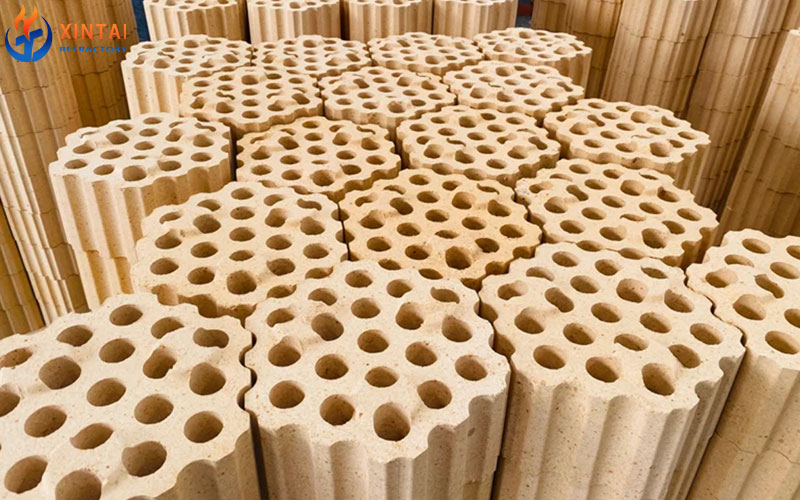
Refractory Applications in Steel Plants
1. Blast Furnace System
- Shaft: high-alumina bricks
- Bosh: carbon and SiC materials
- Hearth: carbon blocks with cooling systems
2. Hot Blast Stove
- Checker bricks: silica or high-alumina materials
- Combustion chamber: fireclay refractories
3. Steelmaking Furnaces (BOF & EAF)
- Slag line: magnesia-carbon bricks
- Sidewall: magnesia-based refractories
- Roof: high-alumina or carbon composites
4. Ladle and Tundish Systems
- Working lining: high-alumina or MgO-C
- Permanent lining: insulation and fireclay materials
5. Taphole and Runner Systems
- Carbon-based refractories
- Silicon carbide enhanced materials
What Is the Best Refractory Material for Steel Plants?
There is no single “best” material. Instead, the optimal choice is system-dependent.
Performance-Oriented Summary:
- Best for slag resistance: Magnesia-based refractories
- Best for thermal shock: Carbon and SiC refractories
- Best for structural stability: High-alumina refractories
- Best for cost efficiency: Fireclay and silica refractories
- Best overall balance (modern steelmaking): Magnesia-carbon composites
In modern steel plants, magnesia-carbon (MgO-C) refractories are often considered the most advanced solution for high-stress zones due to their combination of slag resistance, thermal shock resistance, and mechanical durability.
Economic and Operational Considerations
Refractory performance is not evaluated solely by lifespan. Key economic factors include:
- Installation cost
- Downtime frequency
- Repairability and patching capability
- Energy efficiency contribution
- Production continuity impact
A well-designed refractory system reduces total lifecycle cost even if initial investment is higher.
Conclusion
The selection of refractory material for steel plants is a complex engineering decision influenced by temperature, chemical environment, mechanical stress, and economic constraints.
Rather than relying on a single material, modern steel plants adopt a multi-layer refractory system, combining:
Magnesia-based materials for slag resistance
Carbon and SiC materials for thermal shock zones
High-alumina bricks for structural stability
Fireclay and silica for insulation and cost efficiency
This integrated approach ensures maximum furnace efficiency, extended campaign life, and optimized production cost.
Ultimately, the “best” refractory is not a material—it is a system engineered for specific industrial conditions.