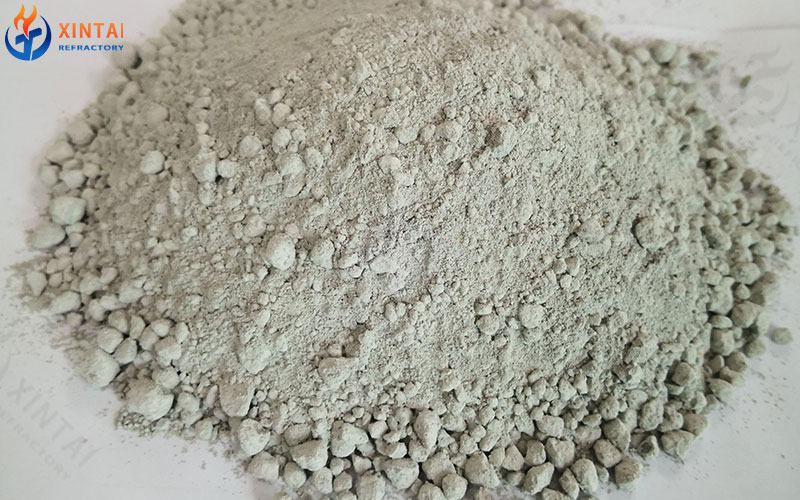
Electric arc furnace bottom ramming mix is a type of dry monolithic refractory material specifically designed for the working lining of EAF hearths and slopes. It is widely used in steelmaking furnaces where the lining is exposed to extreme conditions such as molten steel impact, scrap charging shock, and aggressive basic slag corrosion.
Unlike conventional refractory castables, this material is installed in a dry, water-free state and compacted through high-energy mechanical ramming. During furnace operation, it undergoes in-situ high-temperature sintering, gradually transforming into a dense, ceramic-like refractory layer.
This self-sintered structure provides excellent resistance against steel penetration, chemical attack, and mechanical erosion, making it one of the most reliable solutions for modern electric arc furnace linings.

1. Magnesium-Calcium Iron-Based Dry Ramming Mix
Material Composition
Magnesium-calcium iron-based ramming mixes are widely used in ultra-high power EAF operations.
- Raw materials: Fused magnesia + synthetic magnesia-calcium aggregates
- Particle size distribution: 0–5 mm optimized grading
Performance Characteristics
This type is considered a mainstream solution in steel plants due to its balanced performance:
- Begins sintering at approximately 1100°C
- Achieves optimal densification at around 1600°C
- Strong resistance to iron-rich slag corrosion
- Capable of absorbing sulfur and phosphorus impurities from molten steel
- Low steel penetration and minimal hearth swelling risk
- Service life typically ranges from 800 to 1400 heats
The magnesia-calcium system improves slag compatibility while maintaining structural stability under thermal cycling.
Application Scenarios
Magnesium-calcium ramming mixes are widely used in:
- Conventional scrap-based steelmaking furnaces
- Plain carbon steel production lines
- Alloy steel electric arc furnaces
- Furnace hearths and slopes
- Steel tapping areas and surrounding zones
They are especially suitable for high-throughput steel plants with stable production cycles.
2. High-Purity Fused Magnesia Ramming Mix
Material Composition
High-purity magnesia-based ramming materials are designed for premium steel production environments.
- MgO content: 95%–97%
- Impurity level: SiO₂ ≤ 1.2%
Performance Characteristics
This advanced material offers exceptional refractory performance:
- Extremely high refractoriness exceeding 2000°C
- Superior high-temperature mechanical strength
- Excellent resistance to molten steel penetration
- Low thermal conductivity, reducing heat loss
- Thin but highly dense sintered layer formation
- Stable performance under continuous high-load operation
The high purity of magnesia ensures minimal chemical reaction with slag, extending furnace life significantly.
Application Scenarios
High-purity fused magnesia ramming mix is mainly used in:
- Ultra-high power electric arc furnaces (UHP EAFs)
- Clean steel and special steel production
- Stainless steel refining furnaces
- DC electric arc furnaces with bottom anodes
- High-load continuous steelmaking operations
This material is preferred in advanced metallurgy industries requiring strict steel quality control.
3. Magnesium-Alumina Spinel Ramming Mix
Material Composition
This type incorporates magnesium-alumina spinel phases into a magnesia-based system.
- Base material: Fused magnesia
- Additive phase: Magnesium aluminate spinel (MgAl₂O₄)
Performance Advantages
Spinel-enhanced ramming mixes are designed for thermal cycling environments:
- Excellent thermal shock resistance
- Strong resistance to crack propagation during heating and cooling cycles
- Improved structural toughness under dynamic furnace operation
- Enhanced resistance to spalling and surface degradation
- Easier hot repair and maintenance performance
The spinel phase improves elasticity within the refractory matrix, reducing internal stress accumulation.
Application Scenarios
This material is widely used in:
- Medium and small electric arc furnaces
- Intermittent production steel plants
- Furnaces with frequent cold starts and shutdowns
- Flexible production environments requiring quick relining
- Repair zones in existing furnace hearths
It is particularly effective where operational cycles are unstable.

4. Dolomite-Based Ramming Mix
Material Composition and Characteristics
Dolomite-based ramming mixes use magnesium-calcium raw materials derived from dolomite systems.
- Main components: MgO + CaO (dolomite-based)
Performance Characteristics
Dolomite ramming materials offer specific metallurgical advantages:
- Strong desulfurization capability during steel refining
- Good chemical compatibility with basic slags
- High temperature performance under steelmaking conditions
However, they also have limitations:
- Poor resistance to moisture absorption
- Prone to hydration and powdering if improperly stored
- Requires strict sealed storage conditions
- Sensitive to environmental humidity
Application Scenarios
Dolomite ramming mixes are mainly used in:
- Secondary refining zones requiring desulfurization
- Specialized steelmaking processes
- Controlled atmospheric furnace environments
- Short-cycle industrial applications with strict material handling
Due to hydration sensitivity, careful storage and handling are essential.
5. Physical and Chemical Performance Indicators
The performance of EAF bottom ramming mixes is evaluated through several key technical parameters.
| Test Item | Typical Range | Functional Significance |
|---|---|---|
| MgO Content | 82%, 92%, 95% grades | Higher purity improves slag resistance |
| Bulk Density (After Ramming) | ≥ 3.25 g/cm³ | Higher density reduces steel penetration |
| Cold Crushing Strength at 1600°C | ≥ 25 MPa | Ensures structural stability under heat |
| Linear Change Rate | ±0.8% | Controls expansion and cracking risk |
| Maximum Service Temperature | 1700°C–1850°C | Suitable for steelmaking conditions |
These parameters directly determine furnace lifespan and operational stability.
6. Key Product Features of EAF Bottom Ramming Mix
1. Dry Installation Process
EAF ramming mixes are installed without any water or liquid binder.
- Completely dry formulation
- Eliminates hydration-related cracking risks
- Requires only moisture-proof storage
- Simplifies logistics and handling
This dry system ensures long-term stability before furnace operation.
2. In-Situ Sintering Mechanism
The material remains loose during installation but transforms under heat:
- Compacted mechanically during construction
- Begins sintering during furnace heating
- Forms a dense ceramic-like structure
- Sintered layer thickness: 100–150 mm
This self-bonding mechanism eliminates the need for pre-fired components.
3. Excellent Resistance to Harsh Furnace Conditions
EAF ramming mixes provide strong protection against:
- Mechanical impact from scrap charging
- Erosion from molten steel flow
- Chemical attack from basic slag
- Thermal cycling stress
The monolithic lining structure eliminates joints, significantly reducing leakage risk.
4. Flexible Installation and Hot Repair Capability
These materials can be applied in complex furnace geometries:
- Furnace hearths and slopes
- Steel tapping zones
- Electrode surrounding areas
- Irregular or worn refractory sections
Damaged areas can be repaired during hot conditions, extending furnace campaign life without full shutdown.
7. Industrial Advantages and Operational Benefits
EAF bottom ramming mixes provide several strategic benefits for steelmakers:
- Extended furnace service life (up to 1400 heats depending on grade)
- Reduced maintenance downtime
- Improved steel purity due to reduced contamination
- Lower operational risk from refractory failure
- Enhanced energy efficiency through dense lining structure
Their ability to self-sinter under operating conditions makes them highly cost-effective for large-scale steel production.
Conclusion
Electric arc furnace bottom ramming mix is a critical monolithic refractory material designed for modern steelmaking environments. Through dry installation and high-temperature sintering, it forms a dense, durable, and chemically resistant furnace lining capable of withstanding extreme operational conditions.
From magnesium-calcium systems for general steelmaking to high-purity fused magnesia for advanced metallurgy, spinel-enhanced formulations for thermal cycling stability, and dolomite-based materials for specialized refining, each type serves a distinct industrial purpose.
Proper selection based on furnace type, steel grade, and operating conditions is essential to maximize performance, extend furnace lifespan, and ensure stable and efficient steel production.