
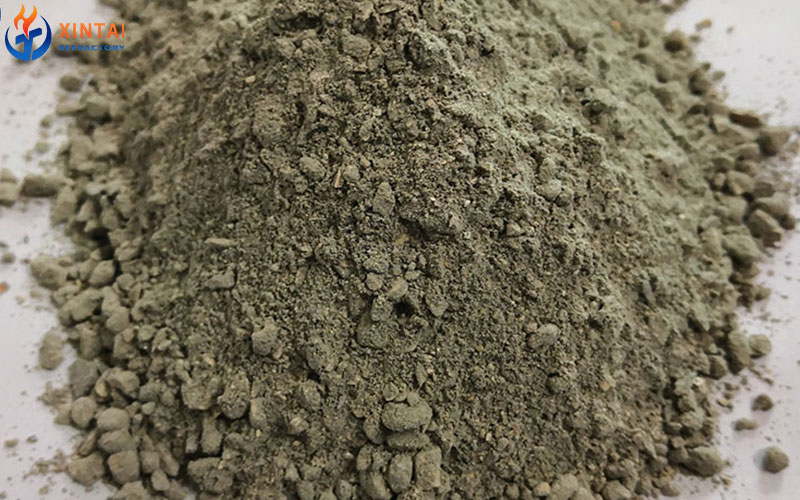
In modern high-temperature industries, refractory materials are required to withstand increasingly severe operating conditions, including high temperatures, thermal shocks, slag corrosion, and mechanical wear. Among various monolithic refractories, ultra-low cement castables have become one of the most important high-performance materials due to their excellent strength, dense structure, and outstanding resistance to thermal and chemical attack.
Compared with conventional castables, ultra-low cement castables contain significantly less calcium oxide and rely mainly on ultrafine powder bonding instead of cement hydration. This design minimizes the formation of low-melting phases and provides superior high-temperature performance. As a result, ultra-low cement castables are widely used in steelmaking, cement production, petrochemical industries, non-ferrous metallurgy, and environmental protection facilities.
Now, Xintai Refractory will introduce the types, properties, advantages, and major applications of ultra-low cement castables.
What Are Ultra-Low Cement Castables?
Ultra-low cement castables (ULCC) are advanced refractory castables containing only 0.2–1.0% CaO, with a small amount of calcium aluminate cement acting as a supplementary binder. The primary bonding mechanism is provided by ultrafine powders and matrix particles, which create a highly dense microstructure after firing.
The reduction of cement content significantly decreases the amount of low-melting compounds such as calcium aluminates and anorthite, thereby improving high-temperature strength, corrosion resistance, and thermal shock stability.
Ultra-low cement castables are generally designed for service temperatures ranging from 1500°C to 1800°C, making them suitable for demanding industrial environments.
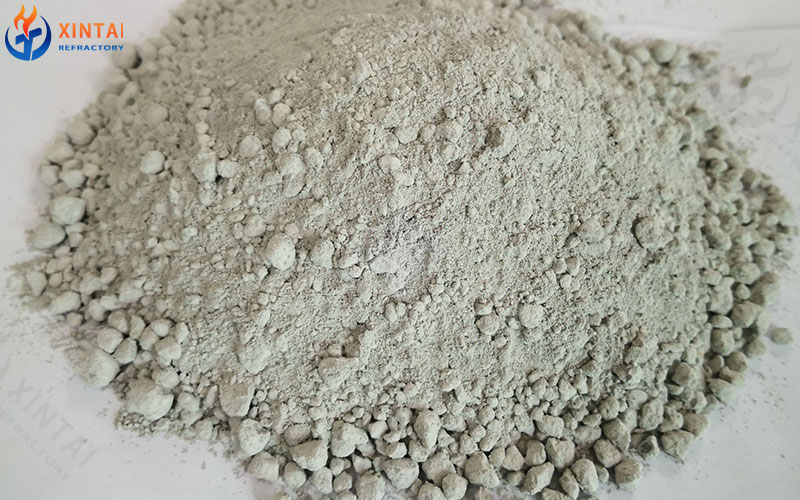
Classification of Castables According to CaO Content
Refractory castables can be classified based on their calcium oxide content.
Ordinary Castables
- CaO content: >2.5%
- Cement addition: 15–30%
- Higher water requirement
- Relatively high porosity
- Moderate strength
Ordinary castables are economical and suitable for general furnace linings but exhibit lower resistance to thermal shock and slag penetration.
Low Cement Castables
- CaO content: 1.0–2.5%
- Improved density
- Better high-temperature properties
Low cement castables offer enhanced mechanical strength and are widely used in medium-duty applications.
Ultra-Low Cement Castables
- CaO content: 0.2–1.0%
- Dense microstructure
- Excellent hot strength
- Superior thermal shock resistance
These castables are ideal for severe operating conditions requiring long service life.
Cement-Free Castables
- CaO content: below 0.2%
- No calcium aluminate cement
- Maximum corrosion resistance
- Extremely high purity
Cement-free castables are used in the most demanding environments and often employ colloidal silica or other advanced bonding systems.
Main Characteristics of Ultra-Low Cement Castables
Low Water Requirement
Ultra-low cement castables require only 4–6% mixing water, compared with 10–15% for ordinary castables.
Benefits include:
- Reduced drying shrinkage
- Lower porosity
- Improved density
- Better mechanical strength
The reduced water content minimizes defects and improves overall lining reliability.
High Bulk Density and Low Porosity
Typical properties include:
- Bulk density: 2.6–3.1 g/cm³
- Apparent porosity: ≤18%
By comparison, conventional castables generally have:
- Bulk density: 2.2–2.4 g/cm³
- Porosity: 25–35%
The denser structure effectively prevents slag and molten metal penetration, extending service life.
Excellent Mechanical Strength
Ultra-low cement castables exhibit remarkable strength characteristics.
Room Temperature Strength
Cold crushing strength typically ranges from:
- 40–100 MPa
Intermediate Temperature Strength
One of the greatest advantages of ULCC is the absence of strength degradation in the critical temperature range of 300–800°C.
Conventional castables often experience:
- 30–50% strength reduction
Ultra-low cement castables maintain or even increase strength with rising temperature.
High-Temperature Strength
After firing at 1400°C for three hours:
- Modulus of rupture ≥12 MPa
- Strength 1.5–3 times higher than ordinary castables
These properties ensure excellent resistance to abrasion and mechanical stress.
Outstanding Thermal Stability
Ultra-low cement castables possess excellent dimensional stability.
Typical characteristics include:
- Service temperature: 1500–1800°C
- Permanent linear change: ≤±0.5% at 1350°C × 3 h
- Excellent volume stability
This allows refractory linings to maintain structural integrity under prolonged exposure to extreme temperatures.
Superior Thermal Shock Resistance
Repeated heating and cooling cycles are common in industrial furnaces.
Ultra-low cement castables can withstand:
- More than 20 water-quenching cycles at 1100°C
Conventional castables generally survive only:
- 5–10 cycles
Enhanced thermal shock resistance reduces crack formation and minimizes maintenance requirements.
Strong Resistance to Slag and Metal Penetration
The low CaO content reduces the formation of low-melting phases such as:
- Anorthite
- C12A7
As a result:
- Slag resistance improves by 30–40%
- Molten metal penetration decreases significantly
- Erosion resistance is greatly enhanced
These characteristics are particularly important in steel and non-ferrous metallurgical applications.
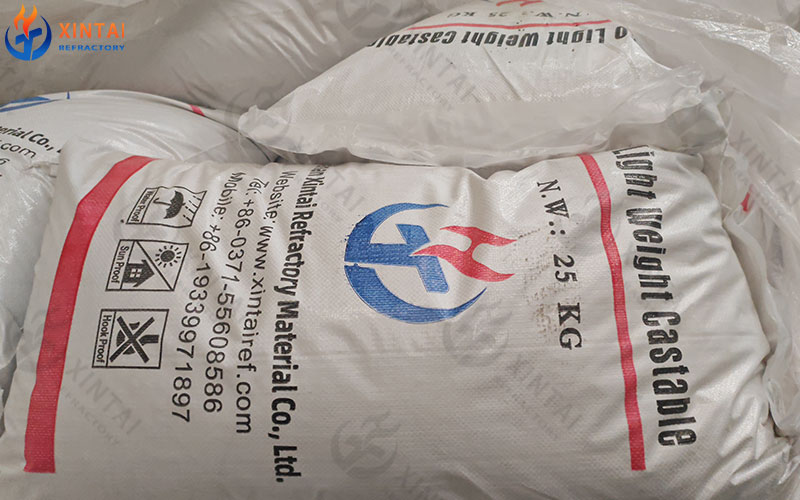
Types of Ultra-Low Cement Castables
Different aggregate compositions are used according to service conditions.
High Alumina Ultra-Low Cement Castables
Composition
Al₂O₃ content:
- 60–80%
Service Temperature
Approximately:
- 1500°C
Characteristics
- Good mechanical strength
- Excellent abrasion resistance
- Cost-effective
- Reliable thermal stability
Applications
High alumina ultra-low cement castables are widely used in:
- Heating furnaces
- Soaking pits
- Steel ladles
- Industrial boilers
They are suitable for moderate thermal and chemical conditions.
Corundum Ultra-Low Cement Castables
Composition
Al₂O₃ content:
- ≥90%
Service Temperature
1700–1800°C
Features
- Extremely high refractoriness
- Excellent slag resistance
- Outstanding wear resistance
- High hot strength
Applications
Corundum castables are commonly employed in:
- Blast furnace troughs
- Secondary refining furnaces
- RH degassers
- Steel ladles
- Vacuum refining equipment
They perform exceptionally well under severe thermal and mechanical stress.
Mullite Ultra-Low Cement Castables
Characteristics
Mullite materials possess:
- Low thermal expansion
- Good thermal shock resistance
- Excellent creep resistance
- Stable structure at elevated temperatures
Service Temperature
Around 1600°C
Applications
Mullite ultra-low cement castables are widely used in:
- Cement rotary kilns
- Preheaters
- Decomposition furnaces
- Waste incinerators
Their resistance to temperature fluctuations makes them highly reliable in cyclic heating conditions.
Carbon-Silicon Carbide Castables
Features
These castables combine:
- Carbon materials
- Silicon carbide
- Anti-oxidation additives
Advantages include:
- Exceptional thermal shock resistance
- Superior slag resistance
- High thermal conductivity
- Excellent erosion resistance
Applications
They are mainly used in:
- Blast furnace runners
- Tapholes
- Slag lines
- Molten iron channels
Their ability to resist molten iron and slag attack greatly extends service life.
Applications of Ultra-Low Cement Castables
Steel Industry
The steel industry is one of the largest consumers of ultra-low cement castables.
Steel Ladles and Hot Metal Ladles
Critical areas include:
- Slag line
- Impact zone
- Bottom lining
These areas experience severe thermal cycling and slag corrosion.
Tundishes
Ultra-low cement castables are used for:
- Working lining
- Dams
- Weirs
- Flow control structures
Their low contamination characteristics help maintain steel cleanliness.
Reheating Furnaces
Applications include:
- Furnace roofs
- Side walls
- Burner blocks
- Water-cooled pipe coverings
High thermal stability ensures long-term operation.
Blast Furnaces
Major applications:
- Troughs
- Belly section
- Tuyere zone
Excellent resistance to molten iron erosion makes ULCC indispensable in blast furnace operation.
Cement Industry
Cement production equipment operates under harsh conditions involving high temperatures and alkali attack.
Ultra-low cement castables are widely used in:
Rotary Kilns
Especially:
- Kiln mouth
- Transition zone
Calcining Furnaces
They provide excellent resistance to:
- Abrasion
- Alkali attack
- Thermal shock
Coal Injection Pipes
High abrasion resistance improves service life and reduces shutdown frequency.
Petrochemical Industry
Petrochemical furnaces demand refractory materials with high thermal stability and chemical resistance.
Applications include:
Ethylene Cracking Furnaces
Ultra-low cement castables withstand:
- Rapid heating cycles
- High temperatures
- Chemical corrosion
Hydrogen Reforming Furnaces
They offer:
- Excellent dimensional stability
- Long operating life
FCC Reactors
Fluid catalytic cracking units require materials capable of resisting:
- Abrasion
- Thermal cycling
- Chemical attack
Non-Ferrous Metallurgy
Ultra-low cement castables are used extensively in:
Copper Melting Furnaces
Benefits include:
- Reduced slag penetration
- Longer campaign life
Zinc Smelting Furnaces
High-temperature stability improves production efficiency.
Aluminum Electrolysis Cells
Sidewalls and insulation sections benefit from the material’s excellent corrosion resistance.
Environmental and Energy Industries
With increasing emphasis on sustainability, waste treatment and biomass energy facilities require reliable refractory linings.
Waste Incinerators
Ultra-low cement castables provide:
- Resistance to thermal shock
- Corrosion resistance
- Long service life
Biomass Gasification Furnaces
These systems experience frequent temperature fluctuations, making thermal shock resistance particularly important.
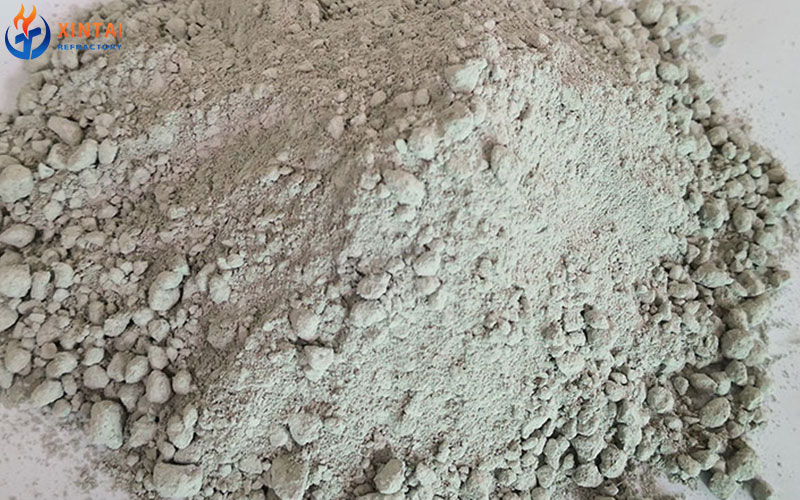
Installation and Drying Considerations
Proper installation is critical for achieving optimum performance.
Mixing
Water addition should be strictly controlled:
- 4–6%
Mixing time:
- 3–5 minutes using forced mixers
Construction methods include:
- Vibration casting
- Self-flowing casting
- Pump casting
Curing
After installation:
- Cure for 24–48 hours at ambient temperature
- Avoid direct sunlight and strong wind
Proper curing ensures adequate initial strength.
Drying and Heating Schedule
Below 200°C
Heat slowly to remove free water.
300–600°C
Hold at intermediate temperatures to prevent explosive spalling.
Above 800°C
Heating rate may be increased.
Careful drying significantly affects service life and reliability.
Advantages and Limitations
Advantages
Ultra-low cement castables provide:
- High density
- Excellent hot strength
- Outstanding thermal shock resistance
- Superior slag resistance
- Good dimensional stability
- Long service life
- Reduced maintenance frequency
These benefits make them highly attractive for demanding industrial applications.
Limitations
Despite their advantages, some challenges exist:
- Higher cost than ordinary castables
- More stringent installation requirements
- Careful drying procedures are necessary
- Lower early strength at low temperatures
However, the longer campaign life often compensates for the higher initial investment.
Conclusion
Ultra-low cement castables represent a major advancement in monolithic refractory technology. Their low calcium oxide content, dense microstructure, high-temperature strength, and exceptional resistance to thermal shock and slag attack make them indispensable in modern high-temperature industries.
From steelmaking and cement production to petrochemical processing, non-ferrous metallurgy, and environmental protection systems, ultra-low cement castables offer longer service life, improved operational reliability, and lower maintenance costs. By selecting the appropriate material type according to temperature and operating conditions, industries can maximize furnace efficiency and achieve substantial economic benefits over the entire service cycle.