
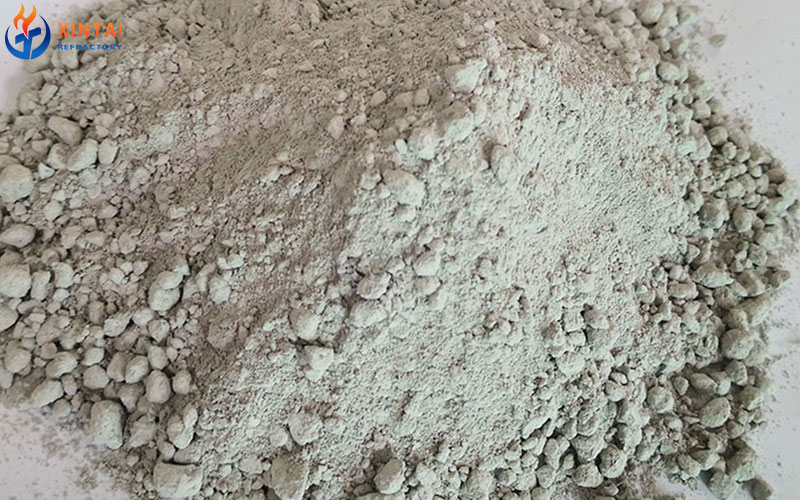
Monolithic castable refractory is widely used in industrial furnaces, kilns, boilers, incinerators, and other high-temperature equipment. Unlike traditional refractory bricks, which are installed individually with mortar joints, monolithic refractories are supplied as unshaped materials and formed directly at the installation site. They can be installed by casting, gunning, ramming, or other construction methods, creating a continuous refractory lining with fewer joints.
Different industrial applications require different levels of thermal resistance, mechanical strength, abrasion resistance, and chemical stability. Therefore, understanding the main monolithic castable refractory types is essential when selecting suitable materials for furnace construction, maintenance, and repair.
This article introduces the major categories of monolithic castable refractories, their characteristics, applications, and key selection considerations.
More About Monolithic Castable Refractory
Monolithic castable refractory is an unshaped refractory material generally composed of refractory aggregates, fine powders, binders, and performance-enhancing additives. After mixing with an appropriate amount of water or another specified liquid, the material can be placed into a mold or directly applied to the required surface.
After installation, the castable undergoes setting, curing, and drying before being exposed to high temperatures. During service, it forms a protective lining that helps industrial equipment withstand heat, thermal fluctuations, mechanical impact, and chemical attack.
Compared with traditional refractory bricks, monolithic castables offer several advantages:
- Flexible installation: They can be applied to complex shapes and irregular furnace structures.
- Fewer joints: Continuous linings reduce the number of joints where heat or molten materials may penetrate.
- Convenient maintenance: Damaged sections can often be repaired without replacing an entire refractory structure.
- Wide material selection: Different formulations can meet specific temperature, strength, and corrosion-resistance requirements.
- Construction efficiency: Suitable installation methods can reduce construction time for large industrial equipment.
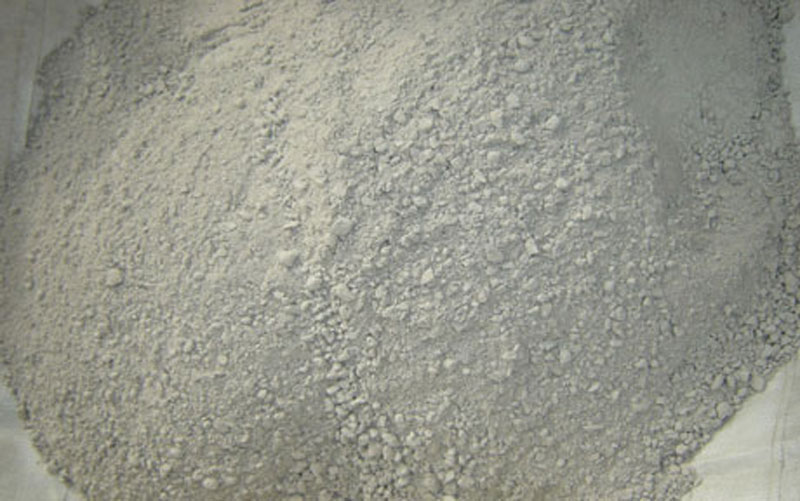
2. Main Monolithic Castable Refractory Types
Monolithic castable refractories can be classified according to their chemical composition, aggregate materials, bonding systems, and installation methods. The following are some of the most widely used types in industrial applications.
2.1 Conventional Dense Castable Refractory
Conventional dense castable refractory is one of the basic types of monolithic refractory materials. It typically contains coarse refractory aggregates, fine powders, and a suitable binder, commonly calcium aluminate cement.
These materials are designed to provide structural strength and thermal resistance under demanding operating conditions. Their properties depend on the aggregate composition, cement content, particle-size distribution, and curing conditions.
Main characteristics:
- Good mechanical strength after proper curing and firing.
- Relatively straightforward mixing and installation.
- Suitable for various industrial furnace structures.
- Available in different alumina contents and performance grades.
Typical applications:
- Industrial furnace floors and walls.
- Boiler combustion chambers.
- Cement kiln auxiliary equipment.
- Incinerator linings.
- General-purpose thermal equipment.
Conventional castables are often selected for applications where reliable structural performance and practical installation are important.
2.2 Low Cement Castable Refractory (LCC)
Low cement castable refractory is developed to reduce the calcium aluminate cement content while maintaining suitable bonding and installation properties. It generally contains optimized refractory aggregates, ultrafine powders, dispersants, and a relatively small amount of cement.
Compared with conventional castables, low cement formulations can achieve lower porosity, higher density, and improved mechanical strength after proper heat treatment.
Main characteristics:
- High density and relatively low apparent porosity.
- Good mechanical strength at elevated temperatures.
- Improved resistance to slag penetration.
- Reduced cement content.
- Suitable for demanding thermal environments.
Typical applications:
- Steel ladles and tundishes.
- Blast furnace auxiliary equipment.
- Cement rotary kiln components.
- High-temperature industrial furnace linings.
Low cement castables are particularly useful in areas exposed to thermal stress, mechanical impact, and molten material penetration.
2.3 Ultra-Low Cement Castable (ULCC)
Ultra-low cement castable is a further development of low cement refractory technology. It contains an even smaller proportion of cement and relies on carefully designed ultrafine powders and particle packing to achieve the required bonding and physical properties.
By reducing cement content, this type of castable can improve certain high-temperature performance characteristics when properly formulated.
Main characteristics:
- Very low calcium aluminate cement content.
- High bulk density.
- Good high-temperature strength.
- Low porosity when properly installed.
- Potentially improved resistance to slag and chemical penetration.
Typical applications:
- Steelmaking furnaces.
- High-temperature furnace roofs.
- Cement kiln transition zones.
- Metallurgical equipment exposed to severe operating conditions.
ULCC is generally selected for applications requiring more demanding refractory performance than conventional low cement formulations.
2.4 No-Cement Castable Refractory
No-cement castable refractory uses alternative bonding systems instead of conventional calcium aluminate cement. Depending on the formulation, bonding may involve colloidal silica, sol-gel systems, or other chemical bonding technologies.
The absence of conventional cement changes the setting and hardening mechanisms, making installation procedures and drying schedules important considerations.
Main characteristics:
- No conventional calcium aluminate cement binder.
- Formulations can be designed for specific high-temperature conditions.
- Potentially improved chemical compatibility in selected applications.
- Different setting and curing characteristics.
Typical applications:
- Specialized metallurgical furnaces.
- High-temperature industrial equipment.
- Selected non-ferrous metal processing applications.
- Furnace sections requiring specific chemical resistance.
The appropriate bonding system should be selected according to operating temperature, installation conditions, and chemical exposure.
2.5 Insulating Castable Refractory
Insulating castable refractory is designed primarily to reduce heat transfer through furnace walls and other high-temperature structures. It generally uses lightweight aggregates such as expanded clay, vermiculite, perlite, or lightweight refractory materials.
Compared with dense castables, insulating castables have lower bulk density and higher porosity.
Main characteristics:
- Low thermal conductivity.
- Lightweight structure.
- Reduced heat loss.
- Lower heat storage capacity.
- Helps improve furnace energy efficiency.
Typical applications:
- Furnace backup insulation.
- Boiler insulation layers.
- Industrial kiln walls.
- Heat treatment equipment.
- Thermal insulation systems.
Insulating castables are usually used in backup linings rather than directly exposed to severe abrasion or molten slag.
2.6 Abrasion-Resistant Castable Refractory
Abrasion-resistant castable refractory is formulated to withstand continuous particle impact, material movement, and surface wear. Its composition may include high-strength refractory aggregates, high-alumina materials, and other wear-resistant components.
These castables are particularly important in equipment where hot gases carry dust, ash, or solid particles at high velocities.
Main characteristics:
- High abrasion and erosion resistance.
- Good mechanical strength.
- Suitable for areas exposed to continuous material movement.
- Available in different temperature-resistance grades.
Typical applications:
- Fluidized bed boilers.
- Cyclones and separators.
- Cement preheaters.
- Industrial incinerators.
- Material transfer sections in high-temperature equipment.
2.7 Phosphate-Bonded Castable Refractory
Phosphate-bonded castable refractory uses phosphate-based binders instead of conventional cement bonding systems. It can develop strong bonding properties through appropriate chemical reactions and curing processes.
Some formulations provide good resistance to abrasion, thermal shock, and certain chemical environments.
Typical applications:
- Industrial furnace repairs.
- Kiln maintenance.
- High-temperature equipment exposed to mechanical wear.
- Specialized refractory linings.
The formulation should be matched to the actual service environment because phosphate-bonded materials have specific installation and curing requirements.
3. Comparison of Different Monolithic Castable Refractory Types
The following table provides a general comparison of common monolithic castable refractory types.
Castable Type | Main Advantage | Typical Application |
|---|---|---|
Conventional Dense Castable | General strength and versatility | Furnace walls and floors |
Low Cement Castable | High density and strength | Steel ladles and kilns |
Ultra-Low Cement Castable | Optimized high-temperature performance | Metallurgical furnaces |
No-Cement Castable | Alternative bonding technology | Specialized furnace linings |
Insulating Castable | Low thermal conductivity | Backup insulation |
Abrasion-Resistant Castable | Strong wear resistance | Cyclones and boilers |
Phosphate-Bonded Castable | Specialized bonding and wear resistance | Furnace repairs |
The actual performance of each material depends on its chemical composition, manufacturing process, installation quality, and operating conditions.
Conclusion
Understanding different monolithic castable refractory types helps industrial users select suitable materials for furnace construction, equipment maintenance, and high-temperature applications.
Conventional dense castables provide versatile structural protection, while low cement and ultra-low cement castables offer enhanced performance for demanding environments. Insulating castables help reduce heat loss, and abrasion-resistant or phosphate-bonded formulations address more specialized operating conditions.
The right material depends on operating temperature, chemical exposure, mechanical stress, insulation requirements, and installation methods. Working with an experienced refractory manufacturer can help ensure that the selected formulation meets the technical requirements of the project.
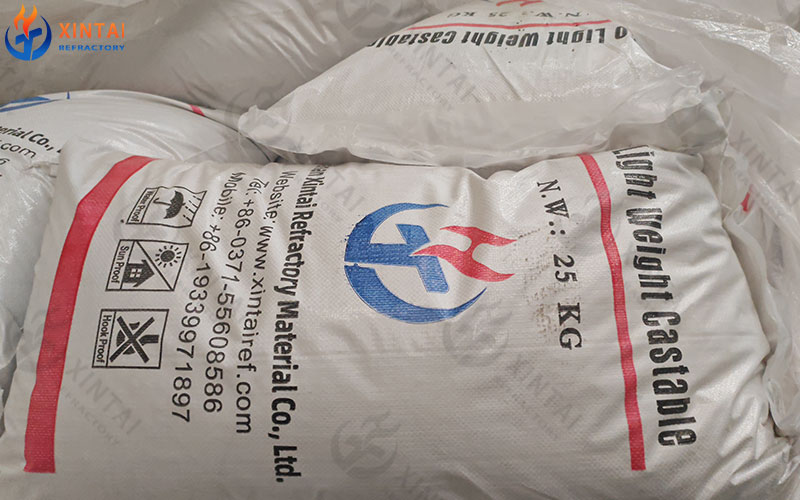
Henan Xintai Refractory Material Co., Ltd. provides various refractory materials for industrial furnaces and high-temperature applications. With experience in refractory material manufacturing and international supply, Xintai can provide material recommendations according to customers’ application requirements and technical specifications.