
Cement production involves continuous high-temperature operations, chemical reactions, material movement, and thermal cycling. The refractory linings used in cement kilns and auxiliary equipment must withstand these demanding conditions to maintain stable production and protect industrial equipment. Among various refractory materials, cement kiln refractory castables play an important role because of their flexible installation, good structural integrity, and adaptability to different equipment shapes.
Depending on the operating temperature, chemical environment, abrasion intensity, and installation requirements, different types of refractory castables are used throughout a cement production line. Common options include steel fiber reinforced castables, low cement castables, high-strength alkali-resistant castables, insulating castables, anti-coating castables, and anti-spalling castables.
Understanding these material types helps cement manufacturers select suitable refractory linings for different kiln sections, reduce maintenance requirements, and improve equipment service life.
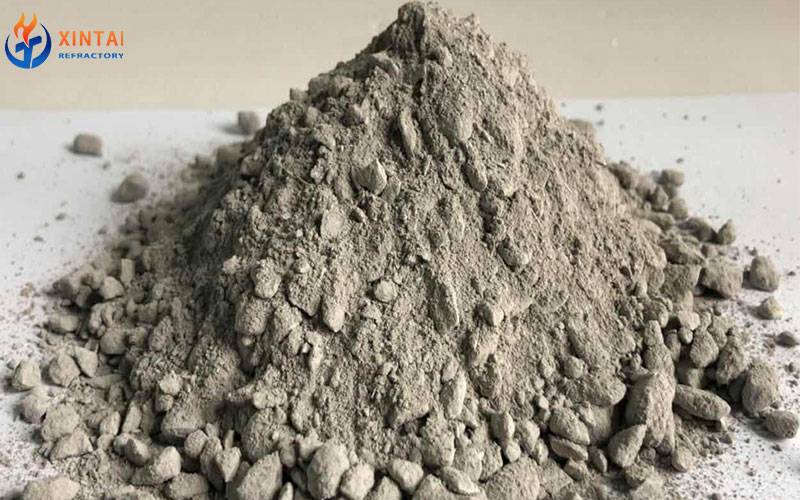
1. Steel Fiber Reinforced Refractory Castables
Steel fiber reinforced refractory castables are designed for areas exposed to severe mechanical impact, abrasion, and thermal stress. They are manufactured by incorporating heat-resistant stainless steel fibers into a refractory castable matrix, improving its structural strength and resistance to cracking.
The steel fibers help distribute mechanical stress throughout the lining and reduce crack propagation caused by repeated heating and cooling. This reinforcement also improves resistance to mechanical damage from falling materials and moving clinker.
Main characteristics:
- High mechanical strength and impact resistance.
- Improved thermal shock resistance.
- Good resistance to abrasion and mechanical wear.
- Better crack resistance under thermal stress.
- Suitable for demanding industrial operating conditions.
Typical applications:
Steel fiber reinforced castables are commonly used in cement kiln hoods, kiln discharge areas, material chutes, clinker coolers, and other sections subject to intense abrasion and mechanical impact. They are particularly suitable for kiln inlets and outlets where material movement and temperature fluctuations can cause rapid refractory deterioration.
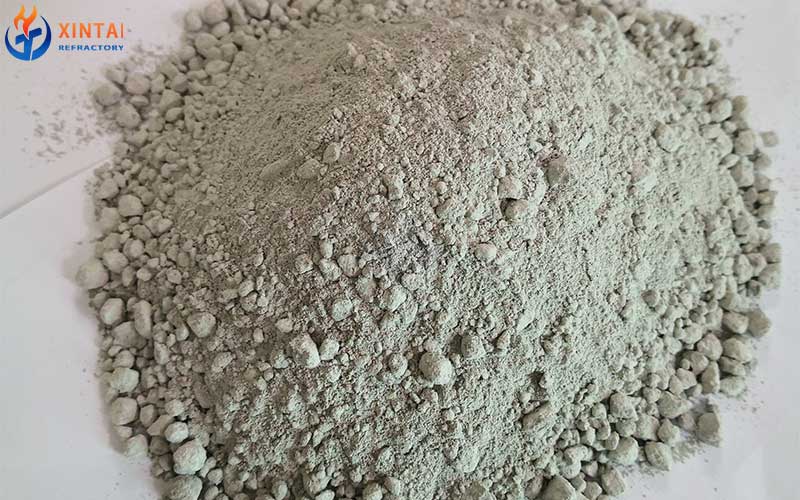
2. Low Cement Refractory Castables
Low cement refractory castables are widely used in cement kiln systems because of their high strength, good density, and excellent resistance to abrasion and material erosion. Compared with conventional castables, they contain a reduced amount of calcium aluminate cement, while carefully selected refractory aggregates, fine powders, and additives help develop a strong matrix.
Low cement castables are available in several material compositions, mainly including high alumina, mullite, and corundum-based formulations. Each type offers different performance characteristics depending on the working temperature and service environment.
Common types include:
High Alumina Low Cement Castables
High alumina low cement castables use high-alumina refractory aggregates and powders as their primary components. They provide good refractoriness, mechanical strength, and resistance to abrasion. They are suitable for various high-temperature sections of cement production equipment.
Mullite Low Cement Castables
Mullite low cement castables offer good high-temperature structural stability, thermal shock resistance, and creep resistance. They are suitable for areas requiring reliable performance under repeated temperature fluctuations.
Corundum Low Cement Castables
Corundum low cement castables contain high-purity alumina-based materials. They provide high hardness, excellent wear resistance, and good resistance to high-temperature erosion. They are often selected for particularly demanding working environments.
Low cement castables can also be formulated as rapid-drying or explosion-resistant products. These formulations are useful for maintenance projects requiring shorter heating-up periods. Their drying characteristics must be matched to the installation thickness and the manufacturer’s recommended heating schedule.
3. High-Strength Alkali-Resistant Refractory Castables
Alkali-resistant refractory castables are specially formulated for cement kiln environments where alkali compounds, including potassium and sodium compounds, may react with refractory materials. These compounds can penetrate the lining and cause chemical deterioration, expansion, cracking, and structural damage.
High-strength alkali-resistant castables are designed to resist attack from alkaline gases and chemical deposits while maintaining sufficient mechanical strength during operation.
Main characteristics:
- Good resistance to alkali chemical attack.
- High mechanical strength.
- Resistance to chemical erosion and penetration.
- Suitable for cement kiln preheating systems.
- Good structural stability under high-temperature conditions.
Typical applications:
These castables are commonly used in kiln hoods, preheater systems, precalciners, and other sections exposed to alkali-rich gases and deposits. They are particularly useful in areas where chemical reactions between kiln gases and refractory linings can shorten the service life of conventional materials.
The specific formulation should be selected according to the alkali concentration, operating temperature, and chemical composition of the process atmosphere.

4. Insulating Refractory Castables for Preheater Systems
Preheaters are important components of modern cement production lines. They use hot gases from the kiln system to heat raw materials before they enter the calcination process. Refractory linings in these systems must provide thermal protection while maintaining sufficient mechanical stability.
Insulating refractory castables are commonly selected for sections where reducing heat loss and controlling the external equipment temperature are important considerations.
Unlike dense wear-resistant castables, insulating castables generally have a lower bulk density and a more porous structure. Their thermal conductivity is reduced through the use of lightweight refractory aggregates and other insulating components.
Main characteristics:
- Low bulk density.
- Low thermal conductivity.
- Good thermal insulation performance.
- Relatively lightweight construction.
- Flexible installation for irregular equipment shapes.
Typical applications:
Insulating castables are used in selected areas of preheater towers, cyclones, connecting ducts, upper sections, and other equipment requiring thermal insulation.
Because preheater systems contain complex structures, including cones, roofs, discharge pipes, and connecting passages, castable materials offer installation flexibility. The material can be poured or cast into different shapes, making it suitable for equipment with complicated internal geometries.
However, insulating castables should not automatically replace dense refractory castables in areas exposed to severe abrasion or direct material impact. The selection should consider both thermal insulation and mechanical requirements.
5. Anti-Coating Refractory Castables for Precalciners
Material coating and buildup are common operational challenges in cement kiln systems. In particular, the constricted sections and gooseneck ducts of precalciners may experience deposits formed by alkali salts, sulfur compounds, chlorides, and other volatile components.
Anti-coating refractory castables are developed to reduce the adhesion and penetration of these deposits.
Some formulations use high-alumina refractory aggregates combined with silicon carbide (SiC). Silicon carbide has high hardness, good thermal conductivity, and favorable resistance to certain chemical and deposit-related conditions. Its incorporation can help improve the wear resistance and anti-coating performance of the refractory lining.
Main characteristics:
- Good resistance to abrasion.
- Improved resistance to material buildup.
- High-temperature stability.
- Resistance to certain chemical deposits.
- Easier removal of deposits in suitable operating conditions.
Typical applications:
Anti-coating castables are mainly used in precalciner constrictions, gooseneck ducts, and other sections where material buildup frequently occurs.
Their purpose is to reduce deposit adhesion and help maintain smoother material and gas flow. Actual performance depends on the refractory formulation, kiln operating conditions, and the chemical composition of the deposits.
6. Anti-Spalling Refractory Castables for Kiln Inlets and Tails
Thermal spalling is another important factor affecting refractory lining service life in cement production. Rapid temperature changes, uneven heating, and differences in thermal expansion can cause cracks or surface layers to detach from the lining.
Anti-spalling refractory castables are designed to improve resistance to thermal stress and structural damage caused by temperature fluctuations.
These products are formulated with suitable refractory aggregates, powders, and additives to balance mechanical strength and thermal shock resistance.
Main characteristics:
- Improved resistance to thermal spalling.
- Good mechanical strength.
- Resistance to repeated temperature changes.
- Suitable for demanding kiln operating environments.
- Reliable structural performance under thermal cycling.
Typical applications:
Anti-spalling castables are used in selected kiln tail sections, feeding zones, preheating areas, and other locations exposed to frequent temperature fluctuations. They can also be considered for certain rotary kiln applications where thermal shock resistance is an important selection criterion.
The specific grade should be selected according to the operating temperature, heating and cooling cycles, and mechanical loading conditions.
Conclusion
Cement kiln refractory castables are available in various formulations to meet the different operating requirements of cement production equipment. Steel fiber reinforced castables provide improved impact and abrasion resistance, while low cement castables offer high strength and good wear resistance. Alkali-resistant castables protect linings against chemical attack, insulating castables reduce heat loss, and silicon carbide-containing anti-coating castables help address material buildup in precalciner systems. Anti-spalling castables provide additional protection against thermal stress and temperature fluctuations.
Choosing the right cement kiln refractory castables for each equipment section is essential for maintaining stable kiln operation, extending refractory lining service life, and reducing unplanned maintenance. Cement manufacturers should evaluate actual working conditions and consult refractory suppliers to determine the most appropriate material composition and installation method for their production lines.