
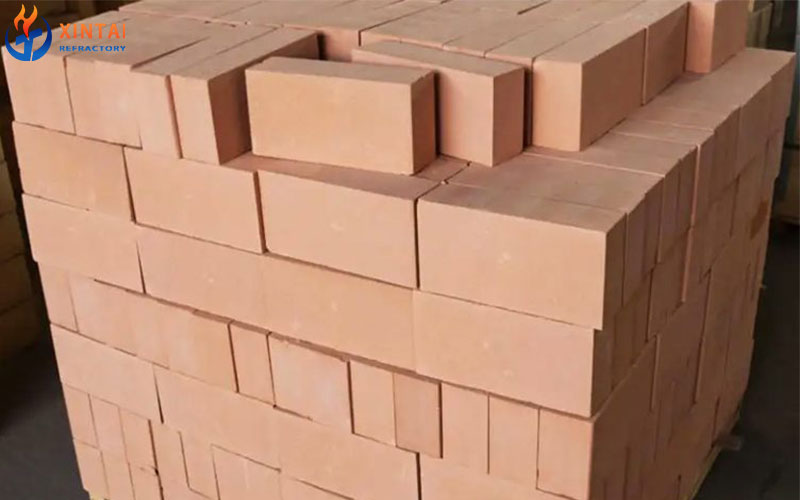
Refractory bricks and insulating bricks are both widely used in industrial furnaces, kilns, and other high-temperature thermal equipment. Although these materials are often used together in furnace linings, they serve different purposes. Refractory bricks are primarily designed to withstand high temperatures, mechanical loads, and chemical attack, while insulating bricks are developed to reduce heat transfer and improve thermal efficiency. Understanding the differences between refractory bricks and insulating bricks helps industrial buyers, furnace designers, and maintenance engineers select suitable materials for specific operating conditions.
1. What Are Refractory Bricks?
Refractory bricks are heat-resistant masonry materials designed to maintain their structural integrity and performance under high-temperature conditions. Depending on their composition and grade, they can resist thermal shock, slag corrosion, chemical erosion, abrasion, and mechanical stress.
Common types include fireclay bricks, high alumina bricks, silica bricks, magnesia bricks, and magnesia-carbon bricks. Each type offers different properties for particular industrial applications.
For example, fireclay bricks are commonly used in general furnace linings, while high alumina bricks offer improved refractoriness and resistance to certain forms of chemical attack. Magnesia bricks are frequently used in basic steelmaking environments where resistance to alkaline slags is essential.
Refractory bricks are widely applied in steelmaking furnaces, blast furnaces, cement kilns, glass furnaces, nonferrous metal smelting equipment, and petrochemical processing facilities. Their primary function is to protect furnace structures and equipment from extreme heat and aggressive operating environments.
However, not all refractory bricks have the same density, strength, or thermal conductivity. Dense refractory bricks generally provide better mechanical support and resistance to wear, while lightweight refractory products may be designed to combine heat resistance with improved insulation.
2. What Are Insulating Bricks?
Insulating bricks are lightweight refractory materials specifically designed to reduce heat transfer through furnace walls, kiln linings, and other high-temperature structures. Their insulation performance generally comes from a porous internal structure that limits heat conduction.
Common insulating brick materials include lightweight fireclay, lightweight high alumina, lightweight silica, mullite insulating bricks, diatomite bricks, and alumina bubble bricks. Their operating temperatures and physical properties vary according to the raw materials, manufacturing process, and product grade.
Insulating bricks can be classified into different categories according to their temperature resistance and composition.
High-temperature insulating bricks are designed for demanding thermal environments and may include lightweight corundum bricks, alumina bubble bricks, and zirconia bubble products. Certain specialized grades can operate above 1,500°C under appropriate conditions.
Conventional insulating bricks include diatomite bricks, expanded vermiculite bricks, and expanded perlite bricks. These materials are generally suitable for lower-temperature insulation applications, although their actual service limits depend on product specifications.
Refractory insulating bricks are designed for intermediate- to high-temperature furnace applications. Examples include lightweight fireclay bricks, lightweight silica bricks, mullite insulating bricks, and lightweight high alumina bricks.
Insulating bricks are commonly used in furnace backup linings, kiln insulation layers, heat treatment equipment, and industrial thermal systems where reducing heat loss is important.

3. Main Differences Between Refractory Bricks and Insulating Bricks
Although both materials belong to the broader category of heat-resistant products, their performance characteristics differ in several important ways.
3.1 Primary Function
The most important difference is their main purpose.
Refractory bricks primarily protect furnace interiors against high temperatures, molten materials, chemical attack, and mechanical damage. In demanding applications, they form the hot-face lining directly exposed to furnace conditions.
Insulating bricks primarily reduce heat transfer from the hot interior to the external structure. They help maintain furnace temperatures, reduce energy consumption, and limit heat loss through the lining.
Some insulating bricks can also serve as the hot-face material in suitable applications. However, their suitability depends on temperature, load, atmosphere, and chemical exposure.
3.2 Temperature Resistance
Temperature resistance varies considerably among different grades of both materials.
Dense refractory bricks are available for a wide range of industrial temperatures, including applications involving extremely high heat and molten metals. Their maximum service temperature depends on chemical composition, load conditions, and the surrounding atmosphere.
Insulating bricks also cover a broad temperature range. Lower-temperature products may be suitable for applications below 1,000°C, while specialized high-temperature insulating bricks can operate at temperatures above 1,500°C.
Therefore, it is inaccurate to assume that all insulating bricks have lower temperature resistance than conventional refractory bricks. Buyers should evaluate the rated service temperature and actual operating conditions of each product rather than relying on product names alone.
3.3 Thermal Conductivity
Thermal conductivity is another major distinction.
Dense refractory bricks often have relatively high thermal conductivity compared with lightweight insulating grades. This characteristic can be beneficial when heat transfer within the lining is desirable, but it may increase heat loss through the furnace structure.
Insulating bricks generally have lower thermal conductivity because their porous structures contain air-filled spaces that restrict heat transfer. This makes them particularly useful for reducing energy losses and improving temperature control.
For industrial facilities operating continuously, selecting suitable insulating materials can contribute to lower fuel consumption and improved overall thermal efficiency.
3.4 Density and Mechanical Strength
Conventional dense refractory bricks are generally heavier and stronger than insulating bricks. They are often selected for locations that must withstand abrasion, material impact, furnace pressure, and other mechanical stresses.
Insulating bricks typically have lower bulk density and higher porosity. These characteristics reduce their weight and improve insulation performance but can also reduce their resistance to impact, abrasion, and heavy loads.
Nevertheless, mechanical strength varies by grade and manufacturing method. Some specialized insulating products provide adequate strength for particular structural or lining applications.
When selecting materials, engineers should consider compressive strength, bulk density, apparent porosity, and the expected mechanical loads rather than comparing only the general product categories.
3.5 Resistance to Chemical Attack and Thermal Shock
Dense refractory bricks are available in formulations designed to resist specific slags, molten metals, furnace gases, and chemical environments. For example, magnesia-based products are commonly selected for basic slag conditions, while other compositions may be better suited to acidic environments.
Insulating bricks can also provide chemical and thermal resistance, but their porous structure and material composition may make certain grades unsuitable for direct exposure to aggressive slags, molten metals, or high-velocity particles.
Thermal shock resistance varies among both categories. It depends on factors such as thermal expansion, elastic properties, microstructure, and temperature gradients. Product selection should therefore be based on the actual heating and cooling cycle rather than a general assumption that one category always performs better.
4. Comparison Table: Refractory Bricks vs. Insulating Bricks
| Comparison Factor | Refractory Bricks | Insulating Bricks |
|---|---|---|
| Primary purpose | Protect against heat, wear, and chemical attack | Reduce heat transfer and energy loss |
| Typical structure | Often dense, depending on grade | Generally lightweight and porous |
| Bulk density | Usually higher for dense grades | Generally lower |
| Mechanical strength | Often suitable for demanding loads | Usually lower than dense grades |
| Thermal conductivity | Generally higher for dense products | Generally lower |
| Temperature range | Depends on composition and grade | Ranges from low-temperature to specialized high-temperature grades |
| Common applications | Hot-face linings, furnace hearths, and high-wear zones | Backup linings, insulation layers, and energy-saving furnace structures |
These comparisons describe common product characteristics rather than universal specifications. Individual grades may differ substantially.
5. Can Refractory Bricks and Insulating Bricks Be Used Together?
Yes. In many industrial furnaces, refractory bricks and insulating bricks are installed together to achieve a balance between durability and thermal efficiency.
A typical furnace lining may use dense refractory bricks on the hot face, where the materials must resist direct exposure to high temperatures, abrasion, and chemical attack. Insulating bricks can then be installed behind the working lining to reduce heat transfer toward the steel shell or surrounding structure.
This layered design allows each material to perform the function for which it is best suited. The dense working lining provides protection, while the insulating layer helps reduce heat loss and maintain stable operating temperatures.
The exact arrangement depends on furnace design, operating temperature, mechanical loading, atmosphere, and maintenance requirements. Engineers must also consider thermal expansion, joint design, anchoring, and compatibility between different lining materials.
In some furnaces, a single insulating refractory product may be suitable for direct hot-face use. In others, a dense working lining is necessary to withstand severe service conditions.
6. How to Choose the Right Bricks for Your Furnace
Selecting the right refractory or insulating bricks requires a clear understanding of the furnace’s operating environment.
First, determine the maximum operating temperature and the frequency of heating and cooling cycles. The selected material must provide an appropriate safety margin for the actual service conditions.
Second, evaluate mechanical and chemical exposure. Furnaces handling molten metals, abrasive materials, or corrosive slags may require dense refractory grades with specialized resistance properties.
Third, consider thermal efficiency. If excessive heat loss is a major concern, suitable insulating bricks can help reduce energy consumption and improve temperature uniformity.
Fourth, assess the installation location. Hot-face linings, backup insulation layers, furnace roofs, and kiln walls may require different combinations of strength, density, and thermal conductivity.
Finally, compare technical specifications, including refractoriness, recommended service temperature, bulk density, thermal conductivity, compressive strength, and chemical composition. Consulting a refractory manufacturer can help identify suitable grades and customized dimensions for specific equipment.
Conclusion
The main difference between refractory bricks and insulating bricks lies in their primary functions. Refractory bricks are generally selected for protection against high temperatures, mechanical wear, and chemical attack, whereas insulating bricks are designed to minimize heat transfer and improve thermal efficiency.
Neither category is universally superior. The right choice depends on the operating temperature, furnace structure, chemical environment, mechanical loading, and energy-saving requirements. In many industrial applications, combining dense refractory bricks with insulating bricks provides an effective solution for achieving reliable furnace protection and reducing heat loss.
For steelmaking, cement production, metallurgy, chemical processing, and other high-temperature industries, working with an experienced refractory manufacturer helps ensure that the selected materials match the specific operating conditions and service requirements.