
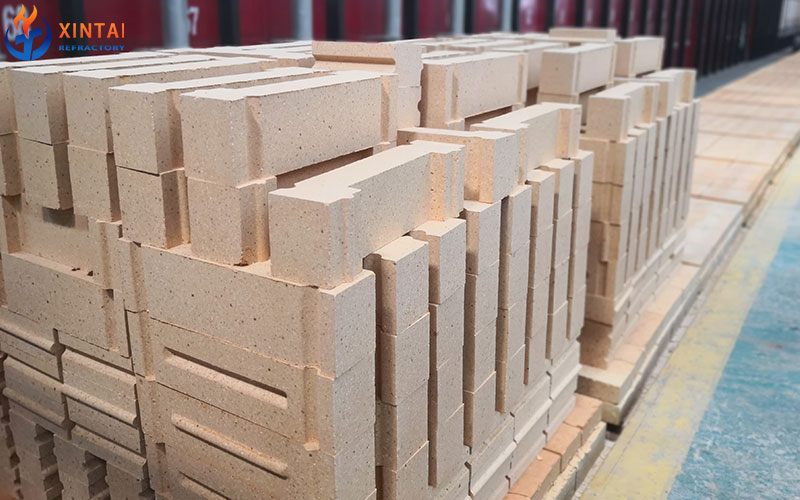
The service temperature of refractory bricks is an important factor to consider when selecting refractory materials. Different types of refractory bricks have different high-temperature capabilities because of differences in chemical composition, mineral phases, structure, and manufacturing processes. When selecting refractory bricks, it is important not only to consider their maximum temperature resistance, but also their working temperature, thermal shock resistance, wear resistance, corrosion resistance, mechanical strength, and the specific position where they will be installed.
Common refractory bricks can be classified according to their materials and applications, including aluminosilicate refractory bricks, basic refractory bricks, carbon-containing refractory bricks, zirconium-containing refractory bricks, and insulating refractory bricks. In general, some zirconium-containing and carbon-containing refractory materials can withstand extremely high temperatures. Aluminosilicate refractory bricks commonly operate in the range of 1500°C to 1750°C, while lightweight insulating refractory bricks are mainly used for thermal insulation and generally operate at lower temperatures than dense working-layer refractory bricks.
It should be noted that the temperature ranges below are provided as general guidelines for material selection. The actual service temperature should be confirmed according to the specific product grade, furnace design, atmosphere, load, and operating conditions.
Service Temperature Ranges of Common Refractory Bricks
Different types of refractory bricks have significantly different service temperature ranges. The following table provides a general reference:
| Type of Refractory Brick | Typical Service Temperature | Main Application Characteristics |
|---|---|---|
| Ordinary Fireclay Brick | Around 1250°C | General furnace linings |
| Low-Porosity Fireclay Brick | Above 1350°C | Glass furnaces and special furnaces |
| Ordinary High Alumina Brick | 1300–1400°C | High-temperature furnace zones |
| Special High Alumina Brick | 1350–1500°C | Areas requiring thermal shock and wear resistance |
| Mullite Brick | 1300–1600°C | Burner and other high-temperature areas |
| Corundum-Mullite Brick | 1300–1600°C | High-temperature and wear-resistant areas |
| Corundum Brick | Above 1700°C | Ultra-high-temperature environments |
| Magnesia Basic Brick | 1500–1650°C | High-temperature basic environments |
| Lightweight Fireclay Brick | 1000–1200°C | Insulating layers |
| Lightweight High Alumina Brick | 1200–1350°C | Insulating zones |
| Mullite Lightweight Brick | 1400–1500°C | High-temperature insulation |
| Alumina Bubble Brick | 1600–1700°C | High-temperature insulation and some working layers |
1. Service Temperature of High Alumina Refractory Bricks
High alumina refractory bricks are one of the common types of aluminosilicate refractory materials. They contain a relatively high percentage of alumina and therefore generally have better high-temperature performance, mechanical strength, and wear resistance than ordinary fireclay bricks.
Ordinary high alumina refractory bricks are commonly used in high-temperature areas of furnace linings. Their typical service temperature is approximately 1300–1400°C. When the working temperature exceeds 1400°C, or when the furnace environment involves severe thermal shock, wear, or corrosion, anti-spalling high alumina bricks or corundum bricks may be considered.
For burner areas and other localized high-temperature zones, ordinary high alumina bricks may not always be the most suitable choice. Mullite bricks or corundum-mullite bricks can be used in these areas. Their service temperature can generally reach 1300–1600°C, while they also provide good wear resistance and corrosion resistance.
Adding andalusite or cordierite to high alumina refractory materials can further improve thermal shock resistance. Depending on the formulation, these special high alumina refractory bricks can have a service temperature of approximately 1350–1500°C.
2. Service Temperature of Fireclay Refractory Bricks
Fireclay refractory bricks are traditional refractory products with good thermal shock resistance and extensive application experience. They are commonly used for the linings of general industrial furnaces and kilns.
The typical service temperature of ordinary fireclay refractory bricks is around 1250°C. Since their high-temperature performance is lower than that of high alumina bricks, higher-grade refractory materials are generally required for higher-temperature applications.
Low-porosity fireclay bricks have a lower apparent porosity and improved structural stability. They can be used in glass furnaces and certain special furnaces, with service temperatures generally reaching above 1350°C.
When andalusite or cordierite is added to fireclay refractory bricks, their high-temperature performance and thermal shock resistance can be improved. Some specially formulated products can have a service temperature of above 1400°C.
3. Service Temperature of Corundum Refractory Bricks
Corundum refractory bricks are high-performance refractory materials with a high alumina content. They offer excellent high-temperature resistance, high mechanical strength, and good wear resistance.
Corundum refractory bricks are commonly used in environments above 1700°C, where ordinary fireclay bricks and high alumina bricks may not be able to withstand long-term operation.
If silicon carbide is incorporated into a corundum-based refractory material, its wear resistance, thermal shock resistance, and high-temperature performance can be further improved. These materials are particularly suitable for working environments involving severe abrasion or high-temperature gas and material flow.
4. Service Temperature of Basic Refractory Bricks
Basic refractory bricks include magnesia bricks, magnesia-chrome bricks, and other basic refractory materials. Their main advantage is good resistance to basic slags, making them suitable for certain metallurgical and high-temperature industrial applications.
The service temperature of general basic refractory bricks is often below 1200°C, depending on the specific product and operating environment.
Magnesia-based basic bricks have better high-temperature performance, with typical service temperatures of approximately 1500–1650°C. However, temperature alone should not determine material selection. The composition of the slag, chemical attack, mechanical load, and furnace atmosphere must also be considered.
5. Service Temperature of Lightweight Fireclay Refractory Bricks
One of the major differences between lightweight and dense refractory bricks is their primary function. Lightweight refractory bricks are generally designed for thermal insulation and reducing heat loss from the furnace rather than directly withstanding the most severe working conditions.
Lightweight fireclay refractory bricks are generally used in insulating zones, with service temperatures of approximately 1000–1200°C. Their relatively low bulk density and low thermal conductivity help reduce heat transfer from the furnace to the outside.
However, lightweight fireclay bricks are generally not suitable as the primary working layer in high-temperature zones. Areas directly exposed to flames, molten materials, slag, or severe mechanical wear normally require denser and more durable refractory materials.
6. Service Temperature of Lightweight High Alumina Refractory Bricks
Lightweight high alumina refractory bricks combine a certain level of high-temperature performance with good thermal insulation properties. They are mainly used in the insulation zones of furnaces and kilns. Their typical service temperature is approximately 1200–1350°C.
The main purpose of these bricks is to reduce heat loss through the furnace wall. Therefore, they are generally used as insulating layers rather than as working layers that directly withstand high temperatures, abrasion, and corrosion.
For applications requiring thermal insulation at higher temperatures, mullite lightweight refractory bricks can be considered. Their service temperature can generally reach 1400–1500°C, making them suitable for higher-temperature insulation zones.
7. Service Temperature of Alumina Bubble Refractory Bricks
Alumina bubble refractory bricks are lightweight high-temperature refractory materials made primarily from alumina bubbles. Because they contain a high proportion of alumina and have a porous internal structure, they provide both high-temperature resistance and good thermal insulation.
The typical service temperature of alumina bubble refractory bricks is approximately 1600–1700°C. In some high-temperature furnaces and kilns, these bricks can not only be used as insulating materials but can also be used directly in working layers, depending on the specific product properties and operating conditions.
Compared with ordinary lightweight fireclay bricks, alumina bubble bricks are more suitable for high-temperature applications. However, their actual application still needs to be determined based on furnace temperature, mechanical strength, atmosphere, and other operating conditions.

How to Choose Refractory Bricks According to Service Temperature
When selecting refractory bricks, the first step is to determine the actual operating temperature of the furnace or kiln. The material and application location of the refractory brick should then be considered.
For example, lightweight fireclay bricks may be suitable for insulation zones operating at 1000–1200°C. For working environments of 1200–1400°C, fireclay bricks, high alumina bricks, or lightweight high alumina bricks may be selected depending on the specific conditions. When the temperature reaches 1400–1600°C, mullite bricks, corundum-mullite bricks, or higher-grade high alumina refractory materials may be considered. For ultra-high-temperature environments above 1700°C, high-performance materials such as corundum refractory bricks are generally required.
Temperature, however, is not the only selection criterion. If refractory bricks are continuously exposed to slag erosion, mechanical abrasion, high-temperature gas flow, or repeated thermal cycling, a brick with a sufficiently high theoretical service temperature may still not be suitable for the actual application.
Therefore, there is no single answer to the question, “What are the service temperatures of common types of refractory bricks?” The actual service temperature depends on the material, product grade, furnace design, and operating conditions. For refractory material buyers, furnace designers, and industrial manufacturers, the most appropriate refractory brick should be selected by considering temperature together with wear resistance, corrosion resistance, thermal shock resistance, mechanical strength, and the specific working environment.