
When refractory bricks are used to build industrial furnaces, kilns, heating chambers, and other high-temperature equipment, refractory mortar is an essential part of the masonry system. Refractory bricks provide the main structural and thermal protection, while refractory mortar bonds the bricks together and fills the joints between them. Similar to the role of cement in conventional building construction, refractory mortar helps form a stable and continuous refractory lining.
However, refractory mortar is not simply a bonding material. Its chemical composition, particle size, consistency, bonding strength, refractoriness, and high-temperature behavior can directly affect the performance and service life of a refractory brick lining. Choosing the correct refractory mortar and applying it properly is therefore an important part of refractory brick installation.
Matching Refractory Mortar With Different Refractory Bricks
Different refractory bricks have different chemical compositions and high-temperature characteristics. Using a compatible refractory mortar helps reduce chemical reactions and differences in thermal behavior between the mortar and the bricks.
Clay Bricks and Clay Refractory Mortar
When building with clay refractory bricks, clay refractory mortar should normally be used. Clay refractory mortar is generally made from clay refractory clinker combined with bonding clay.
Because the mortar and bricks have similar basic compositions, this combination provides good compatibility during heating and cooling. Clay refractory mortar can be used for suitable furnace and kiln applications where clay refractory bricks are exposed to moderate or high temperatures.
High Alumina Bricks and High Alumina Refractory Mortar
High alumina bricks require careful selection of refractory mortar according to their alumina content.
For high alumina bricks containing approximately 60–75% Al₂O₃, high alumina refractory mortar containing more than 50% Al₂O₃ can be selected. For high alumina bricks containing approximately 48–55% Al₂O₃, high-refractoriness clay refractory mortar may also be suitable depending on the specific operating conditions.
The closer the chemical characteristics of the mortar are to those of the bricks, the better the compatibility of the masonry system can generally be.
Silica Bricks and Silica Refractory Mortar
When silica bricks are used, silica refractory mortar is normally required. Silica refractory mortar with approximately 90–93% SiO₂ can be used for appropriate silica brick masonry.
Silica-based materials have their own characteristic behavior during heating, so using a compatible mortar is particularly important when constructing high-temperature furnace linings.
Magnesia Bricks and Magnesia Refractory Mortar
Magnesia bricks should be installed using magnesia refractory mortar. For suitable applications, the MgO content of the magnesia mortar should generally be no less than approximately 78%.
Because magnesia refractory materials are basic in chemical character, the use of compatible basic refractory mortar helps maintain the desired chemical and thermal properties of the masonry.
How Should Refractory Mortar Be Prepared and Used?
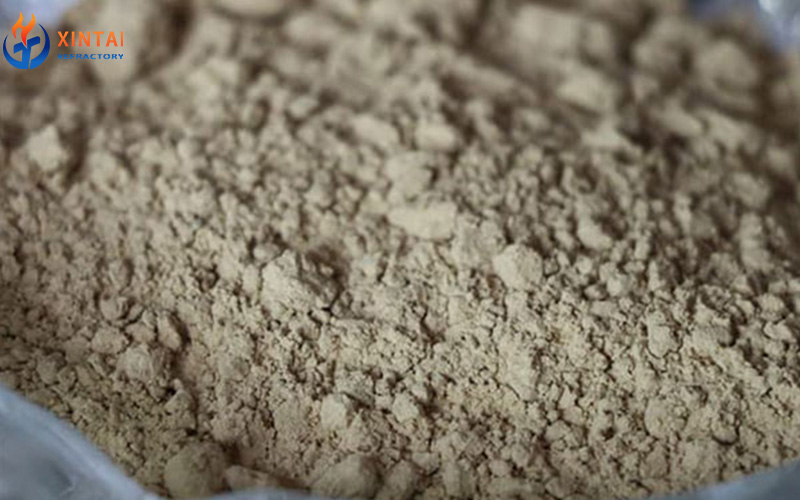
Correct preparation and application are just as important as selecting the right refractory mortar. Even a high-quality mortar may fail to perform properly if it is mixed incorrectly or applied with unsuitable joint thickness.
1. Select the Correct Mortar
Different refractory bricks should be installed with corresponding refractory mortar. Clay mortar, high alumina mortar, silica mortar, and magnesia mortar should not be mixed indiscriminately.
The selection should consider the brick composition, furnace atmosphere, operating temperature, chemical environment, joint thickness, and expected thermal cycling.
2. Control the Water Addition
Water should be added according to the requirements of the specific refractory mortar. Excessive water can make the mortar too fluid, causing it to flow out of the brick joints during installation. Too little water, on the other hand, can make the mortar dry and difficult to spread, reducing its ability to bond the bricks properly.
The goal is to achieve suitable viscosity and workability while maintaining the required performance after drying and firing.
3. Use Mixed Mortar Promptly
Once refractory mortar has been mixed, it should generally be used within the appropriate working period specified for the material. Mortar that has already hardened should not simply be re-mixed with water and reused.
Using fresh, properly prepared mortar helps ensure consistent bonding and joint filling throughout the refractory lining.
4. Keep Brick Joints as Small as Practical
The mortar should have appropriate viscosity and flowability so that the gaps between refractory bricks can be minimized. In many applications, the joint thickness is controlled to around 1 mm or even less, depending on the masonry design and refractory brick requirements.
The mortar should adequately fill the contact surface between bricks rather than leaving empty areas. Properly filled joints help create a more continuous refractory lining and accommodate the required expansion and contraction behavior.
5. Control Particle Size
Fine-grained refractory mortar is generally preferred for thin masonry joints. The maximum particle size should be selected according to the required joint thickness. As a general guideline, the maximum particle size should not exceed approximately 30% of the joint thickness.
This helps improve the filling of narrow joints and provides a more uniform contact surface between refractory bricks.
Why Is Refractory Mortar So Important?
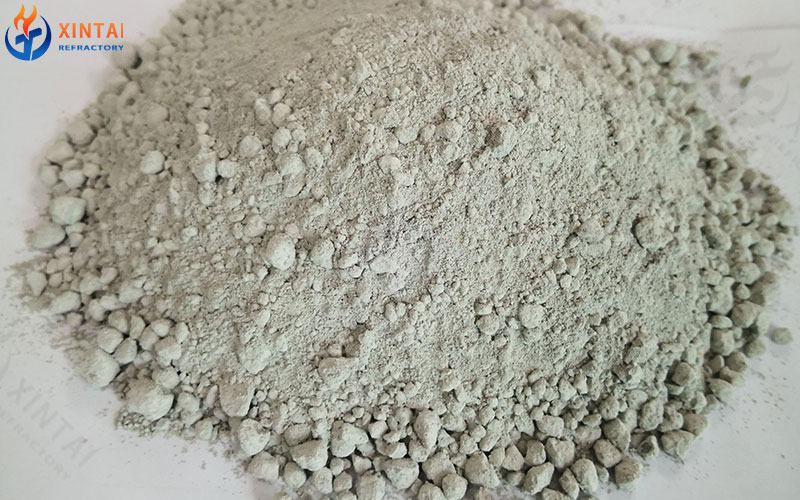
The quality and installation of refractory mortar can have a direct influence on the service life of refractory brick masonry. A refractory lining is not simply a collection of individual bricks. The mortar joints form an important part of the overall structure.
If the bonding strength is insufficient, the masonry may become unstable during operation. If the mortar contains excessively coarse particles, it may be difficult to achieve the required thin joints. If too much water is added, the mortar may shrink excessively or lose its intended properties after drying. If too little water is added, proper bonding and joint filling may be difficult.
Another important consideration is the high-temperature behavior of refractory mortar. The mortar must withstand high temperatures and mechanical loads together with the refractory bricks, especially in large industrial kilns and furnaces.
The load-softening temperature of refractory mortar is one important indicator of its high-temperature performance. It can help indicate the temperature range in which the mortar begins to soften under load and can also provide information about its high-temperature volume stability.
Refractory Mortar and the Service Life of Refractory Linings
During furnace operation, refractory masonry may experience high temperatures, thermal cycling, mechanical loads, chemical attack, and repeated expansion and contraction. The mortar joints must remain sufficiently stable under these conditions.
A poorly selected or improperly installed mortar can create weak points in the refractory lining. Cracks, excessive joint shrinkage, poor bonding, and local brick movement may eventually reduce the effectiveness of the entire lining.
For this reason, refractory mortar should be regarded as an integral component of refractory brick masonry rather than simply a supplementary bonding material. Proper material selection, accurate mixing, controlled water addition, suitable particle size, and careful joint construction all contribute to a more reliable refractory lining.
Conclusion
The application of refractory mortar in refractory brick masonry is essential for creating a stable and durable high-temperature lining. Clay bricks should generally be matched with clay refractory mortar, high alumina bricks with suitable high alumina or high-refractoriness clay mortar, silica bricks with high-silica mortar, and magnesia bricks with compatible magnesia mortar.
Beyond material selection, proper preparation and construction are equally important. Water content, working time, mortar consistency, particle size, and joint thickness should all be carefully controlled.
Although refractory bricks usually receive more attention because they form the main body of the lining, refractory mortar plays a critical role in connecting the bricks into an integrated structure. Its quality and high-temperature performance can directly affect the stability, durability, and service life of the entire refractory masonry system.